integrated metrology community.

MANUFACTURING AND MATERIALS EFFICIENCY
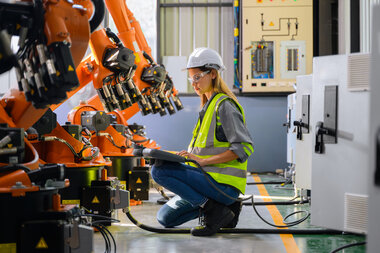
The European Union’s sustainable materials policy focuses on quantifying the safety, sustainability, and environmental and climate performance of materials, as well as analysing supply chains of materials and products. The overall objective is to increase the sustainability of the manufacturing process and support a circular European economy. This aligns with the Unites Nations sustainability goal 9 ‘industry, innovation and infrastructure’, which aims to foster innovation while building resilient infrastructure and promote sustainable industrialisation.
Measurement science is essential to underpin the implementation of new production techniques and ensure the SI-traceability of product quality assessments. The European Metrology Network for Advanced Manufacturing aims to closely work with stakeholders and create a knowledge sharing programme to ensure that sustainability in manufacturing and materials efficiency is promotes across Europe.
Many EURAMET projects have supported metrology for manufacturing and materials efficiency, inlcuding the ones listed below:
RELATED CASE STUDIES
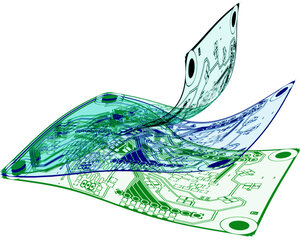
Mass spectrometry for 3D measurements
Modern high value goods often incorporate multiple layers of different types of materials, both organic and inorganic. This complexity can cause severe measurement issues during production where any defects that occur may be buried or hard to detect. Mass spectrometry has been identified as a promising technique for revealing and identifying such problems but has lacked the resolution and traceability to be employed in this manufacturing sector.

Optical methods for inline inspection
Industry is increasingly applying high-throughput production processes to modern electronic devices to decrease the cost of goods by applying an ‘economy of scale’. Such products can be composed of hundreds of components requiring correct assembly to function as intended, which presents problems when using mass production techniques. New ways of inline monitoring are required that must be fast, accurate, and costeffective to ensure European competitiveness in this growing sector.
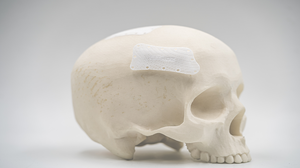
Measurement traceability for 3D printing
Implanted medical devices that replace, repair or support the normal function of the body were one of the greatest medical successes of the 20th Century. Additive manufacturing, commonly known as 3D printing, could offer high-quality, affordable medical devices specifically tailored to a patient. However, this technology lacked the knowledge of the build-up of errors that can occur from production to clinical use; required for quality controls and patient safety.

A low-cost 3D Large Volume Metrology system for the factories of the future
Many industries utilise components that are too large to fit within conventional measuring machines or too bulky to transport to a calibration laboratory. These require measuring in situ, but current systems used in warehouses or factory floors are often off-line, slow, expensive or lack metrological traceability. Cheaper, more accurate methods are required to enable more companies to benefit from the ‘digital’ factories of the future.
RELATED NEWS STORIES

EMPIR project enables world-first for dynamic pressure and temperature measurements
Rapidly changing temperatures and pressures encountered in many production environments make accurate calibrations difficult to perform.
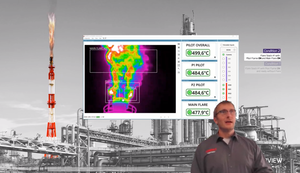
EMPIR project showcased in industrial thermometry workshop
Enhancing process efficiency through improved temperature measurement.
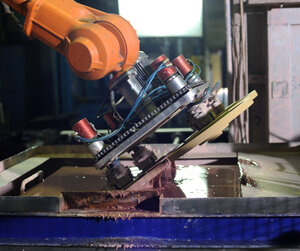
EMPIR project on large scale dimensional measurements sees early uptake
Improving large-scale dimensional measurements for manufacturing.