integrated metrology community.

News
Two EMPIR projects work together to bring measurement to the IIoT
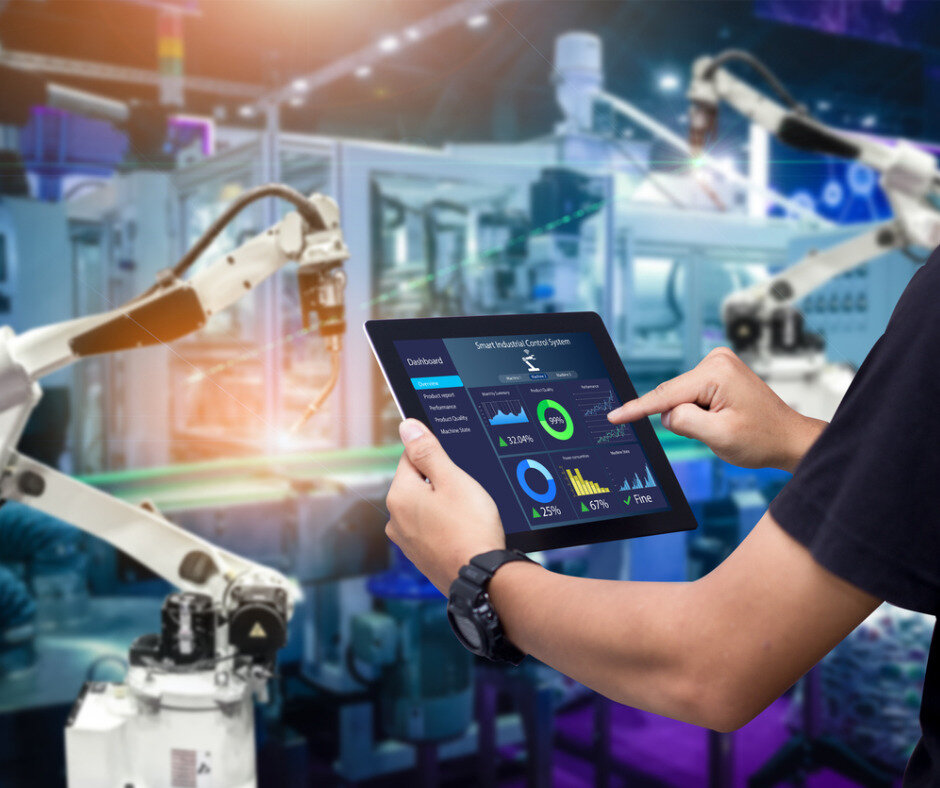
Smart industry control concept
Research from two projects collaborating benefits the Industrial Internet of Things
Consortia working on two separate European Metrology Programme for Innovation and Research (EMPIR) projects have joined forces in order to increase the benefits and impact for industry. The strong collaboration of these projects will help to bring the benefits of traceable measurement to the Industrial Internet of Things (IIoT).
Working together, the two project consortia have:
- formed a joint stakeholder advisory board who inform the project consortium on the needs of industry, academia and standardisation, and give feedback on project outputs such as the most suitable sensors and interfaces for the two projects
- developed a demonstrator to showcase the utilization of the D-SI data model in the communication of measured data using a flexible mulit-agent system framework
- implemented a prototype uncertainty-aware anomaly detection in IoT that uses a Long Short Term Memory network to identify anomal behaviour in uncertain sensor data
- started development of a one-touch calibration of MEMS temperature sensors with output of digital calibration certificates
The two projects that are collaborating are:
Communication and validation of smart data in IoT-networks (17IND02, SmartCom) which is working to define a digital format for the secure transmission and unambiguous interpretation of measurement-related data used in science and technology, the Digital SI and the Digital Calibration Certificates. Wiebke Heeren from PTB, and coordinator of this project, said
‘Our projects perfectly complement each other, for example by enabling to demonstrate the benefit of digitalising measurement and calibration data in the IIoT environment and in return providing real-world requirements to improve the data format definition.’
Metrology for the Factory of the Future (17IND12, Met4FoF) is developing sensor network metrology and calibration methods for advanced digital-only industrial sensors, including those with internal pre-processing capabilities. Sascha Eichstädt also from PTB, and coordinator of this project, said
‘With the combination of both projects we are able to cover the whole lifecycle of data in the industrial IoT – from measurements traceable to the SI to the uncertainty-aware machine learning’.
This EMPIR project is co-funded by the European Union's Horizon 2020 research and innovation programme and the EMPIR Participating States.
Want to hear more about EURAMET?
Sign up for EURAMET newsletters and other information
Follow us on LinkedIn and Twitter
Information
- Machine learning and data analysis video tutorials available from EMPIR project
- Workshops on Europe’s digital measurement evolution held in September 2021
- Results of EMPIR project receives international recognition
- EURAMET’s stakeholders share metrology for digital transformation needs
- New software and guide on digital sensors for the Factory of the Future
- EMPIR,
- Industry,
Updated calibration guide will improve the harmonisation of volumetric measurement calibrations more
Paper about new single-photon source is published in Advanced Quantum Technologies more
A software tool for conformance testing of measurement devices is now available, and being used to help with the recovery from COVID-19 more

Techniques developed in the project may help with recovery from the pandemic more

Work from earlier EMPIR projects is used to support recovery from pandemic more