integrated metrology community.

News
Guide for the calibration of sensors for seismic, infrasound and hydroacoustic monitoring published
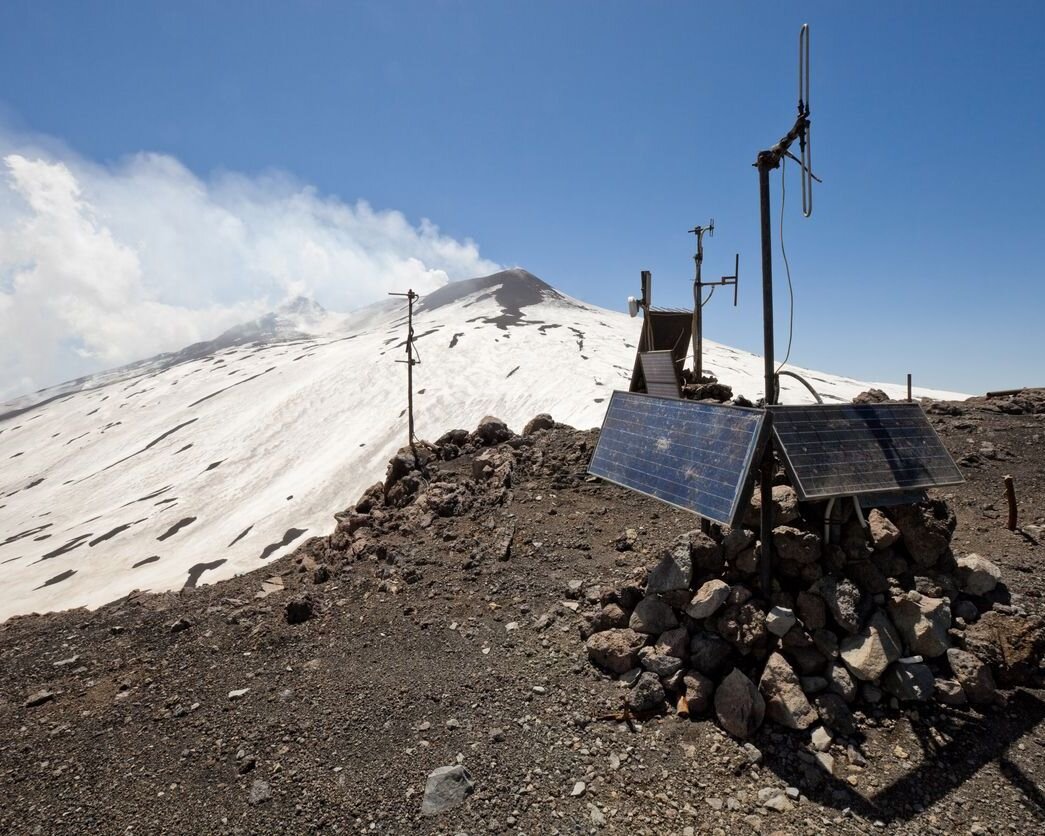
A seismograph transmitting vibrations of erupting volcano
An EMPIR project that demonstrated first traceability for extremely low-frequency sound and vibration measurements has published a good practice guide
The careful monitoring of low frequency sound and infrasound can detect extreme events, such as earthquakes, tsunamis or volcanic eruptions. The International Monitoring System (IMS) also use monitoring stations to detect nuclear explosions and hence check compliance with the provisional Comprehensive Nuclear-Test-Ban Treaty (CTBT), outlawing further testing of nuclear weapons.
However, at the start of 2018 many detection systems lacked supporting calibration and traceability to the International System of Units, (the SI). This was addressed by the now completed EMPIR project Metrology for low-frequency sound and vibration (19ENV03, Infra-AUV) which represented the first consolidated attempt to address the needs identified across three technologies in this area – airborne acoustics, seismology and underwater acoustics.
The consortium has now published a good practice guide on traceability for seismo-acoustic and hydroacoustics sensor systems deployed in IMS networks.
The guide, whilst aimed at the International Monitoring System and its observation stations, is also organised by technology, with stand-alone sections for Seismic, Infrasound and Hydroacoustic sensor systems. The full traceability and calibration chain is described for each – from primary realisation methods to those that can be implemented in the field.
With input from all project partners each technology used is detailed with emphasis on the newly developed calibration facilities on primary and secondary laboratory calibration and their on-site counterparts.
Three case studies are described in the guide each illustrating the benefits that serve to inform deployment strategies. These include:
- Clarity in the resulting uncertainty in field parameters derived from the measurement data, through analysis of the propagation of measurement uncertainty.
- New capabilities to detect defects in sensor system components, and even correct for such occurrences in post-processing.
- A demonstration of the feasibility of an on-site calibration method developed for one technology being successfully applied in another.
- Optimisation of the number of reference sensors that can adequately cover an entire sensor array.
For the first time in the world, thanks to the Infra-AUV project, traceability for extremely low-frequency sound and vibration measurements has been established.
Dr Bruns (PTB) who coordinated the project said about the guide:
“This document sums up more than three years of intensive research and development effort and we hope it will provide a significant gain for data quality for the whole field of geoscientific measurements.”
This EMPIR project was co-funded by the European Union’s Horizon 2020 research and innovation programme and the EMPIR Participating States.
Want to hear more about EURAMET?
Sign up for EURAMET newsletters and other information
Follow us on LinkedIn and X/Twitter
Information
- EMPIR,
- Environment,
- EMN Climate and Ocean Observation,
- TC-AUV,
Developing new standards to accelerate the use of microfluidic devices in medical and pharmaceutical applications more

The EMN created task groups and hosted the first meeting of the stakeholder council more
The European Metrology Network for Energy Gases presents its members: this time it is BAM, The Bundesanstalt für Materialforschung und -prüfung more

Call for proposals is now open – deadline for submission is 23:59 CEST on 30 September 2024 more

The open-source software streamlines analysis and visualisation of light exposure data measured using wearable devices more