integrated metrology community.

News
EMPIR project raises awareness of air pollution and presents metrological solutions
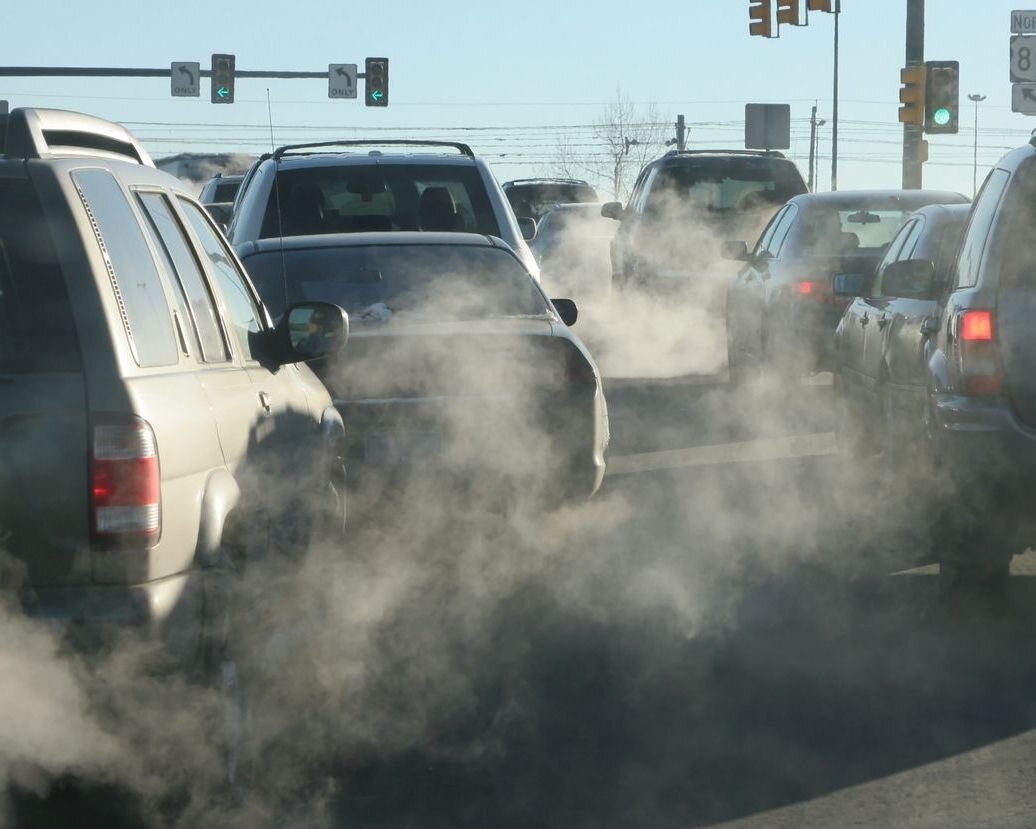
At an intersection in Denver, Colorado, exhaust pours out of tailpipes from accelerating vehicles onto Santa Fe Drive
The project held several talks at key conferences, including the French aerosol congress, and hosted a calibration workshop for pollen monitors
The project
Air pollution is caused by both anthropogenic and natural sources and can result in serious health and environmental issues. Aerosol metrology studies the measurement of air pollutants. Traceable and accurate measurement systems of aerosols are essential for the development of public health measures and the enforcement of current regulations. Completed EMPIR project Advanced aerosol metrology for atmospheric science and air quality (19ENV08, AEROMET II) aimed to further improve the meteorological network surrounding aerosols and air pollution. Building on the previous project Aerosol metrology for atmospheric science and air quality (AEROMET, 16ENV07), AEROMET II developed monitoring instruments, researched the chemical characterisation of ambient aerosols, as well as developed the following calibration guides, datasets and reference materials:
Guide:
- Quantification of element mass concentrations in ambient aerosols by combination of cascade impactor sampling and mobile total reflection x-ray fluorescence spectroscopy.
- The article ‘Calibration of optical particle size spectrometers against a primary standard: Counting efficiency profile of the TSI Model 3330 OPS and Grimm 11-D monitor in the particle size range from 300 nm to 10 μm’
Dataset and reference materials:
- Digitized Raw Output Signals of a Low-cost Aerosol PM Sensor Sharp GP2Y
- Raw data from Incineration Ash-Inter Comparison Results for Metal Concentrations by ICP-mS method
- TXRF and TXRF-XANES data for characterization of unique aerosol pollution episodes in urban areas
- Dataset: Reliable compositional analysis of airborne particulate matter beyond the quantification limits of total reflection X-ray fluorescence
- The corresponding dataset for the guide detailing calibration of optical particle size spectrometers against a primary standard
- Dataset for ‘Quantification of element mass concentrations in ambient aerosols by combination of cascade impactor sampling and mobile total reflection x-ray fluorescence spectroscopy’.
Dissemination activities
Throughout the lifetime of the project, project partners participated in dissemination activities, including:
- Partners publicised the project results at the 5th HAAR Summer School 2023 at the Navarino Environmental Observatory (NEO) in Messinia, Greece. The summer school was scheduled over seven days in June 2023 and the programme was titled ‘Theory and practice of aerosol chemistry and engineering for climate, air quality, emissions and health effects’.
- Project partner METAS hosted a calibration workshop for automated pollen monitors in Bern, Switzerland.
- The project also organised a hybrid workshop co-hosted by RISE and Lund University titled ‘Welcome to a workshop on soot! Black Carbon (Soot) Air Pollution – Measurement, Sources, Fate, and Regulation’ on 26 of April 2023.
- AEROMET II organised a dedicated session at the French Aerosol congress CFA 2023 where the project organised four talks.
The project coordinator Burkhard Beckhoff (PTB) comments on the success of AEROMET II:
“The AEROMET II project has successfully improved a number of different dimensional (microphysical) and analytical measurement techniques with respect to their traceability to the SI system and associated uncertainty budgets. The development-oriented and interdisciplinary work within this project has contributed to the evaluation of the quantification quality of aerosol measurement instruments and is being continued in further European research projects on aerosol measurement technology.”
This EMPIR project is co-funded by the European Union's Horizon 2020 research and innovation programme and the EMPIR Participating States
Want to hear more about EURAMET?
Sign up for EURAMET newsletters and other information
Follow us on LinkedIn and X/Twitter
Information
- EMPIR,
- Environment,

Higher performance optical-based methods to serve the humidity measurement supply chain more

Developing the instruments and software required to enable industrial use of high-speed scanning technology more
Solar panels in locations such as urban areas need to have their shade sensitivity quantified more

More than 40 presentations will be made by EMPIR and Partnership projects at this year’s conference more
An EMPIR project supported the European Metrology Network for Climate and Ocean Observation – focusing on reliable metrology in this important area more