integrated metrology community.

News
EMPIR project publishes technical standard extending magnetic field measurements to the micro scale
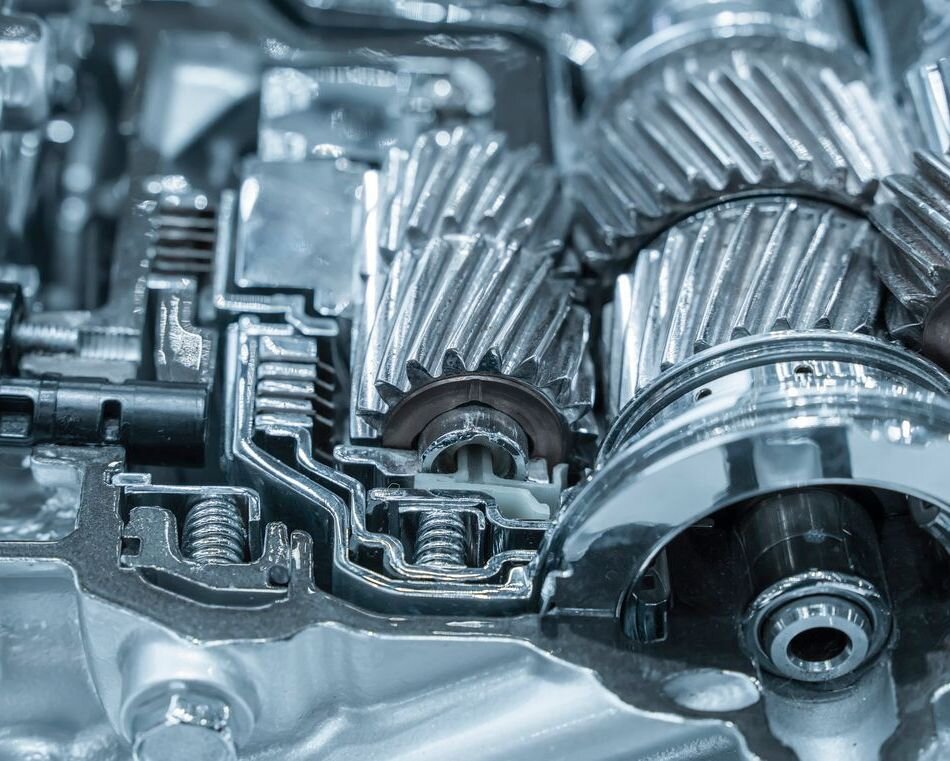
Automotive transmission gearbox
Access to markets that demand quality-assured magnetic materials has been constrained by gaps in the ranges of options for reliably characterising micro-magnetic materials. Manufacturers of electrotechnical products and developers of nanotechnologies could choose to use quantitative Magneto-Optical Indicator film measurement (qMOIF), a fast, high-resolution imaging technique, that suits samples sized up to several centimetres squared and rough samples. The method works in harsh environments and does not require costly and time-consuming surface treatments.
While commercial offerings perform well within limited ranges of scale; a size gap in provision existed: only flat samples at about 100 nm could be measured and only accurately at centimetre-scale, whereas industrial magnetic materials tend to be in the millimetre or centimetre range and have rough rather than flat surfaces.
The earlier EMPIR project NanoMag validated and standardised quantitative magnetic force microscopy, a technique to image magnetic field distributions on the few micro-metre to nanometre-scale, but a gap remained at the microscale, prompting the International Electrotechnical Commission (IEC) to request industrially relevant specifications on the use of qMOIF.
Completed EMPIR project Standardization of a quantitative Magneto-Optical Indicator Film based magnetic field measurement technique (20SIP04, qMOIF) addressed the metrological gap present at the micro scale in quantitative Magneto-Optical Indicator film measurement.
Project achievements
Project achievements include:
- Performed a round robin on magnetic measurements
- Developed terminology Magnetic field measurements with magneto optical indicator films (MOIF): Terms and Definitions, Key Control Parameters (KCPs) and typical values
New technical standard
Based on the work of this project, a new technical standard has been published:
Now, for the first time, standardised measurements of magnetic fields will be viable for macroscopic objects from millimeter down to microscale features, opening up opportunities for developing smaller, faster and higher-performing magnetic sensor and magnetic materials. This will present innovation opportunities, for example in the automotive sector and for high-quality electrical steel sheets as used in generators and transformers for low-loss electrical energy conversion.
Hans Werner Schumacher from PTB, Germany said
‘The IEC standard developed within the EMPIR qMOIF project is a major step to underpin the reliability of magnetic measurements on the micro scales with wide impact on industrial applications.’
This EMPIR project is co-funded by the European Union's Horizon 2020 research and innovation programme and the EMPIR Participating States.
Want to hear more about EURAMET?
Information
- EMPIR,
- SI Broader Scope / Integrated European Metrology,
- EMN Advanced Manufacturing,

Developing a metrologically-based field assessment of glare and obtrusive light more
Standardising industrial procedures for the magnetic properties of devices leading to the improved quality of a wide variety of products more
Implementing quantum-based pressure measurement techniques in European industries more

Developing reference materials for mass spectroscopy to monitor radioactive and stable isotope pollution in the environment more

Development of the metrological network needed to realise and implement 6G technology more