integrated metrology community.

News
EMPIR project gives first access to algorithms used for MR-based EPT
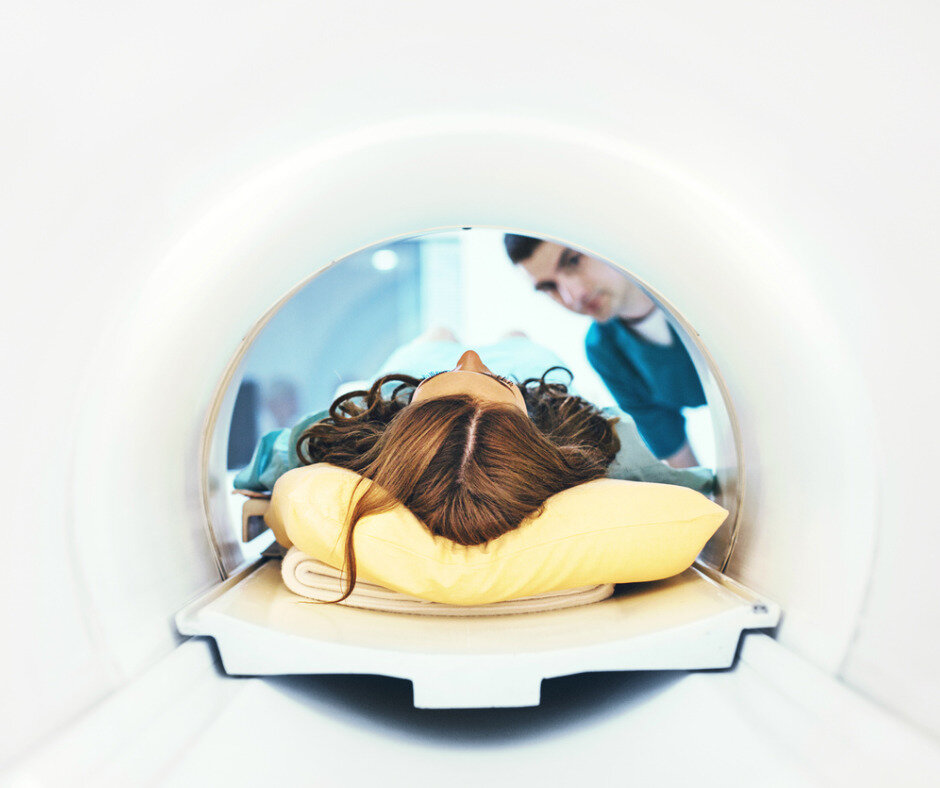
MRI scan
Assessing new MRI technologies using quantitative methods for more accurate clinical diagnoses
The project
Magnetic Resonance Imaging (MRI) is a commonly used medical scanning technique. Standard MRI scans are typically qualitative, requiring visual inspection to identify diseased tissue. Variation in subjective interpretations of images means diagnostic accuracy could be improved using quantitative analysis. MRI imaging techniques such as Electric Properties Tomography (EPT) and Magnetic Resonance Fingerprinting (MRF), could herald a ‘quantitative revolution’ in MRI. However, these technologies require validation before use in clinical diagnosis.
European Metrology Programme for Innovation and Research (EMPIR) project Quantitative MR-based imaging of physical biomarkers (18HLT05, QUIERO) is working to evaluate emerging and complementary EPT and MRF techniques, to develop quantitative MRI analysis for more accurate disease diagnostics. Algorithms for performing EPT and MRF, decoding the information hidden in the data collected during MRI, will be developed and improved, with performance validated using fully characterised, International System of Units (SI) traceable, ‘phantom’ reference artefacts and monitored components. Diagnosis of high impact clinical conditions (such as heart conditions) with these new techniques will be assessed, and results disseminated to end-users such as MRI manufacturers and the medical community.
Publication of EPT algorithms – first ever open access
The project has published an extensive, open-source library, collecting the EPT methods that are under study within the project. Named EPTlib, this initiative for the first time ever gives open access to the methods and aims to facilitate the spread of EPT within the scientific community, to enable a possible future integration into clinical practice. EPTlib is available via the new EMTP Hub, which aspires to become the main hub for the community working on the quantification of electric and magnetic properties of tissues via MRI.
Shortly after its publication, EPTlib was used in EMPIR project Advancing measurement uncertainty - comprehensive examples for key international standards (17NRM05, EMUE). In this project EPTlib played the role of a computational ‘engine’ in the evaluation of the uncertainty associated with the repeatability of EPT experiments. Such a result, in turn, provides helpful feedback for the further development of EPTlib itself.
Project Coordinator Luca Zilberti from INRIM said ‘Quantitative MRI techniques, like EPT and MRF, transform each pixel of the tomographic image into the objective quantification of some physical parameter that may act as a biomarker. Our work, performed in a metrological perspective, not only provides this quantification, but complements it with the measurement uncertainty, which plays a fundamental role to assess the reliability, and therefore the effectiveness, of these new diagnostic tools’.
Forthcoming workshops
An oral session dedicated to QUIERO will be featured at the online Mathematical and Statistical Methods for Metrology workshop, MSMM 2021, to be held on 31 May – 1 June 2021.
In addition on the next World Metrology Day, which is 20 May 2021 INRIM is organising a whole day of virtual workshops devoted to research in the health sector. The event will be held at a national level (in Italian).
Part of the work developed within the QUIERO project will be presented during a dedicated session of the Joint Workshop on MR Phase, Magnetic Susceptibility and Electrical Properties Mapping planned for 2022 in Lucca (Italy).
This EMPIR project is co-funded by the European Union's Horizon 2020 research and innovation programme and the EMPIR Participating States.
Want to hear more about EURAMET?
Sign up for EURAMET newsletters and other information
Follow us on LinkedIn and Twitter
Information
- New compendium of examples on measurement uncertainty available
- Work of an EMPIR project contributes to EMN Mathmet training and JCGM publications
- EMPIR project releases video summarising metrology on new Magnetic Resonance techniques
- EMPIR project on Magnetic Resonance Imaging continues to have impact
- EMPIR,
- Health,

Developing a metrologically-based field assessment of glare and obtrusive light more

Standardising industrial procedures for the magnetic properties of devices leading to the improved quality of a wide variety of products more
Implementing quantum-based pressure measurement techniques in European industries more

Developing reference materials for mass spectroscopy to monitor radioactive and stable isotope pollution in the environment more

Development of the metrological network needed to realise and implement 6G technology more