integrated metrology community.

News
EMPIR project develops measurement methods to support a sustainable hydrogen storage infrastructure
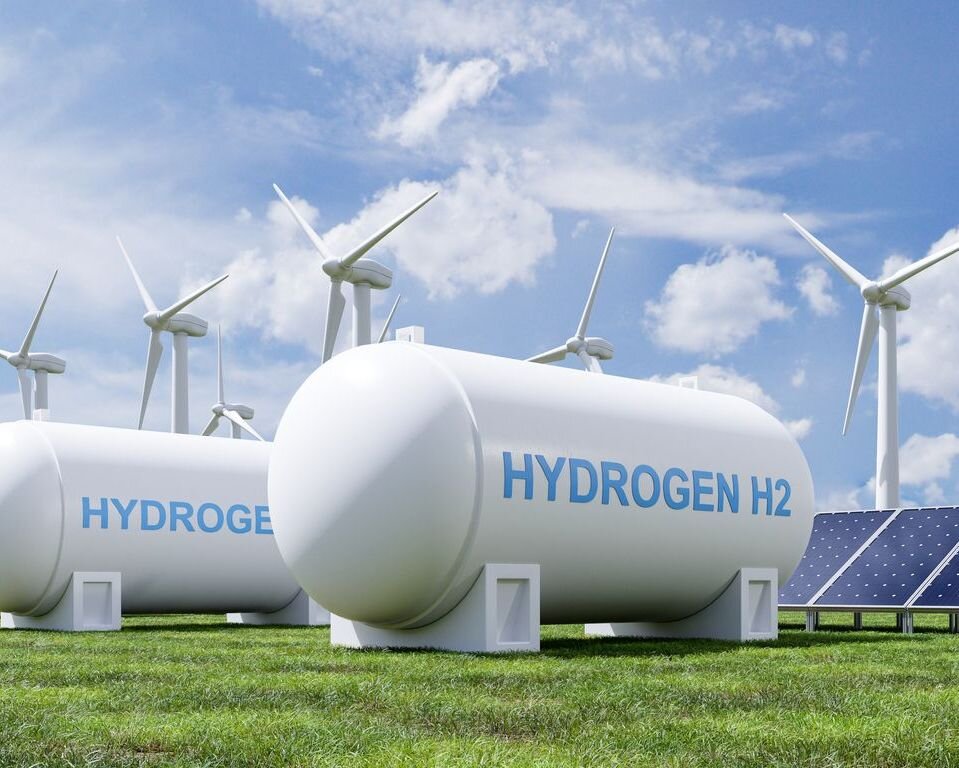
Hydrogen energy storage gas tank
Advancing the large-scale energy storage which is required for a shift to renewable energy supply
The project
Hydrogen offers the potential to be a major contributor to helping achieve the EU target of deriving 32 % of Europe’s energy usage from renewable sources by 2030, especially as it may impose less disruption to existing supply infrastructures than alternatives.
As hydrogen fuels can be stored, it could support take-up of other, more fluctuating, renewable energy sources. However, important metrology remains to be defined in the hydrogen storage market: energy conversion processes lack traceability to standards for accurate billing and quality control, while potential safety issues remain unaddressed.
Completed EMPIR project Metrology for Advanced Hydrogen Storage Solutions (19ENG03, MefHySto) developed standards-based solutions to support the development of advanced hydrogen storage technologies.
Key outputs of the project were:
- Evaluation of the quality of the hydrogen produced and improvement of the reference state equations used for modelling the hydrogen feed
- Investigation of the sustainability and reliability of fuel cells whose performance is affected by impurities in the hydrogen
- Development of validated and harmonised methods for hydrogen storage
- Consideration of metrological and thermodynamic issues in the large-scale storage of hydrogen in underground gas storage facilities and in the conversion of existing underground gas storage facilities from natural gas to hydrogen
Impact
- An analytical instrument (the ITEX-DHS-GC-MS) was adapted by the Universidade da Coruña (UDC) to analyse up to 39 volatile compounds, to assess their effect on fuel cells, has found further use/further adapted for monitoring atmospheric pollutants directly from coal-powered stations.
- Two project partners DBI and DVGW are actively involved in converting caverns in Bad Lauchstädt and Huntorf in Germany to store hydrogen. The measurement technology investigated in MefHySto is also being used there to assess oxygen and water contamination of hydrogen. The gas chromatographs investigated are also being used for hydrogen control. The thermodynamic results are being incorporated into a study by the German Society for Sustainable Energy Carriers, Mobility and Carbon Cycles (DGMK), which is investigating changes in hydrogen during storage.
- DBI is also involved in a large hydrogen project, building a gas treatment plant at Bad Lauchstädt.and measuring hydrogen quality at several points which is incorporating the findings from MefHySto. The measurement findings have been implemented in the German project ‘Energiepark Bad Lauchstädt’. https://energiepark-bad-lauchstaedt.de/en/. This is a production-scale real-life laboratory for the intelligent production of green hydrogen and its storage, transport, marketing and use. This real-life laboratory is testing the entire value chain of green hydrogen on an industrial scale for the first time
- The results are currently being incorporated into the standardisation work involving ISO/TC 158/JWG 79.
Project coordinator Dirk Tuma from BAM said
‘In my opinion, the success of MefHySto originates from the project’s holistic conception. The project partners came both from industry and academia and the work successfully addressed the entire hydrogen supply chain at an outstandingly professional level. The introduction of hydrogen as part of the shift to fossil-free energy will strongly benefit.’
This EMPIR project is co-funded by the European Union's Horizon 2020 research and innovation programme and the EMPIR Participating States.
Want to hear more about EURAMET?
Information
- EMPIR,
- Energy,
- EMN Energy Gases,

Enabling production of more reliable data and more rigorous assessments of climate change and variability more
The Spanish National Metrology Institute is an active member of the European Metrology Network (EMN) for Energy Gases more
Advancing the large-scale energy storage which is required for a shift to renewable energy supply more

Lowering measurement uncertainty and improving SI-traceability more

Stage 1 of the 2026 Call under the European Partnership on Metrology is open to submit potential research ideas more