
Establishing metrology standards in microfluidic devices II
Short Name: MFMET II, Project Number: 24NRM03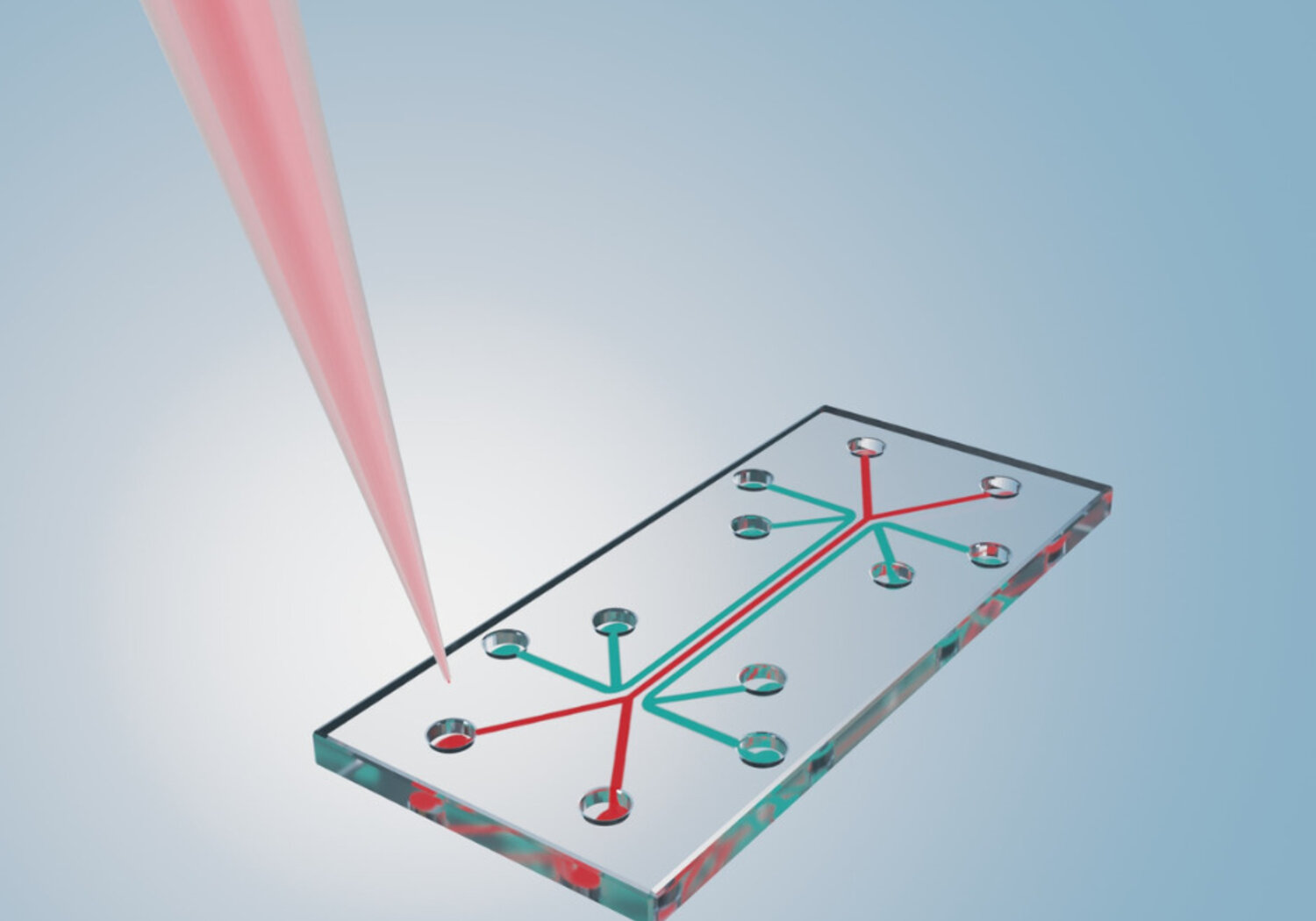
Developing metrology for microfluidic organ-on-chip devices
Microfluidic devices deal with fluids at the nano-to-millimetre scale and are used in applications from chemical analysis to healthcare. As microfabrication techniques have improved, organ-on-chip devices have emerged as a cost-effective method for medical diagnosis. They have also been identified as a tool in replacing the use of animal testing – one of the ‘three Rs’ (Replacement, Reduction and Refinement) considered in humane experimental testing.
By 2030, the market for organ-on-chip devices is predicted to grow to €1.6 billion. However, there has been a lack of standardisation for organ-on-chip devices and manufacturers have developed systems without the ability to validate performance, material compatibility or safety. This has impeded the implementation, innovation and development of microfluidics and negatively affected the reproducibility and comparability of results.
EMPIR project MFMET, defined the initial metrological challenges for microfluidics, creating specifications and guidelines for accurate and reproducible measurements. During the project, it became apparent that further work was required to address the need for metrological validation, including for particle-laden flows, to characterise the system performance and to ensure compatibility between components from different manufacturers.
This project will develop new standard procedures to characterise microfluids, including particle-laden flows, flow resistivity and total volume, in microfluidic devices and organ-on-chip applications. It will develop protocols to integrate sensors, actuators and other components, supporting sterilisation, material/medium interface characterisation and prevention of contamination. It will also define standards and guidelines for quality control, validation and characterisation of microfluidic systems, and develop and validate a new integrated microfluidic system to act as a transfer standard. The project’s work will help to accelerate and improve the use of organ-on-chip devices, replacing reliance on animal testing.