integrated metrology community.

News
Metrology Partnership project on standardisation of hydrogen fuel sampling successfully completed
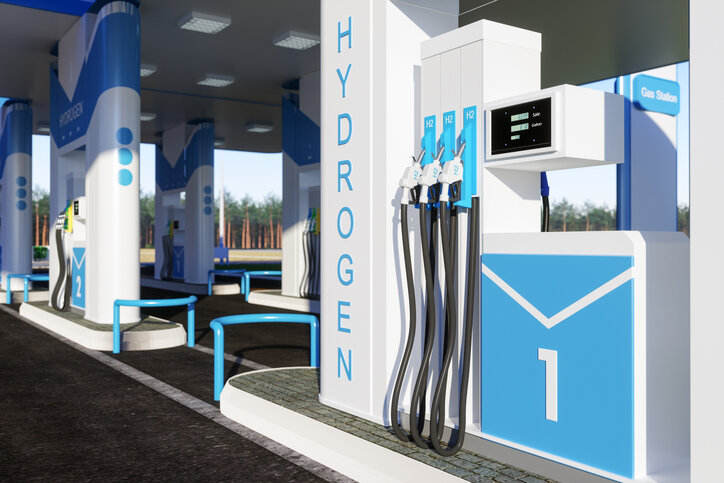
Hydrogen refuelling station
Improving hydrogen refuelling stations for heavy-duty transport to cut carbon dioxide emissions
Hydrogen can play a key role in reducing emissions in the transport sector, particularly for long-haul heavy-duty vehicles. However, wider adoption requires further standardisation. To ensure the gas quality of the hydrogen meets requirements, reliable sampling of the gas at refuelling stations is crucial. While sampling systems previously existed for light-duty vehicles, there was limited evidence for heavy-duty applications.
Recently completed Metrology Partnership project Metrology to support standardisation of hydrogen fuel sampling for heavy duty hydrogen transport (22NRM03, MetHyTrucks) addressed this gap by developing:
-
sampling systems for gaseous species and particulates adapted to HD conditions
-
validation protocols for sampling systems
-
sampling representativeness guidelines
-
uncertainty assessments for sampling
-
safety and venting protocols
Publications available as a result of the work of the project include:
-
Validation protocol for hydrogen sampling systems used at hydrogen refuelling stations (HRS), ensuring collected samples are representative for purity analysis according to standards such as EN 17124 and ISO 14687: Report on the development, comparison and validation of sampling systems (using back-to-back sampling and repeated sampling)
-
Good practice guide for hydrogen venting during heavy duty sampling exercises: Good practice guide on the validation of sampling systems at HD-HRS
-
Hydrogen sampling strategies developed in the project: Report on the development of four reference methods/systems including implementation of sampling systems for hydrogen quality assessment
-
Guidelines for achieving representative hydrogen sampling at heavy-duty refuelling stations by addressing key influencing factors and including methods to quantify the uncertainty associated with sampling: Guidelines for representative sampling at HD-HRS, including the minimum sample size, the filling pressure and the evaluation of the uncertainty (target 10 % relative)
The results were disseminated to standardisation bodies including ISO/TC 197 Hydrogen technologies and CEN/TC 268 Cryogenic vessels and specific hydrogen technologies applications.
Project coordinator Karine Arrhenius from RISE said
‘MetHyTrucks delivered the first comprehensive technical evidence base for standardising hydrogen fuel sampling in heavy-duty transport, including validated methodologies, uncertainty evaluation, and identified challenges related to dynamic refuelling conditions.’
In addition to supporting long-term climate change targets, hydrogen buses and heavy-duty vehicles will improve air quality and provide health benefits as only water is emitted from the tailpipes; this will prevent people from breathing in carbon dioxide and carbon monoxide emissions, and it will reduce the frequency of pollution peaks.
This Metrology Partnership project has received funding from the European Partnership on Metrology, co-financed by the European Union Horizon Europe Research and Innovation Programme and from the Participating States
Want to hear more about EURAMET?
Information
- European Partnership on Metrology,
- Standardisation,
- EMN Energy Gases,
- TC-MC,
Improving sources of single photons to accelerate quantum technology innovation more

Assessing new MRI technologies using quantitative methods for more accurate clinical diagnoses more

Two EURAMET funded projects help redefine the kelvin, reach the world’s lowest temperature measurement uncertainties and demonstrate a new way to meas... more

An award winning EMPIR project in the field of small current measurements is making impact in many diverse areas more

Project consortium organises session on atmospheric gases and particles more