integrated metrology community.

News
Videos and good practice guides on assessing glare and obtrusive light
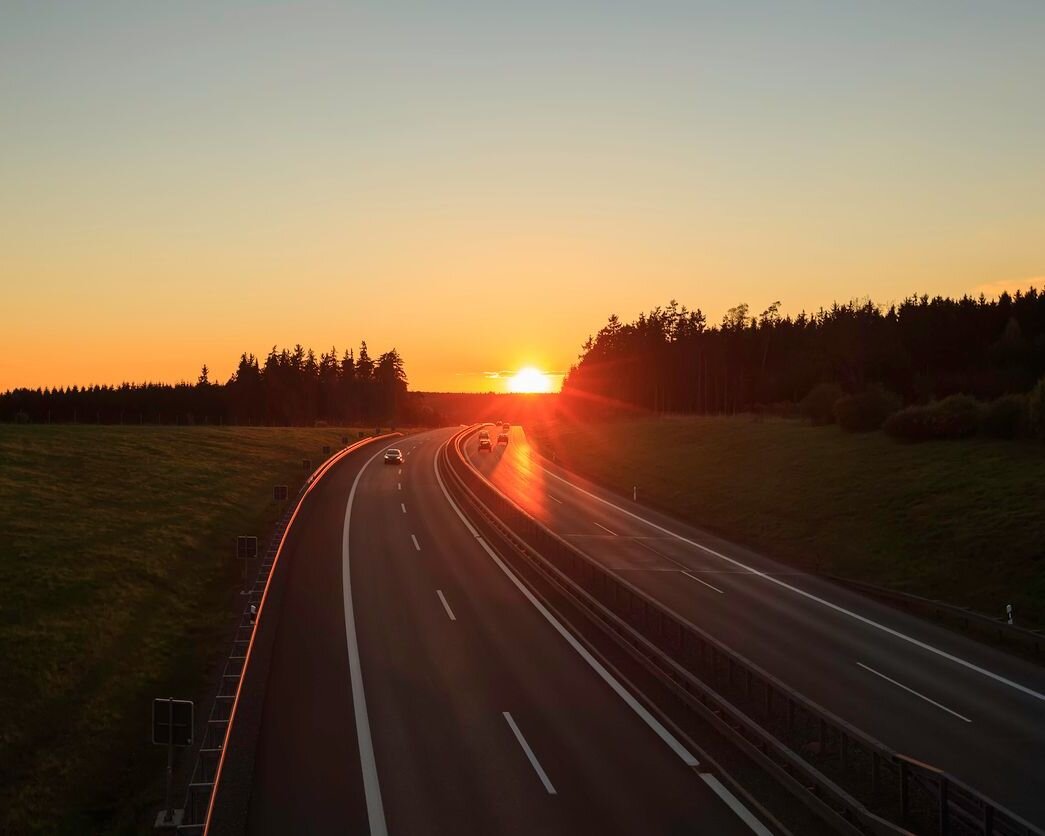
Motorway at sunset
Developing a metrologically-based field assessment of glare and obtrusive light
The complexity of the human visual system allows adaptation to extremely dark and bright lighting conditions. Due to its very large dynamic range for brightness perception (11 orders of magnitude of luminance values), humans can safely and comfortably navigate the world and perform tasks involving vision in lighting environments with very high luminance contrast. However, some lighting environments such as those with high levels of glare can be disturbing for some tasks and may pose issues regarding safety. Therefore, it is necessary to study these environments and adapt them to more adequate lighting.
The evaluation of glare or obtrusive light, and other visual aspects important for safety and comfort, rely on experiments presenting a high luminance contrast. The characterisation of such scenes requires measuring instruments specifically designed for these conditions. High dynamic range (HDR) measurements preserve detail by combining several exposures of the same image.
Metrology Partnership project Support for the standardisation of luminance distribution measurements for assessing glare and obtrusive light using high-dynamic-range imaging systems (21NRM01, HiDyn) has:
- developed algorithms for generating and comparing HDR images
- modelled HDR luminance measurements
- defined requirements for traceability and inter-compatibility
- created high-contrast reference materials to characterise the dynamic ranges of commercial instruments and described them in a design guide
- developed guidelines for HDR uncertainty budgets
HDR Videos
High dynamic range device tutorial videos are available:
- A brief history of high dynamic range imaging
- Overview of the joint research project HiDyn
- Overview of LDR image merging algorithms
- Design of a high-contrast reference light source
- Characterization of imaging devices using reference light sources
- Current challenges for reliable HDR imaging for flare assessment
- Commonly used software to generate HDRs and pitfalls
These were presented at the recent HDR training workshop and include a keynote presentation about the history of HDR imaging, an introduction to the HiDyn project, a tutorial on HDR imaging, and detailed presentations of results by four partners of the consortium.
Good practice guides
The following good practice guides are available:
Good practice guide describing the characterisation of different HDR imaging instruments, such as ILMDs and RGB matrix sensor cameras, based on the recommendations stated in CIE 232:2019 and CIE 244:2021 - based on the research results and on the design of the high-contrast-luminance reference standard.
Good practice guide demonstrating the inter-comparability of HDR luminance measurements, and including guidelines on the uncertainty evaluation of traceable HDR imaging luminance measurements, glare and obtrusive light assessment (according to existing standards EN 17037:2019, EN 13201-2:2015 and EN 12464 1:2011) - based on the results from the measurement campaigns of the project.
The work of this project will enable for the first time a metrologically-based field assessment of glare, and contribute to improvements in public safety, environmental protection, biodiversity and visual comfort.
Project coordinator Johannes Ledig from PTB said
‘The project results successfully demonstrate verified methods for reliable HDR imaging luminance measurements in different lighting scenes, giving trust in glare assessment and initiating further improvement of HDR measurement devices by manufacturers’.
This Metrology Partnership project has received funding from the European Partnership on Metrology, co-financed by the European Union Horizon Europe Research and Innovation Programme and from the Participating States.
Want to hear more about EURAMET?
Information
- European Partnership on Metrology,
- Standardisation,
Work of an EMPIR project has inputted into two new OIML projects related to oscillometric blood pressure measurements more
Accurate measurement of mercury concentrations in the atmosphere is vital to protecting people and the environment from the most toxic heavy metal more
Dr Dolores del Campo, Deputy Director of the Centro Español de Metrología, the Spanish National Metrology Institute, is EURAMET’s new Chairperson more
The ITS-90 temperature scale is used worldwide but unresolved problems could have limited its useful lifespan. These have been addressed by a complete... more

A completed EMPIR project has continued to bring quantitative measurements to a widely used medical imaging technique more