integrated metrology community.

News
World Metrology Day spotlight: Radiation protection makes a difference in sustainability
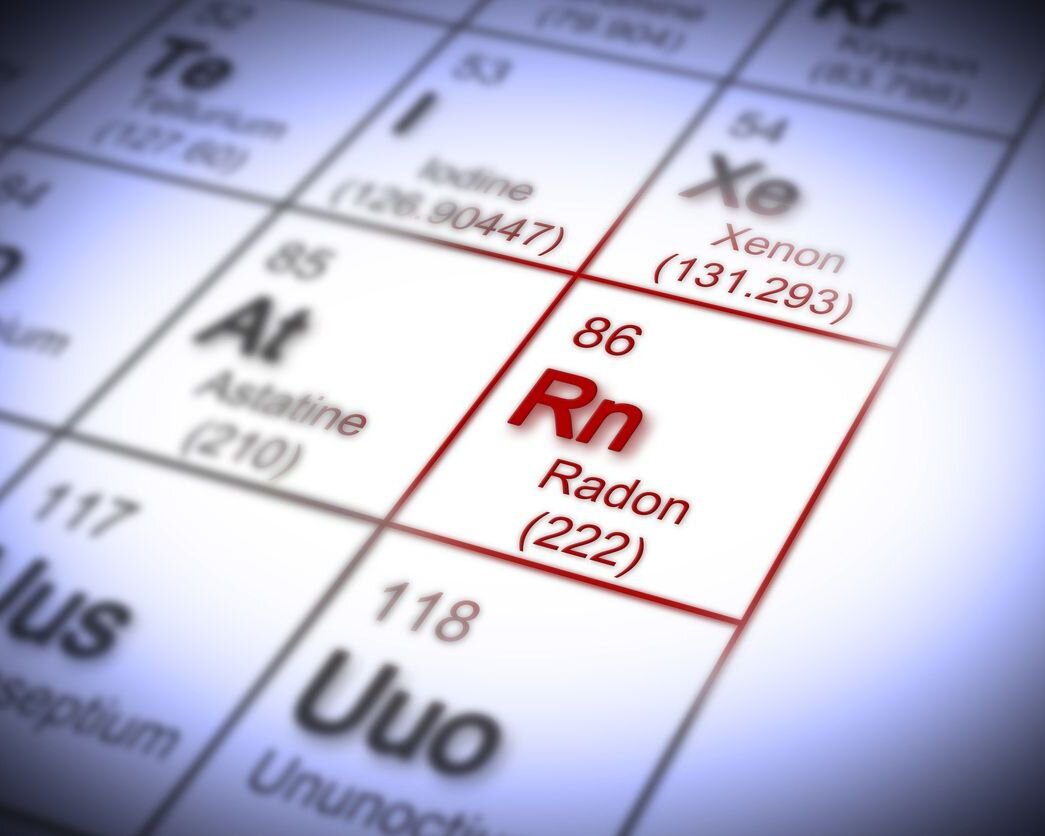
Sometimes it depends on the perspective. That's why people don't automatically think of radiation protection when it comes to sustainability – but perhaps this is a mistake.
It's time embrace new technologies, accelerate transformations, and harness innovative ideas. Above all, it is also important not to repeat past errors. There’s a well-covered topic in radiation protection that is important to the development of modern, energy-efficient buildings but has been given a completely new guise in the field of environmental measurement networks for climate monitoring: radon. Radon has always been the “bad guy” in radiation protection, causing the highest exposure by natural radioactivity – its activity concentration is considered the highest risk of lung cancer after smoking.
This bad image is well deserved: long before the discovery of radioactivity, miners died of a mysterious lung disease when they worked in tunnels containing a lot of radium-containing rock. Many centuries later, the disease was identified as lung cancer and the cause as radon exposure. It is therefore not surprising that all countries in the European Union emphasise radon protection and provide special protection for their inhabitants in the so-called ‘radon priority areas’.
However, radon isn't solely a malefactor; it also offers insights for climate observation. As a noble gas, it serves as an ideal tracer for greenhouse gas fluxes. With its help, carbon dioxide or methane fluxes from the ground can be measured and used for climate modelling. The radioactive element is a stroke of luck for climate research. Metrology has successfully provided solutions to make use of radon in climate observation while simultaneously mitigating its detrimental effect. The international attention garnered by initiatives like the joint research project 'Radon metrology for use in climate change observation and radiation protection at the environmental level' (19ENV01 traceRadon) underscores the significance of calibration, intercomparisons, instrumentation development and atmospheric modelling.
Nevertheless, this is not the end of the story. Considering the growth of buildings in large cities and the fact that the associated energy costs of air conditioning, efficient insulation and reducing air exchange are desirable. However, heavy insulation and low air exchange lead to heightened radon levels, a lesson learned through past experience at great expense. Therefore, it is a good thing that metrology seeks novel approaches to achieve sustainability ensuring energy cost reductions aren’t achieved at the expense of public health.
To measure is to know! Therefore, the upcoming joint research project 'Radon metrology: Sensor networks for large buildings and future cities' (23IND07 RadonNet) will aim to develop beyond the state-of-the-art sensors and calibration methods for a radon sensor network. These innovations are crucial not only for maintaining Europe's global competitiveness in radon mitigation but also for promoting a healthier future, free from radon-induced lung cancer.
“Radon remains a challenge: as a risk as well as an opportunity,” says Annette Röttger, Chair of the European Metrology Network for Radiation Protection, “That is why we need metrology so urgently; it creates the measure that defines the future.”
Sustainability requires holistic consideration. Radon transcends the dichotomy of good and bad guy; instead, we utilise all its facets and think about radon protection for the cities of tomorrow!
Want to hear more about EURAMET?
Information
- Philippa Flanagan-Smith
- World Metrology Day,
- EMN Radiation Protection,

Developing a metrologically-based field assessment of glare and obtrusive light more
Standardising industrial procedures for the magnetic properties of devices leading to the improved quality of a wide variety of products more
Implementing quantum-based pressure measurement techniques in European industries more

Developing reference materials for mass spectroscopy to monitor radioactive and stable isotope pollution in the environment more

Development of the metrological network needed to realise and implement 6G technology more