integrated metrology community.

News
Toxicological effects of air pollution - EMPIR project publishes paper
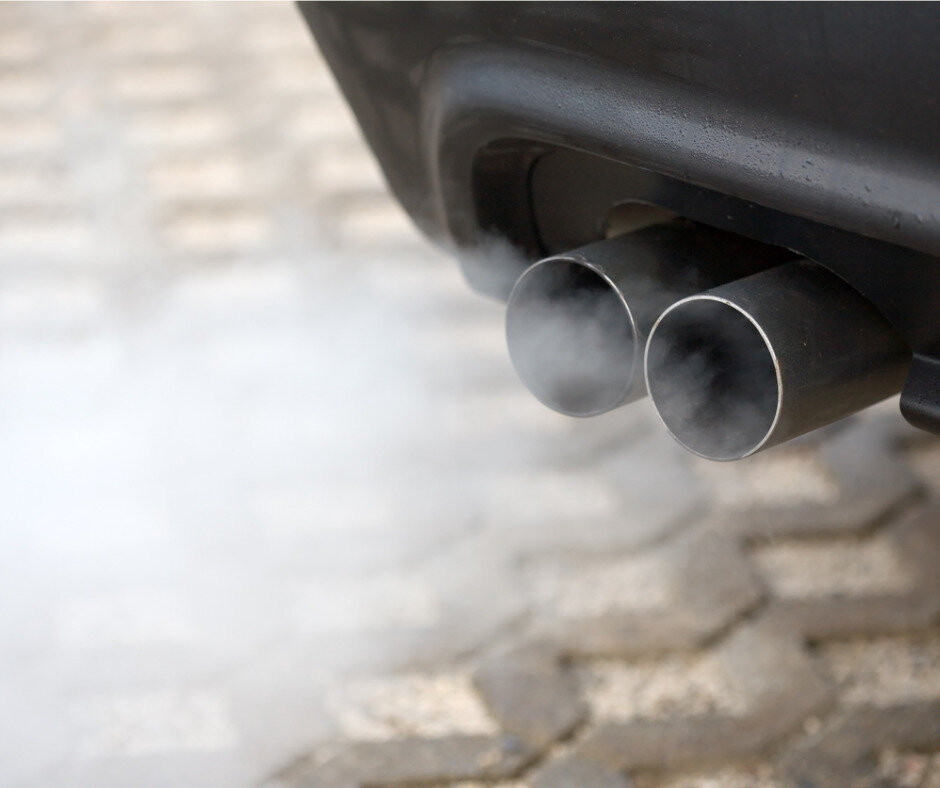
Combustion aerosol released from a car exhaust pipe
The paper grants new insights into the effect of air pollution on human health
The project
Particulate matter (PM) has been linked to hundreds of thousands of deaths across the EU every year, as well as health issues including cardiovascular disease, cancer and dementia. Atmospheric PM has typically been characterised by the mass concentration of PM10 and PM2.5 (PM with diameters below 10 µm and 2.5 µm) but this does not capture the various chemical properties of different PM components within aerosol samples and doesn’t reveal information about the toxicologically important contributions of ultrafine particles (<100 nm), which are of negligible mass.
EMPIR project ‘Measurements for mitigating adverse health effects from atmospheric particulate pollutants’ (18HLT02, AeroTox) has developed reference aerosols and new test methods to evaluate the effects of exposure to aerosol pollutants on human cells, aiming to improve air quality guidance.
Paper
A paper written by the project has been published in the journal ‘Environmental Science & Technology.’
‘Role of Secondary Organic Matter on Soot Particle Toxicity in Reconstituted Human Bronchial Epithelia Exposed at the Air-Liquid Interface’ analyses the effects of soot on the human respiratory system. Cells from the bronchial epithelium – the lining of the bronchi inside the lungs – were exposed to reference aerosols containing both fresh and aged soot particles. Soot particles in air are ‘genotoxic’ (damaging to DNA and potentially leading to cancer and other effects). Over time soot particles in ambient air undergo atmospheric ageing, i.e., they become coated with secondary organic matter (SOM), which can have further harmful effects. After exposure to the different aerosols, the cells were measured for the release of biomarkers indicating toxic effects and inflammation in order to evaluate the different effects of fresh soot cores and from the SOM that condenses around them.
Other achievements
The project has also developed a number of novel devices which have seen interest from outside of the project. Four units of a new Organic Coating Unit (OCU), an all-in-one instrument equipped for generation of secondary organic matter (SOM), have been purchased by different research institutes. Additionally, one unit of a newly developed portable aerosol mixing chamber, which enables homogenisation of various aerosol components, such as soot, inorganic species and mineral dust particles, to generate ambient-like aerosols in the laboratory, has been purchased.
Project coordinator Konstantina Vasilatou (METAS) has said about the project’s work:
“This project has used “tailored” reference aerosols, combined with high-resolution optical imaging of exposed cells and state-of-the-art cell analysis methods to study the cytotoxic effects of airborne PM in vitro.”
This EMPIR project is co-funded by the European Union's Horizon 2020 research and innovation programme and the EMPIR Participating States.
Want to hear more about EURAMET?
Information
- EMPIR,
- Health,
- EMN Pollution Monitoring,

New measurements and manipulation of single electrons for the “second quantum revolution” more
EMPIR project develops SI-traceable methods to support earlier diagnosis of neurodegenerative diseases more

Developing metrological frameworks to standardise new passive cooling materials and test them under real-world conditions more
A project establishing quantitative MRI analysis has released a short video summarising the most important results achieved more