integrated metrology community.

News
New videos introduce work of Biosphere project: Cosmic rays, UV radiation and the ozone shield

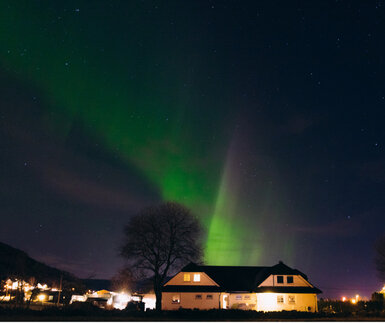
Aurora Borealis in Norway
Developing the first metrological framework to assess the impact of cosmic rays and human activity on the ozone layer
One of the most significant − yet unexplored − ecological challenges facing EU member states and beyond is the impact on human and environmental health of the increasing atmospheric ionisation caused by extra-terrestrial radiation (cosmic rays and solar UV radiation) boosted by anthropogenic emissions.
To address this, Metrology Partnership project Metrology for Earth Biosphere: Cosmic rays, ultraviolet radiation and fragility of ozone shield (21GRD02, BIOSPHERE) aims to develop the necessary tools, methodologies and measurement infrastructure needed to evaluate the mutual impact of cosmic rays and biologically active UV radiation on the Earth’s biosphere, and to support EU policy makers with scientific assessments and information that have the potential to substantially improve policies on climate, health and anthropogenic emission activities.
The project consortium has produced six videos, which give an overview of the project and explain each area of work.
Available on YouTube, the videos are:
- Project overview: Studying the impact of extraterrestrial radiation on Earth's atmosphere
- Improving cosmic ray detectors for BIOSPHERE
- Ensuring accurate measurements of extraterrestrial radiation
- Studying collisions of cosmic rays and atmospheric gases in the lab
- How does radiation from space damage human cells?
- How do solar eruptions, UV and cosmic radiation impact life and the Earth?
Project coordinator Faton Krasniqi from PTB said
‘The BIOSPHERE consortium has conducted a series of measurement campaigns and experiments to decipher how the influx of high-energy particles and solar UV radiation will affect atmospheric ionisation and human health. We recently completed our third measurement campaign, which was carried out at urban Spacepole site in Brussels, where we measured both secondary cosmic rays and solar radiation simultaneously with more than nine instruments to explore how atmospheric ionisation and its effects are encoded in these radiation fields. We have also conducted a series of experiments to investigate how these radiation fields affect cells (e.g. DNA damage and chromosome breaks) and how electrons ionise and fragment atmospheric molecules (both natural and anthropogenic). The results of these experiments are currently being analysed and papers and reports are being prepared.
However, understanding the findings of this research requires a certain amount of expertise in radiation physics, atmospheric chemistry, and biology. With these videos, we attempted to bring the core of our research closer to the general public. Here, we explain in simple terms the significance and impact of extraterrestrial radiation on the Earth's biosphere. These videos may be useful to health and environmental regulatory bodies, governmental and intergovernmental panels on climate and environmental change, and experts working in the fields of environment, climate, medicine, biology, and radiation protection.’
This Metrology Partnership project has received funding from the European Partnership on Metrology, co-financed by the European Union Horizon Europe Research and Innovation Programme and from the Participating States.
Want to hear more about EURAMET?
Sign up for EURAMET newsletters and other information
Follow us on LinkedIn and X/Twitter
Information
- European Partnership on Metrology,
- Green Deal,
- EMN Climate and Ocean Observation,
The poster was presented as part of the 2024 GAS Analysis event more

EMN-Q is collaborating with Horizon Europe Framework Partnership Agreement for the Qu-Test project and would like to promote the Open Calls launched b... more
An EMPIR project that demonstrated first traceability for extremely low-frequency sound and vibration measurements has published a good practice guide more
Developing the first metrological framework to assess the impact of cosmic rays and human activity on the ozone layer more

Supporting the use of nucleic acid measurements in the fight against pathogenic disease more