integrated metrology community.

News
New CEN standard for measurement requirements and test methods for precipitation gauges
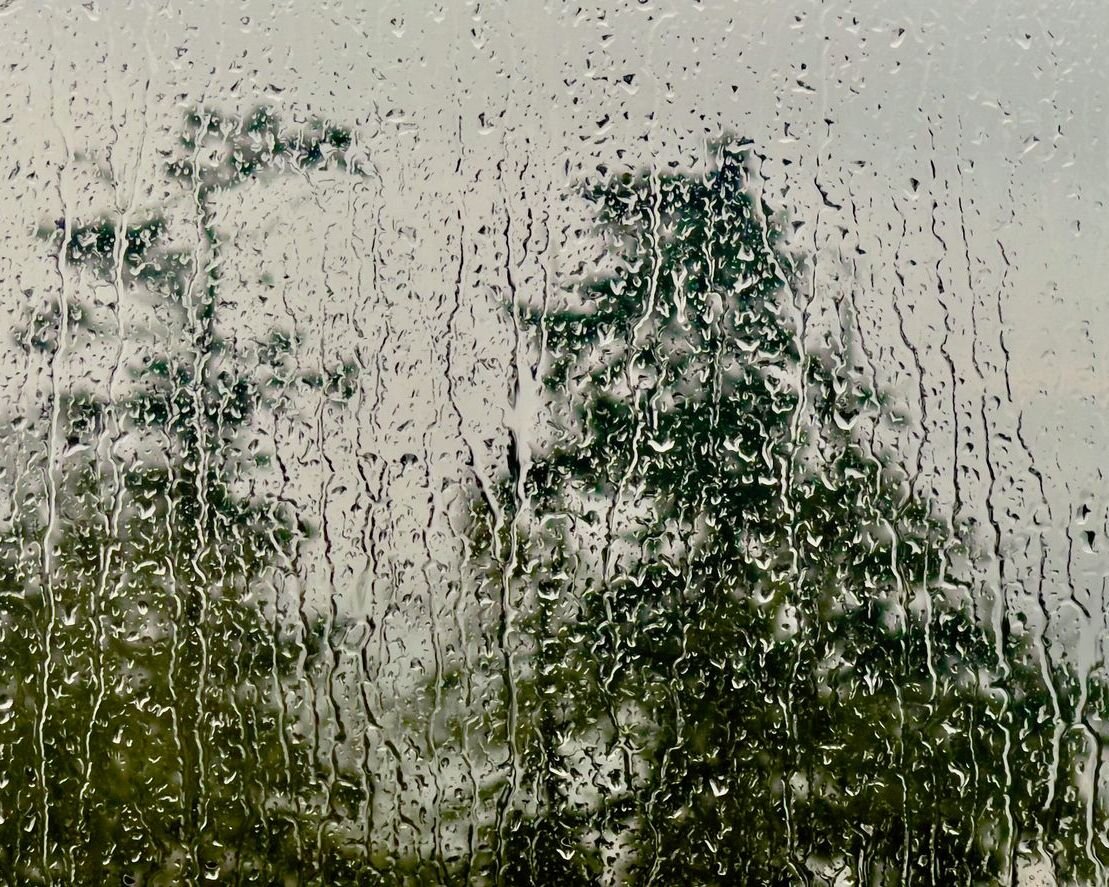
Rain on a window
Enabling production of more reliable data and more rigorous assessments of climate change and variability
Climate studies and everyday hydrological, meteorological, and agricultural applications rely on instruments which measure liquid and solid atmospheric precipitation. However, meaningful comparison and interpretation of data is only possible when a common ground for evaluating the measurement uncertainty is provided.
Atmospheric precipitation affects our everyday life and impacts on natural ecosystems, transportation, agriculture, safety, tourism and recreation. The characteristics of the precipitation depend on the weather phenomenon and climate at any specific location, such as temperature and humidity, together with the fall trajectories of individual particles which are affected by the local conditions at a site.
Non-catching precipitation gauges, which sense rather than catch the precipitation, have several advantages, including the possibility of providing additional information. However, having no funnel or bucket to collect the rainwater, non-catching precipitation gauges cannot be calibrated using a reference flow rate. Instead, the actual characteristics of the rain event have to be reproduced, including the drop size distribution, drop frequency and fall velocities. In order to support their wider use, standardised procedures for the laboratory calibration of non-catching type gauges including the use of laboratory rainfall generators are needed, together with an assessment of the associated calibration uncertainty and repeatability.
Completed EMPIR project Calibration and accuracy of non-catching instruments to measure liquid/solid atmospheric precipitation (18NRM03, INCIPIT) developed traceable calibration methods for non-catching precipitation gauges that are implemented in a form that can be incorporated into CEN/ISO standards. The results of this project offer end users with methods for standardised and traceable calibration of non-catching rain gauges, as well as with a metrologically rigorous way of evaluating and drafting an uncertainty budget for measurements comparison across different stations, climates, locations and at different times.
New CEN standard
This document considers liquid atmospheric precipitation (rain) and defines the procedures and equipment to perform laboratory tests, in steady-state conditions, for the calibration, check and metrological confirmation of non-catching rainfall measurement instruments. This document is not applicable to field performance. It provides a classification of non-catching measurement instruments based on their laboratory performance.
The classification does not relate to the physical principle used for the measurement, nor does it refer to the technical characteristics of the instrument assembly but is solely based on the instrument calibration. Attribution of a given class to an instrument is not intended as a high/low ranking of its quality but rather as a quantitative standardized method to declare the achievable measurement accuracy to provide guidance on the suitability for a particular purpose, while meeting the user’s requirements.
Project coordinator Andrea Merlone from INRiM said
‘The INCIPIT Normative project was based on the same community already involved in the ‘family’ of EMRP and EMPIR MeteoMet projects. Metrology for precipitation was addressed in the MeteoMet project. This experience and the connections established were extended in the INCIPIT project to support guidelines and standards in this fundamental area of meteorology, climatology and early warning. Non-contact systems are a growing and promising technology in different environmental measurements, and this project specifically addressed the standardisation of calibration procedures for non-catching precipitation gauges. Another great and successful interdisciplinary effort, involving Metrology Institutes and Meteorology Services in close cooperation. From the planning of systems, laboratory and field testing, data analysis, preparation of the draft standard, to the final publication, metrologists and meteorologists once again showed how working together can produce scientific advances, operational improvements and bring value to the society well beyond the value of the project’s funds.’
Luca Lanza, participant of INCIPIT, from the WMO Measurement Lead Center ‘B. Castelli’ on Precipitation Intensity, said
‘The new standard will help manufacturers and users of meteorological instruments to improve the accuracy, reliability and comparability of atmospheric precipitation measurements. Calibrated, non-catching instruments will deepen our understanding of the microphysical properties of precipitation, thereby enhancing the effectiveness of remote sensing techniques, such as radar and satellite-borne sensors. Ultimately, these improvements will benefit European citizens by enhancing practical applications such as meteorological forecasting, water resources management and climate studies.’
This EMPIR project is co-funded by the European Union's Horizon 2020 research and innovation programme and the EMPIR Participating States.
Want to hear more about EURAMET?
Information
- EMPIR,
- Standardisation,
- TC-T,

Developing a metrologically-based field assessment of glare and obtrusive light more
Standardising industrial procedures for the magnetic properties of devices leading to the improved quality of a wide variety of products more
Implementing quantum-based pressure measurement techniques in European industries more

Developing reference materials for mass spectroscopy to monitor radioactive and stable isotope pollution in the environment more

Development of the metrological network needed to realise and implement 6G technology more