integrated metrology community.

News
EMPIR project receives recognition for important contribution to thermophysical properties research
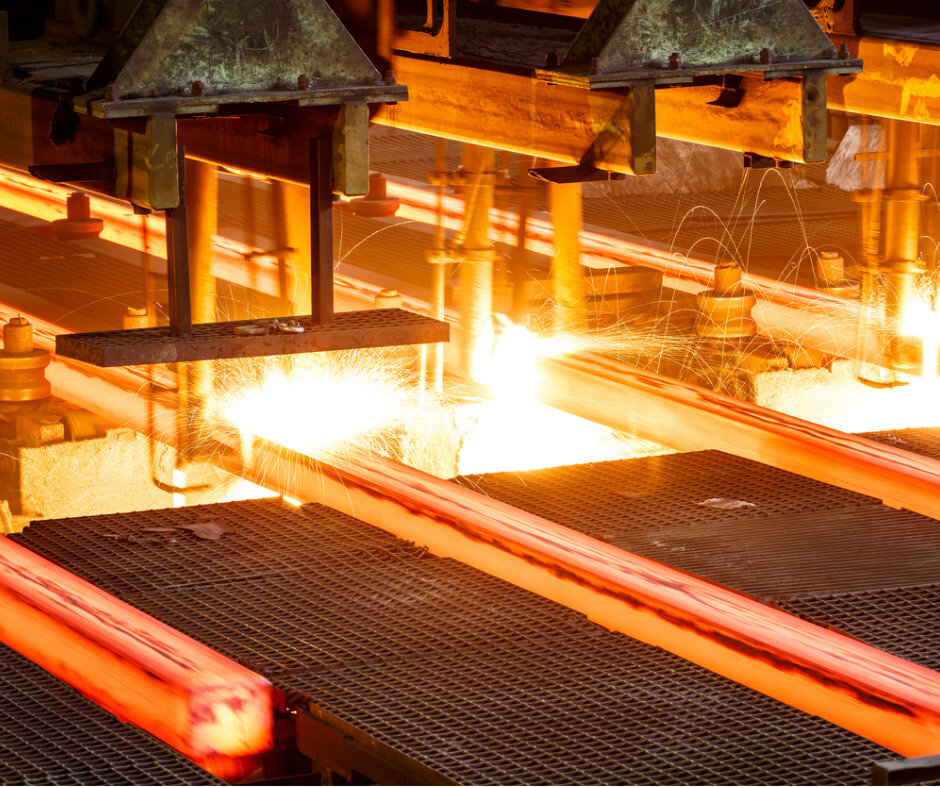
Hot steel on conveyor in steel mill
Supporting robust measurement of thermophysical properties in solid materials
The project
Some industries use new refractory materials able to operate at very high temperatures (up to 3000 °C) to optimise their processes or to expand the efficiency of particular technologies. Completed EMPIR project Industrial process optimisation through improved metrology of thermophysical properties (17IND11, Hi-TRACE) established new traceable methods for characterising the thermophysical properties of solid materials up to 3000 °C, and launched a network of reference facilities available to industry.
By supporting reliable measurement practices, the work of this project will improve the understanding of the thermal behaviour of materials at high-temperature and enable industries such as the aeronautics and energy sectors to develop novel and innovative materials.
Best paper
A paper entitled Uncertainty assessment for very high temperature thermal diffusivity measurements on molybdenum, tungsten and Isotropic graphite, which presents results obtained during this EMPIR project, has been awarded the 2023 Ared Cezairliyan Best Paper Award in recognition of an outstanding contribution to the field of thermophysics research.
The Cezairliyan Award recognises that the paper, selected from 184 published in 2022 in the International Journal of Thermodynamics, is judged to make a significant advance in the field of thermophysics. The award will be presented on the European Conference on Thermophysical Properties, on 12 September 2023, in Venice.
In addition, a paper entitled Development of high temperature multi-layer laser flash artefacts was ranked third in the 17 short-listed for selection.
Project coordinator Bruno Hay from LNE said
‘A world-unique versatile metrological facility has been designed by LNE for determining the thermal diffusivity and specific heat of solid materials up to 3000°C by laser flash method and drop calorimetry respectively. The awarded paper describes for the first time the uncertainty budgets associated with very high temperature thermal diffusivity measurements. This award represents an important recognition by international peers of the research activities performed in the field of the thermophysical properties metrology during the Hi-TRACE project’.
This EMPIR project is co-funded by the European Union's Horizon 2020 research and innovation programme and the EMPIR Participating States.
Want to hear more about EURAMET?
Information
- EMPIR,
- Industry,
- TC-T,
- EMN Advanced Manufacturing,
A new dynamic gas standard for HCl has been developed in the 1–15 nmol mol-1 range – a major cause of production loss in semiconductor manufacturing more

Brain phantoms developed by the project have helped to optimise new diagnostic methods using Magnetic Resonance Imaging more

Accelerated, accurate measurements of key proteins can be used to diagnose and guide treatment for sepsis, improving survival rates more

Novel sensor developed with support of EMPIR projects to provide accurate temperature measurements of the mesosphere and lower thermosphere more

An objects visual appearance can differ depending on the viewing angle. Modern effects require measurements not currently supported by standards more