integrated metrology community.

News
EMPIR project improves emissivity measurements
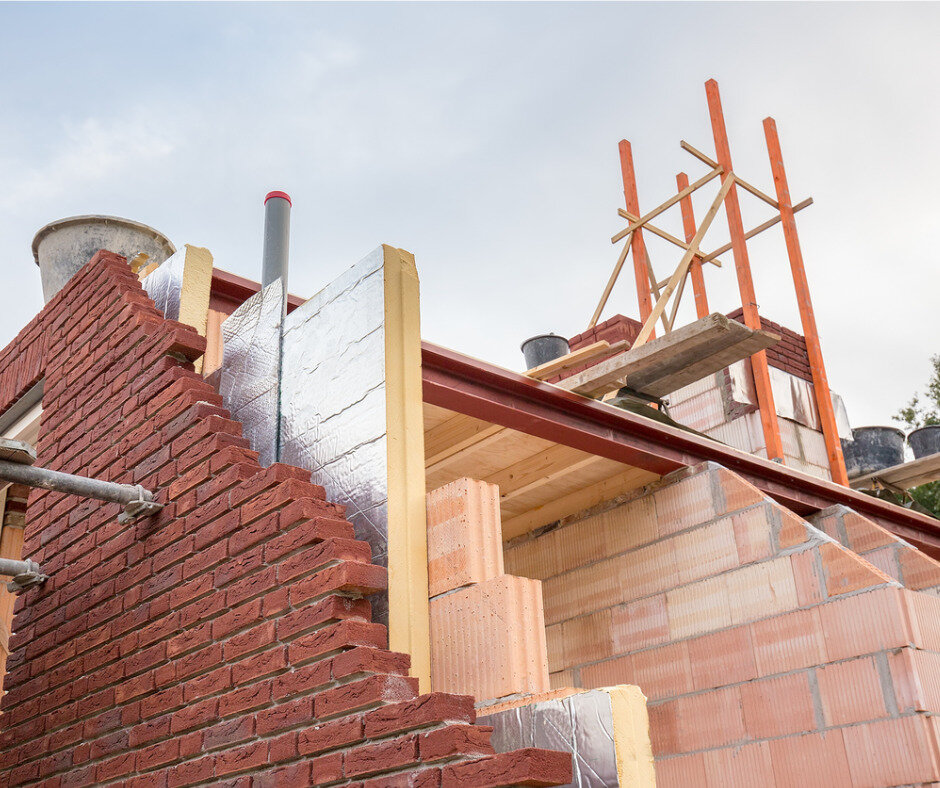
Building a new house with insulation
Research helps to ensure more reliable measurements for thermal insulation
The project
EMPIR project Improvement of emissivity measurements on reflective insulation materials (16NRM06, EMIRIM) is working to test commercial emissivity measurement techniques to understand their limitations, and improve reference techniques at National Measurement Institutes to lower uncertainties.
It will create reference samples and best practice calibration and measurement procedures which bring traceability to commercial instruments. The results will be used to propose amendments to current standards EN 16012 and EN 15976.
This work will allow developers of thermal insulation materials to perform more reliable emissivity measurements on low emissivity foils and develop higher performance products. The use of low emissivity foils, together with appropriate spaces between the surfaces, allows increasing thermal resistance of insulation products without using more insulation matter. These products will help improve energy efficiency in buildings, and support other industries which use reflective foils, including aerospace, automotive, nuclear power, and packaging.
Project progress
PTB and LNE have improved two reference emissivity measurements setups for measurement of total hemispherical emissivity of solid samples or of reflective foils. The PTB setup allows the measurement of total emissivity from a near-normal direction up to 70°, while LNE's setup measures the total hemispherical emissivity at all wavelengths and in all directions.
The comparison of the two techniques based on very different principles showed agreement within ± 0.01 for total hemispherical emissivity results on low or high emissivity solid samples and on low emissivity smooth foils.
Commercial instruments currently used by end-users allow the measurement of total emissivity for a near-normal direction only. The total hemispherical emissivity must then be extrapolated from the measurement result using theoretical extrapolation models that are applicable only for very smooth surfaces. The two reference techniques developed at PTB and LNE can be used for real surfaces under real operating conditions.
The content of a technical report presenting the main results from the project, and improved calibration and measurement procedures for commercial emissivity measurement instruments used by end-users, will be used to propose improved draft versions of standards EN 16012 and EN 15976.
This EMPIR project is co-funded by the European Union's Horizon 2020 research and innovation programme and the EMPIR Participating States.
Want to hear more about EURAMET?
Sign up for EURAMET newsletters and other information
Follow us on LinkedIn and Twitter
Information
- EMPIR,
- Standardisation,

The research will continue in a follow-on EMPIR project aiming at combined time and frequency techniques with enhanced performance more

Newspaper article on optical clocks highlights the potential for even greater precision with international time-keeping more

Research helps to ensure more reliable measurements for thermal insulation more

Are you keen to broaden your horizons by working abroad – have you considered a EURAMET Researcher Mobility Grant? more

Take part in an online questionnaire for the TC-IM’s new digitalisation-focused working group more