
Accuracy for installed flow meters
Challenge
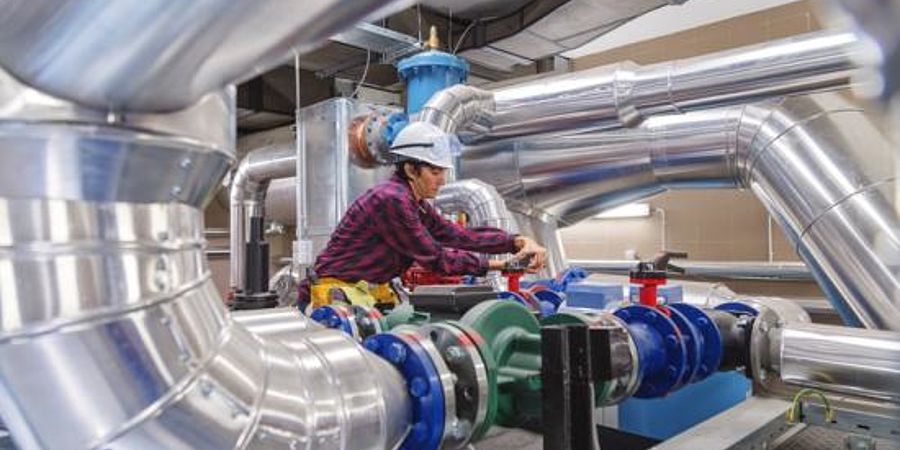
Understanding how fluids move around pipes is vital for improving efficiency and safety – whether in manufacturing processes or in the transport of commodities such as oil and gas. But fluid flow in pipes is variable which makes measuring it hard. Better models are needed to understand how bends in pipes influence fluid flow, so that reliable corrections can be made to the flow meters used to make these important measurements.
Flow meters, which measure this fluid flow, are calibrated before installation on test benches. However once installed in a system, two challenges arise. Firstly, fluid flow characteristics in complex pipe networks such as district heating systems is very different to the ideal conditions used for calibration, as for example, pipe bends cause different fluid flow rate distributions across the diameter of the pipe. Secondly, it is not easy to remove a flow meter for recalibration.
A correction factor is applied to the flow meter measurement to offset flow irregularities. This is calculated using flow simulation models, which estimate the effects of pipe direction changes, but current simulation methods involve computationally expensive processes and lack accuracy. Better methods for understanding non-uniform flow rates would allow the reliable checking and recalibration of flow meters, improving measurements, and enabling performance optimisation.
Solution
The EMRP project Novel mathematical and statistical approaches to uncertainty evaluation developed new statistical models to better estimate the effect of flow disturbance on meter measurements.
Parameters such as operating pressure, temperature and pipe layout, were measured and input into fluid flow models to generate data sets. This new and faster method provides accurate estimates of system flow rates with related uncertainties using less computer processing capacity and without compromising quality.
Impact
Optolution Messtechnik GmbH, which specialises in calibrating district heating system flow meters, has used models developed in the project to create an effective calibration tool for installed flow meters. It measures fluid flow speeds by passing laser beams through a window in the pipe near the system’s flow meter and measuring light interference caused by the fluid flow at the crossing point. By moving the beams you can scan flow speeds at different points across the pipe bore and generate the data on which fluid flow speed calculations are performed.
Using adapted versions of the project’s fluid flow rate model in their software, Optolution have determined system flow rates under the disturbed flow conditions that installed gauges routinely experience, without interrupting the systems operation. The results their lasers generate are related to the installed gauge’s measurements forming a calibration method for the installed gauge.
The introduction of the model gave Optolution sufficient confidence to apply for accreditation from DAkkS, Germany’s accreditation body and enables them to offer a certified calibration service for flow meters. Once granted, Optolution expects to expand their customer base, both in Europe and to countries around the world where heated water supply systems and district heating systems are commonplace.
Novel approaches to uncertainty evaluation
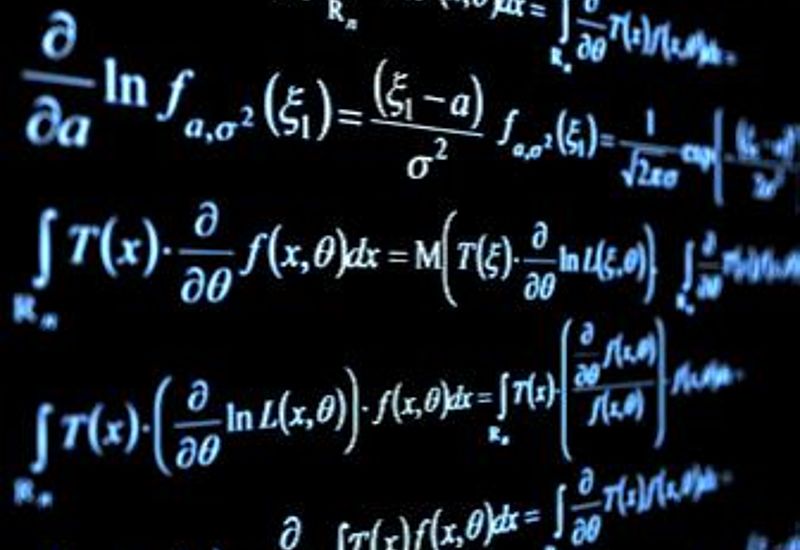
The EMRP Project Novel mathematical & statistical approaches to uncertainty evaluation, developed new robust methods to assess uncertainties for situations that are not currently covered by the Guide to the expression of uncertainty in measurement (GUM). Rigorous application of statistical and mathematical techniques generated ‘smart’ sampling to reduce computational times for processing extended data sets, and new accurate uncertainty approaches based on probability, risk assessment and decision making. Worked examples for improved product testing, safety regulations, medical diagnosis and drug testing will provide input for future GUM revisions.