Case Studies

Page 1 of 5.

Secure communications in the quantum age

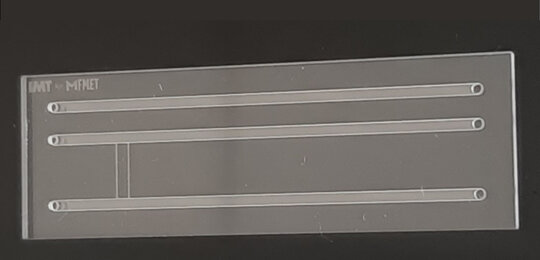
The first “quantum revolution” (Quantum 1.0) came about in the 20th century, when an understanding of fundamental particles led to the development of lasers, semiconductors and atomic clocks. We’re now in the second quantum revolution (Quantum 2.0), where physicists and engineers are controlling individual photons and sub-atomi...

read more
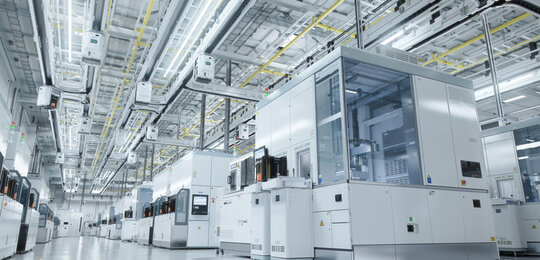
In a grey and sterile warehouse a series of enclosed modules producing semiconductors stretch off into the distance

The first international standard for vacuum gauges

High (10⁻¹-10⁻⁶ Pa) and ultra-high (10⁻⁶-10⁻⁹ Pa) vacuum are indispensable in a range of high-technology industries including preventing atmospheric contamination during integrated circuit fabrication or the deposition of thin films for solar cell or electronic manufacturing. Vacuum levels are measured by “ionisation gauges” (...

read more

Improving the instrumentation needed for new types of cancer treatments

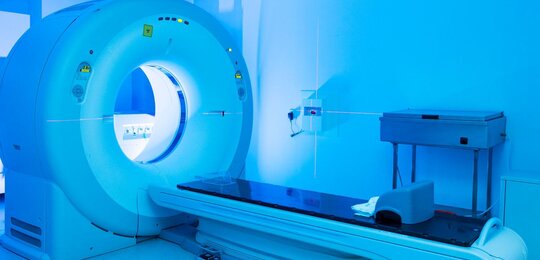
Cancer is the second largest cause of death in Europe. In the last few decades several new treatment modalities have emerged to help reduce the burden of this disease in the population, including, Magnetic Resonance (MR) guided radiotherapy (MRgRT). Magnetic resonance imaging provides detailed images of a patients soft tissues ...

read more
Against a black background is an image of the world showing European countries with cities connected with glowing gold lines to represent the electrical networks

Metrology and standardisation for components of European electrical grids

To prevent electrical failures in the grid, such as short circuits and breakdowns and resulting blackouts, it is essential that components of the electricity grid, including cabling, insulators, switchgears, and transformers, are tested to ensure suitability for their operating environments. As well as the high voltage alterna...

read more
Against a hazy grey sky a large steel plant sits in a valley with white smoke plumes emitted from its large chimney stacks

Enabling better regulation of hydrogen chloride gas emissions

Waste incineration, steel production, chemical and cement plants all emit hydrogen chloride (HCl) gas which combines with water to produce hydrochloric acid, contributing to photochemical smog that damages health, buildings and ecosystems. The Industrial Emissions Directive (IED) limits maximum permissible HCl emissions from w...

read more
Close up of a photodiode array on a circuit board

A new self-calibrating standard for the photonics industry

Photonics – which deals with generating, using and detecting light – has been defined by the European Union as a Key Enabling Technology due to its applications in areas like health, manufacturing and efficient LED lighting. To ensure photonics measurements are accurate, the optical power of sensor systems (which quantifies th...

read more
Page 1 of 5.
Element 1 Element 2 Element 3 Element 1 Element 1 Element 1 Element 1 Element 1 Logo-Footer