New standards for easy to use, cost-effective microfluidic devices
Challenge
Many highly sensitive processes in biomedicine or chemical analysis rely on the accurate measurement of nano-to-millilitre amounts of liquid. This can range from delivering precise drug doses to premature babies in hospital, to detecting trace amounts of pollutants in the environment. In the healthcare sector in particular, organ-on-chip and on-the-spot diagnostic devices are becoming more prevalent to detect and treat diseases, as well as in applications like glucose monitoring for diabetes and improved pregnancy tests.
The global microfluidics market is estimated to be around €44 bn but, as of 2020, no standards existed to support development in the field. Key aspects were poorly understood, such as methods for microflow control inside devices and the impact of different materials on performance, and relevant vocabulary was not standardised.
This meant reduced compatibility and comparability between devices, poorly defined measurement uncertainties and a lack of traceability to the SI, leading to waste, inefficiency and poorer outcomes.
Solution
Building on the work of EURAMET projects MeDD and MeDDII, which developed new protocols and facilities for microfluidic devices at very low flow rates, the MFMET project worked to address the need for new standards in the area of microfluidics.
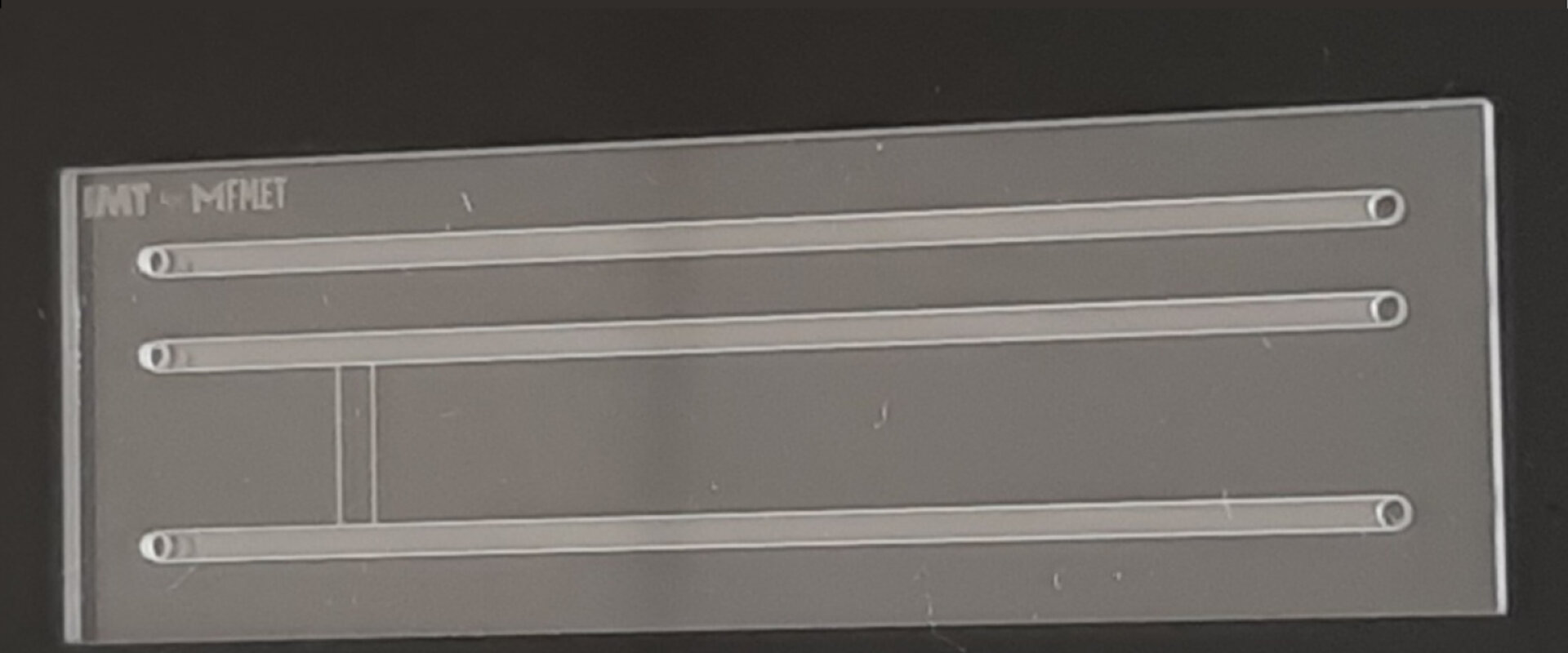
During the project, two transfer standards, one made of glass and one made of polymer, were created. These standards can now be used by labs and other facilities to calibrate specific quantities like volume, flow and leakage in devices made with commonly-used materials. These have also been used in the follow-on project MFMET II to test additional quantities, including pressure drop and particle-laden flows.
In addition to these transfer standards, the project also provided input to a number of ISO technical committees, working groups and standards revisions, and initiated the publication of three new ISO documentary standards and a EURAMET technical guide.
Impact
The first standard published from the work of the MFMET project was “ISO 22916:2022 – Interoperability requirements for dimensions, connections and initial device classification”. This lays out requirements to ensure microfluidic devices are designed to be easy to use and more cost effective to manufacture, with ‘plug-and-play’ functionality.
The second standard, “ISO 10991:2023 Microfluidics – Vocabulary”, provides comprehensive definitions to improve communication and understanding across areas using microfluidics. Finally, “ISO/ TS 6417:2025 Microfluidic pumps – Symbols and performance communication” was published following the conclusion of the project, and provides symbols and datasheets for commonly used microfluidic pumps.
Together, the standards developed by the project will help to simplify the use of microfluidic devices across different applications. Existing devices will be supported by accurate calibrations and consistent vocabulary between manufacturers and end users, and new devices can be developed for user-friendly operation and interoperability with existing hardware. This will lead to a wider uptake of microfluidic devices and improved outcomes for those impacted by the technology, from environmental scientists to vulnerable patients in hospitals.

- Category
- EMPIR,
- Standardisation,
- EMN Traceability in Laboratory Medicine,