Improving the instrumentation needed for new types of cancer treatments
Challenge
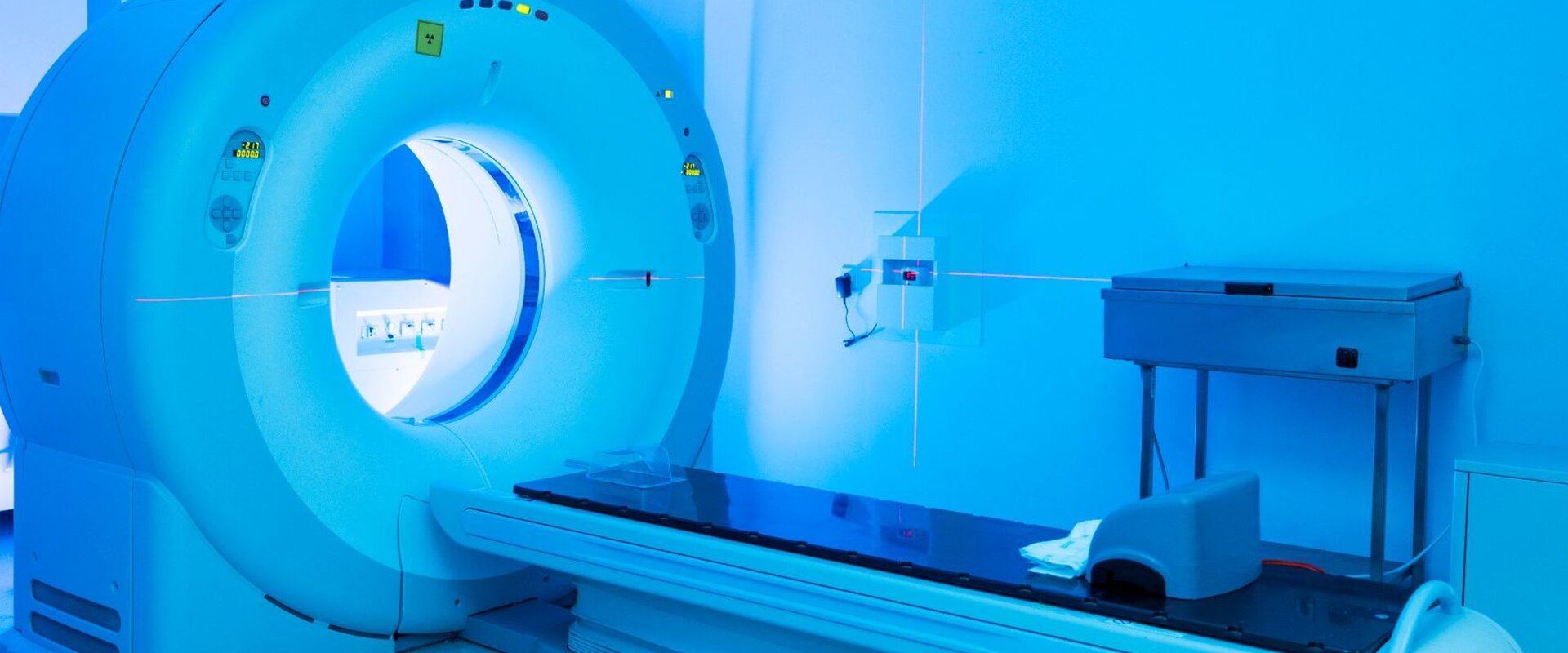
Cancer is the second largest cause of death in Europe. In the last few decades several new treatment modalities have emerged to help reduce the burden of this disease in the population, including, Magnetic Resonance (MR) guided radiotherapy (MRgRT). Magnetic resonance imaging provides detailed images of a patients soft tissues whilst the cancer is targeted with high energy X-rays generated by medical linear accelerators (linacs).
As well as allowing a better definition between healthy and cancerous cells MRgRT also provides real-time information, allowing clinicians to adapt and further optimise treatment. However, MRgRT employs strong magnetic fields which interact with treatment beams. It also poses a problem for conventional dosimeters and clinical water phantoms used to calibrate linacs and control the strength and position of the radiation dose delivered.
This situation becomes exacerbated if MRgRT is combined with “small field” radiotherapy (RT). In this, radiation is delivered to a patient in a small area which minimises damage to healthy tissues, especially when the tumour is small or embedded in sensitive areas of the body. In these small beam physical effects come into play that are not relevant in large fields, which conventional dosimeters struggle to account for – leading to inaccurate dosing.
Solution
During the EMPIR project MRgRT a metrological framework for traceable dosimetry under reference conditions for MR-guided radiotherapy was developed. This included an MR adapted 3D water phantom that was used by project partner the University Medical Center Utrecht, which provided a basis for the company PTW to develop the BEAMSCAN MR after completion of the project.
In the subsequent MRgRT-DOS project two dosimeters from PTW were adapted for use in the presence of high magnetic fields, by removing components that were affecting MR-image quality. These were then characterised in conjunction with their un-modified counterparts by PTB the National Metrology Institute of Germany. Testing was performed with a linac, an electromagnet and a small experimental water phantom and further testing was performed with a BEAMSCAN MR at an MRlinac. The results provided magnetic field correction factors and measurement uncertainty for the “MR optimised” detectors, verifying their use in MR-linac absolute dosimetry. Several similar test setups for characterising detector performance in presence of magnetic fields have been developed in MRgRTDOS.
Impact
PTW is a global leader in radiotherapy solutions, with more than 100 years of experience in dosimetry. The company have now commercialised the MR dosimeters as part of its Semiflex series. Capable of use in RT field sizes from 40 cm x 40 cm down to 2.0 cm x 2.0 cm and 2.5 x 2.5 cm they are suitable for dosimetric calibrations in both MRgRT and small field RT.
The BEAMSCAN MR has now been combined with a Semiflex 3D MR dosimeter and PTW acknowledge the work of the EMPIR projects in laying the foundation for the development of the BEAMSCAN MR and in particular the verification of the performance of the Semiflex dosimeters.
The EMPIR projects MRgRT and MRgRT-DOS have strengthened the metrology chain in MR guided therapies and provided manufacturers of dosimetry equipment the ability to determine the characteristics and magnetic correction factors for MR capable dosimeters.
The methods, correction factor data and test setups developed in EMPIR projects MRgRT and MRgRT-DOS have strengthened the metrology chain in MR guided therapies and provided manufacturers of dosimetry equipment the ability to determine the characteristics and magnetic correction factors for MR capable dosimeters. These methods and correction factors have been included in two recently published Codes of Practice; AAPM TG-351 and the IPEM CoP for reference dosimetry in MRI-linacs.
- Category
- Standardisation,
- Health,
- EMN Radiation Protection,