European Metrology Network for Pollution Monitoring
The European Metrology Network for Pollution Monitoring (EMN PolMon) creates a sustainable metrology infrastructure to support European and international regulations and directives targeting pollution monitoring.
Case Studies
Please find below selected case studies from EURAMET's European Metrology Research Programmes (EMRP and EMPIR) that are related to Pollution Monitoring:
Volatile organic compounds (VOCs) are a type of organic chemical commonly found in furniture, carpets and paints used indoors. VOCs easily evaporate at room temperature into the air, and given that some are known to cause respiratory problems, the ability to reliably control exposure to VOCs is crucial to protecting public health.
The Construction...
The WFD specifies a list of 33 priority water pollutants, for which maximum allowable concentrations have been defined – these are known as Environmental Quality Standards (EQS). EU member states are required to implement monitoring programs to ensure their water bodies comply with the EQS. Some of the priority pollutants identified by the WFD are ...
The Water Framework Directive specifies a list of 33 priority water pollutants which present a significant risk to or via the aquatic environment. The Environmental Quality Standards (EQS) Directive specifies maximum allowable concentrations of these pollutants in surface waters such as rivers, lakes and coastal waters. EU member states are require...
In our cities, small airborne soot particles form a serious health risk, generating an estimated 492,000 premature deaths per year from respiratory and cardiovascular problems in Europe. The EU’s Air Quality Directive requires Member States to limit exposure to these particles, many of which are produced by vehicle engines. Cities are implementing ...
Spectro-analytical techniques are used to identify and quantify concentrations of greenhouse and other gases in the atmosphere. These techniques are based on the unique spectral ‘finger prints’ generated by molecular interactions with specific radiation selected in the near and mid infrared wavelengths of the electromagnetic spectrum.
Satellite bo...
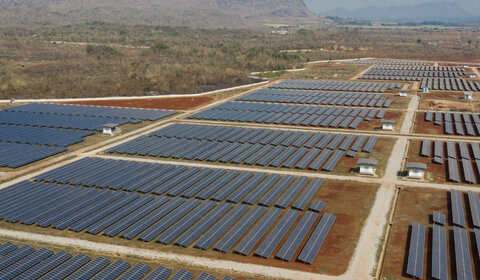
The International Energy Agency predicts that by 2050 solar power could cover 69 % of electricity generation, making it the world’s largest source of power. For this to happen it will require multiple approaches such as reduced installation costs, increased solar cell efficiencies or the adoption of new technologies.
New types of solar cells, or p...