European Metrology Network for Advanced Manufacturing
Covering the metrological requirements related to Advanced Manufacturing
Case Studies
Please find below selected case studies from EURAMET's European Metrology Research Programmes (EMRP and EMPIR) and the Metrology Partnership that are related to Advanced Manufacturing:
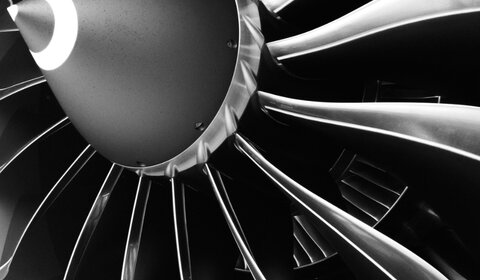
For optimal efficiency and product quality, high-value manufacturing processes are required to operate at very specific temperatures. Turbine blade heat-treatment, for example, is performed at temperatures above 1300 °C and held within narrow tolerances and temperature ranges, requiring furnaces to be controlled by several precious-metal thermocoup...
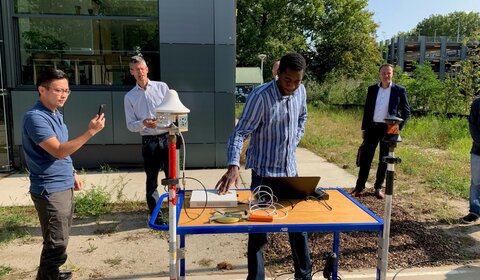
Global Navigation Satellite Systems (GNSS) have become an essential infrastructure, as citizens, industry and the sciences came to rely on its navigation and timing applications. Roughly 7 % of the EU economy benefits from GNSS applications, a market forecast to be worth €250 billion a year by 2022.
However, with no backup infrastructure, any disr...
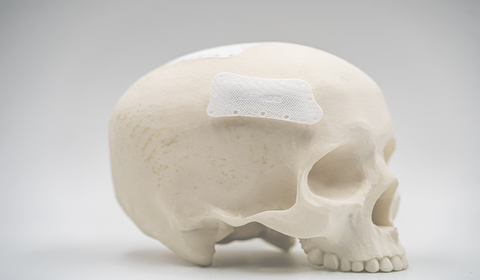
More than 500 000 medical devices are on sale in Europe, generating around €51 billion annually and accounting for one third of the market worldwide. This sector could potentially benefit from the rapidly expanding additive manufacturing (AM) industry. Commonly known as 3D printing this technique could allow the low-cost fabrication of parts for su...
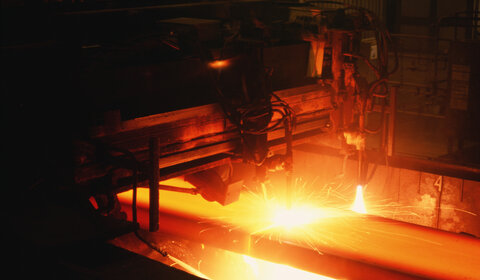
Europe’s manufacturers face the challenge of producing consistent, high-quality products using high-temperature heat treatments. Laser hardening is a surface strengthening process in which a laser heats a small area of a component’s surface to high temperatures just below the melting point to create a hard and wear-resistant finish that significant...
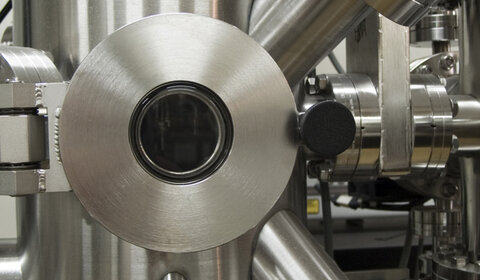
Semi-conductors are manufactured using precision instrumentation in a clean-room environment, as even a single speck of dust can lead to the failure of a high-value product. As components on semi-conductor processors get ever smaller and more sensitive to contamination, there is an increasing requirement to manufacture in a vacuum chamber – the ult...
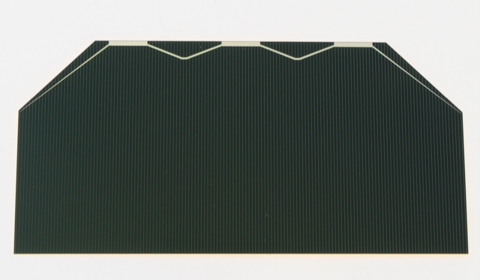
Multi-junction solar cells (MJSC) are made up of layered semiconductors that, together, absorb a wider range of solar energy than silicon alone. Higher energy conversion efficiencies for this type of cells are predicted, that, in time, may enable photovoltaics to become cost-competitive with conventional energy sources. Manufacturing and material a...
Nanotechnology is a promising enabling technology, expected to give rise to new solutions and markets in many areas of research and industry. Nanoparticles are highly functional particles ranging in size from between 1 and 100 nanometres, with properties largely determined by a reactive outer layer. Already a €20BN global industry, applications inc...
Modern technology is producing increasingly complex devices containing hundreds of components, often fabricated by different techniques. These products may also be composed of multiple layers of different materials with nanometre-sized features, each requiring precise positioning for reliable performance. To ensure these devices are free from defec...
European industry is developing ‘high value-added manufacturing’ which uses advanced techniques to generate a wide range of products which often contain novel characteristics such as 3D architecture, smart optical films or advanced coatings. These features, along with the rapidly expanding library of materials used, have caused severe measurement i...
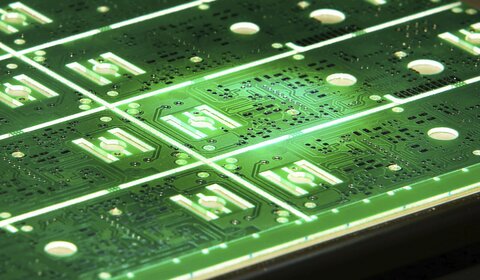
The processing power of traditional silicon chips, or integrated circuits, is now reaching its limit. To address this, and the demand for smaller devices, manufacturers are introducing ‘3D’ chips where parts are assembled on top of each other. This additional level of architecture requires new types of measurements to verify that components are cor...