European Metrology Network for Advanced Manufacturing
Covering the metrological requirements related to Advanced Manufacturing
Case Studies
Please find below selected case studies from EURAMET's European Metrology Research Programmes (EMRP and EMPIR) and the Metrology Partnership that are related to Advanced Manufacturing:
Many modern factories contain highly dynamic environments where robots work autonomously to assemble products. This presents a problem for those industries where individual components need to be tracked in real-time with high precision. Laser trackers can determine distance and position of single targets with sub-millimetre accuracy but can only ha...
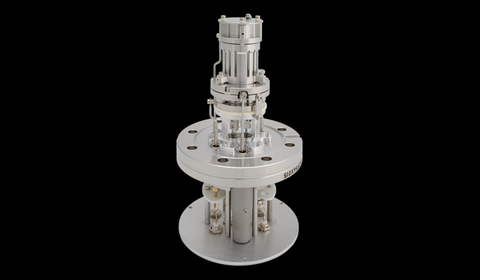
High (10⁻¹-10⁻⁶ Pa) and ultra-high (10⁻⁶-10⁻⁹ Pa) vacuum are indispensable in a range of high-technology industries including preventing atmospheric contamination during integrated circuit fabrication or the deposition of thin films for solar cell or electronic manufacturing.
Vacuum levels are measured by “ionisation gauges” (IG’s) but at the star...
Nanoparticles (NP), defined as having one or more dimension of 1-100 nm, are used in a range of modern products, including cosmetics, sunscreen, coatings for solar cells, and materials for water treatment. A factor for their extensive use is the greater chemical activity imparted by their large surface area relative to their size. As they are small...
Industries increasingly rely on running their operations at high temperatures, up to 3000 °C, to increase the efficiency and reduce environmental footprint. However, before the Hi-TRACE project there was a metrological need for accurate thermophysical properties measurements with assessed measurement uncertainties.
In the space industry, knowing t...
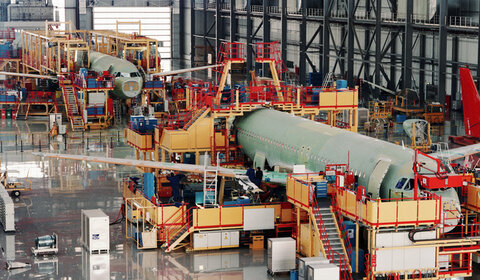
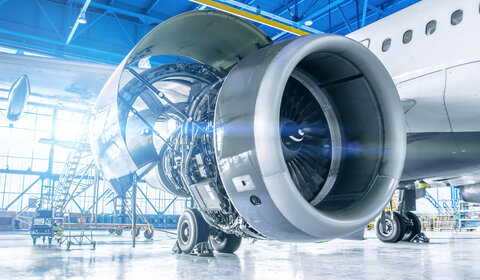
Even relatively small passenger planes have wingspans and fuselages exceeding 35 m in length, and larger, more modern aircraft can exceed 50 m or more. Due to the size of components in aviation, and many other industries, these must be correctly assembled, tracked and error mapped or ‘calibrated’ in situ. To do this requires the use of Large-Volume...
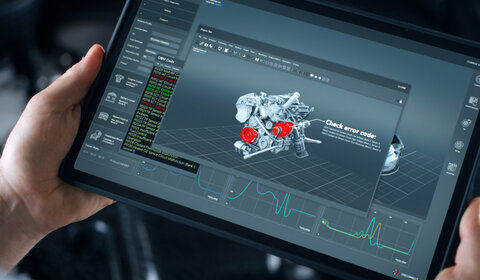
Many industrial sectors involve processes that undergo dynamic changes in temperature and pressure. One key area is the automotive sector where around 99.8% of all global transport is powered by internal combustion engines (ICEs). It has been estimated that improvements in engine designs have the potential to reduce fuel consumption by 30%, represe...
Measurements underpin almost all areas of modern life, including trade, industrial manufacture, environment and health. However, no measurement is perfect — factors such as the instrument type, operator, measurement method or the environment can affect the returned results. All these factors combine to produce a ‘measurement uncertainty’, a quantif...
Around 12% of electricity consumption in the world is used for lighting. More efficient systems have the potential of allowing Europe to save up to 34 TWh of electricity by 2030, reducing CO2 emissions by 7 million tonnes per year. Incandescent lights – where electricity flowing through a thin metal filament, such as tungsten, heats it until it glo...
The EU accounts for around 15 % of the world’s international trade in goods. Purchases are heavily influenced by conscious and subconscious visual cues which we relate as ‘quality’ in a product. A poor finish on a car, for example, may cause paint to develop an ‘orange peel’ look, eliciting a negative response in a buyer. This perception is importa...
Many high-end industrial production processes, including semiconductor and solar cell manufacturing, utilise high (10⁻¹-10⁻⁵ Pa) and ultra-high (10⁻⁵-10⁻¹⁰ Pa) vacuums. Instrumentation used in these areas, such as residual gas analysers and quadrupole mass spectrometers, require accurate calibration with ionisation gauges (IG).
The basic design of...