Case Studies

Page 1 of 7.

Improving the instrumentation needed for new types of cancer treatments

Cancer is the second largest cause of death in Europe. In the last few decades several new treatment modalities have emerged to help reduce the burden of this disease in the population, including, Magnetic Resonance (MR) guided radiotherapy (MRgRT). Magnetic resonance imaging provides detailed images of a patients soft tissues ...

read more
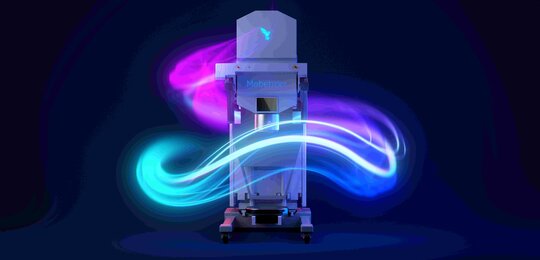
Against a dark background is the Mobetron clinical linear accelerator. A tall, white, box-like instrument on wheels surrounded in the picture with glowing lines

Monitoring of ultra-high dose rate electron beams for advanced cancer treatment

Cancer is among the leading causes of death worldwide. Surgery is a common treatment but where it may be difficult, or cause disfigurement, it is often supplemented or replaced with radiotherapy (RT). In RT, medical accelerators or irradiating sources deliver ionising radiation, such as high-energy photons, protons, or electron...

read more
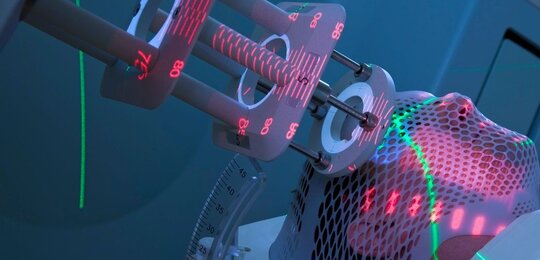
Close up of a man’s head wrapped in protective gauze with the head of a radiation delivery instrument pressed to his temple

Measurement of radiation dose at ultra-high dose rates for advanced radiotherapy

One in two people will get cancer within their lifetime. Radiotherapy (RT) is an important tool used to kill cancer cells, shrink tumours, and relieve symptoms. In this type of treatment, beams of high-energy photons or subatomic particles such as electrons or protons, are delivered to patients using medical accelerators. Whil...

read more

Improving Patient Safety with Infusion Therapy Calibrations

Infusion therapy, where drugs are delivered into a patient’s veins or under their skin, is the most common kind of medical therapy. These methods have applications across areas like pain relief, anaesthesia and chemotherapy, and require a precise dose of a drug to be delivered at a specific rate. In some instances, such as neon...

read more
Courtesy of BAM

A new ISO standard on the identification of nanoparticles

Nanoparticles (NP), defined as having one or more dimension of 1-100 nm, are used in a range of modern products, including cosmetics, sunscreen, coatings for solar cells, and materials for water treatment. A factor for their extensive use is the greater chemical activity imparted by their large surface area relative to their si...

read more
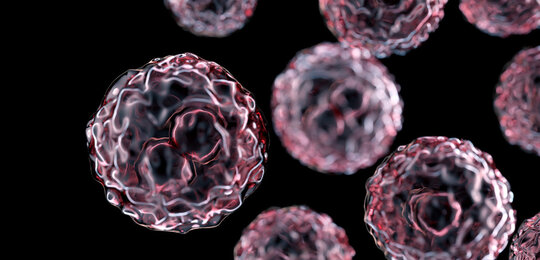
Image showing abstract nanoparticle structure

Measuring nanoparticle shell thickness

Nanoparticles are becoming increasingly used in a wide range of areas, and thus are expected to soon have a significant economic and environmental impact. In health they are used for targeted drug delivery, and in the energy sector they are used in photovoltaic technologies to improve solar cell efficiency compared to conventio...

read more
Page 1 of 7.
Element 1 Element 2 Element 3 Element 1 Element 1 Element 1 Element 1 Element 1 Logo-Footer