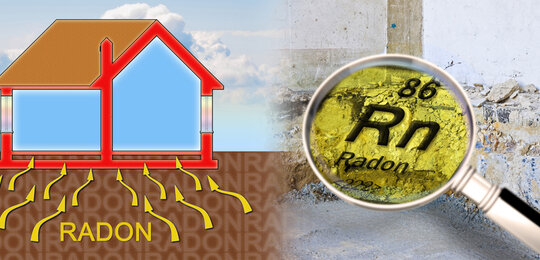
Radon (Rn-222) is a radioactive gas released from soil and building materials and is the largest source of public exposure to naturally occurring radiation. Monitoring its levels is important in this regard but can also act as an additional tool for assessing the emissions of Greenhouse Gases (GHGs) such as carbon dioxide (CO2)...
Photonics – which deals with generating, using and detecting light – has been defined by the European Union as a Key Enabling Technology due to its applications in areas like health, manufacturing and efficient LED lighting.
To ensure photonics measurements are accurate, the optical power of sensor systems (which quantifies th...
The radioactive gas radon is released naturally from soils and rocks. It can accumulate in buildings and accounts for around half of public exposure to naturally occurring radiation. The World Health Organization therefore recommends mitigation if prolonged exposure to concentrations above 100 Bq/m3 to 300 Bq/m3 is reached. As ...
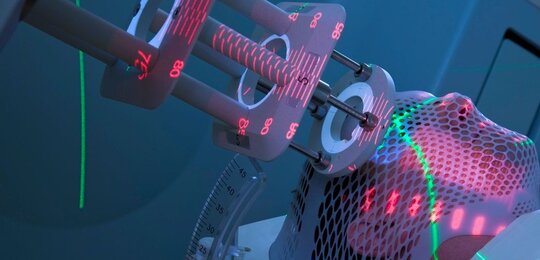
Cancer is among the leading causes of death worldwide. Surgery is a common treatment but where it may be difficult, or cause disfigurement, it is often supplemented or replaced with radiotherapy (RT). In RT, medical accelerators or irradiating sources deliver ionising radiation, such as high-energy photons, protons, or electron...
One in two people will get cancer within their lifetime. Radiotherapy (RT) is an important tool used to kill cancer cells, shrink tumours, and relieve symptoms. In this type of treatment, beams of high-energy photons or subatomic particles such as electrons or protons, are delivered to patients using medical accelerators.
Whil...
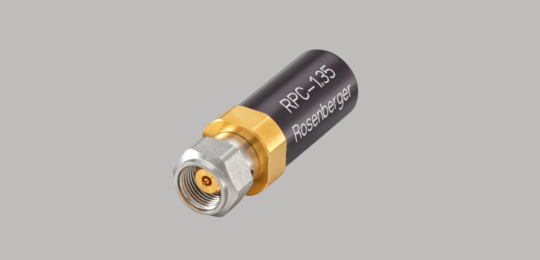
The radiofrequency (RF) part of the electromagnetic spectrum (between 3 kHz and 300 GHz) is used by many current communication systems – including mobile phone networks, TV broadcasting, public radio, and satellites. To reduce interference between these different applications they operate in separate RF “bands” at different fre...