European Metrology Network for Pollution Monitoring
The European Metrology Network for Pollution Monitoring (EMN PolMon) creates a sustainable metrology infrastructure to support European and international regulations and directives targeting pollution monitoring.
Case Studies
Please find below selected case studies from EURAMET's European Metrology Research Programmes (EMRP and EMPIR) that are related to Pollution Monitoring:
Formaldehyde, also known as methanal, is a colourless, volatile organic compound released from burning wood, tobacco smoke and from paints, varnishes, adhesive, and waxes. Low levels of formaldehyde in the air are considered harmless, but levels can build up to ten times higher indoors compared to the outside. As citizens in developed countries spe...
Nitrogen dioxide (NO2) gas is a harmful pollutant mainly produced by the combustion of fossil fuels. It can react with water in the atmosphere to form nitric acid (HNO3), producing acid rain, harmful to vulnerable ecosystems. In humans, it can impair lung function and exacerbate respiratory conditions and is a precursor of ground-level ozone and fi...
According to EEA estimates, 239,000 deaths in the EU in 2022 were attributable to fine particulate matter pollution (PM2.5) at concentrations above the World Health Organisation’s recommendation of 5 μg/m3. To mitigate the effects of air pollution on humans and the environment, regulatory bodies impose strict legal limits on airborne particles, cov...
Thousands of volatile organic compounds (VOCs) are present in the atmosphere. Of those, halogenated ones containing fluorine, chlorine, or bromine - are mainly emitted by anthropogenic activities. In 1987, after it was discovered that chlorofluorocarbons used in refrigeration were destroying the protective ozone layer, the Montreal Protocol was est...
Low frequency sound (below 20 Hz for human hearing) and vibration (0.01-5 Hz) propagating through the atmosphere, oceans and ground are used to detect natural events such as earthquakes, tsunamis and volcanic activity. These frequencies are also indicative of anthropic events including nuclear explosions. To detect these the International Monitorin...
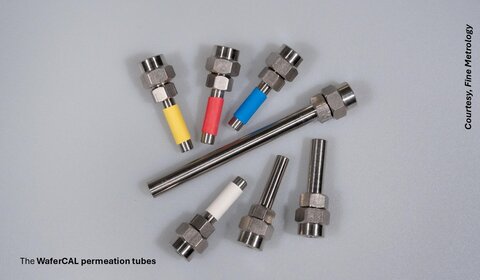
A major contributor to air pollution is a diverse class of low-boiling point chemicals termed “Volatile Organic Compounds” (VOCs). Emitted from natural and anthropogenic sources, thousands of species have been observed in the atmosphere. These include nonmethane hydrocarbons, such as terpenes from plants or benzene from fossil fuel, molecules conta...
Waste incineration, steel production, chemical and cement plants all emit hydrogen chloride (HCl) gas which combines with water to produce hydrochloric acid, contributing to photochemical smog that damages health, buildings and ecosystems.
The Industrial Emissions Directive (IED) limits maximum permissible HCl emissions from waste incineration and...
Nanoparticles (NPs), due to their small size (1-100 nm), have enhanced activity compared to the same material of larger sizes and are finding uses in a range of products and processes, including cosmetics, sunscreens and water treatment. It is estimated that the global market for NPs is €20 billion – with over 300 000 European citizens directly emp...
Radioactive decay occurs in unstable nuclides with an excess of protons or neutrons in the nucleus. Accurate knowledge of the decay process is vital in the nuclear industry where it is used in waste processing, storage, powerplant decommissioning or adherence to Directives such as 2013/59/Euratom on basic safety standards for protection against ion...
Nanoparticles (NP), defined as having one or more dimension of 1-100 nm, are used in a range of modern products, including cosmetics, sunscreen, coatings for solar cells, and materials for water treatment. A factor for their extensive use is the greater chemical activity imparted by their large surface area relative to their size. As they are small...