Case Studies

Page 8 of 44.
© Courtesy Conservatoire national des arts et métiers (CNAM

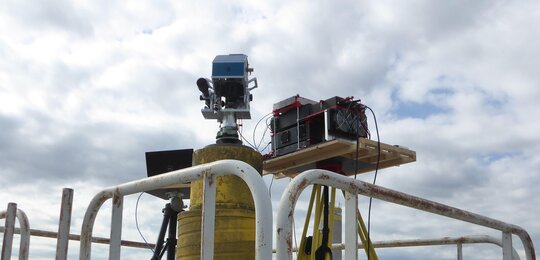
New high precision instruments for surveying and geodesy

The determination of distances with low measurement uncertainty, linked to the SI, is used in the surveillance of large-scale facilities during construction and the deformation monitoring of critical infrastructures. It is also important in observations of geological hazards, such as volcanoes or tectonic faults and can help ch...

read more
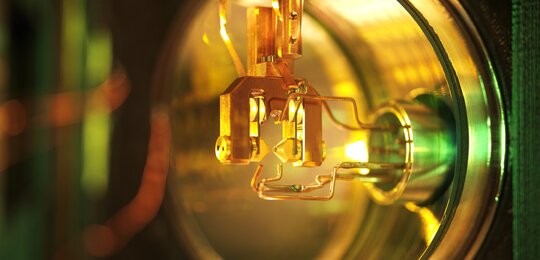
a close-up of the compact ion trap. Image courtesy of PTB

Improving the useability of high accuracy optical clocks

The second, the unit for time, is a component of six out of the seven base SI units and its realisation underpins almost all areas of metrology. The most precise devices available to measure time are optical clocks, a type of atomic clock that utilises isolated ions or neutral atoms with energy transitions in the high-frequency...

read more
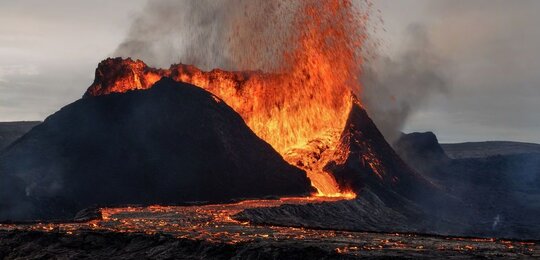
In the foreground is an erupting volcano in Iceland with a lava flow descending its flank

EURO5000: a new baseline for long distance geodetic measurements

Geodesists chart changes in the Earth’s surface with high precision using space-geodesic techniques, like the Global Navigation Satellite System (GNSS). In GNSS, orbital satellites send radio waves to receivers on the ground. The time delay between transmission of the signal and reception can be used to determine a position on ...

read more
Wettzell Geodetic Observatory at night © Paul Köchert / PTB

Refining the geodetic methods required to monitor climate change

To monitor changes caused by natural phenomena, like earthquakes or volcanoes, or the effects of global warming, accurate measurements of the Earth’s surface are required. This is performed by geodesists using ‘reference frames’, one of which is the ‘International Terrestrial Reference Frame’ (ITRF). This utilises a suite of po...

read more
Image showing 17 turbines in a rural wind farm against the sunrise

A new procedure for energy meters to support power grid digitalisation

As energy grids across Europe become increasingly decarbonised, reliance on renewable energy sources such as solar, wind and hydroelectric power is becoming more prevalent. However, due to the nature of these sources, their integration into the grid brings with it more variability of supply and more complex conditions. To main...

read more
Against a black background is a 3D illustration of zinc oxide nanoparticles. Silver in colour, a roughly spherical shape, around 50 particles are clumped into a ball in the centre of the image

A new deep-learning AI tool for analysing images of complex nanoparticles

Nanoparticles (NPs), due to their small size (1-100 nm), have enhanced activity compared to the same material of larger sizes and are finding uses in a range of products and processes, including cosmetics, sunscreens and water treatment. It is estimated that the global market for NPs is €20 billion – with over 300 000 European ...

read more
Page 8 of 44.
Element 1 Element 2 Element 3 Element 1 Element 1 Element 1 Element 1 Element 1 Logo-Footer