Case Studies

Page 27 of 43.

Weather Data for Climate Change

The World Meteorological Organisation (WMO), a specialised agency of the United Nations, oversees global monitoring of the Earth’s weather. This includes maintaining networks of Automatic Weather Stations (AWS) which measure temperature, humidity and pressure around the world, data which is used to make short term local and nat...

read more

Improved Climate Change Monitoring

Around the world, automatic weather stations measure parameters including temperature and humidity, with networks gathering data from multiple locations to generate shorttimescale weather forecasts. This data could also be used to make climate change predictions, but characterising long-term trends, such as global warming, requ...

read more

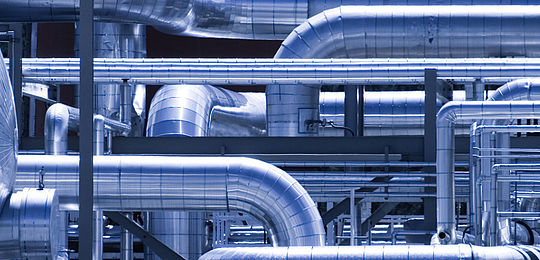
Better industrial insulation materials

Many production industries, such as steel and glass manufacture and petrochemical refining, run processes at high temperatures, requiring high energy consumption. Insulation materials are needed to minimise heat loss throughout the system. All such materials need certification to confirm their insulation properties. Certificat...

read more

Improving sub-nanometre accuracy

Innovations in nanotechnology are producing novel materials with unique properties, such as the functionalised surfaces that are spurring the development of a new generation of electronics. Verifying that these nanoscale innovations perform as designed relies on measuring their features with sub-nanometre accuracy. Ultra-high-...

read more

Assessing complex optic performance

Academic or industrial researchers studying new materials and chemicals – such as those for pharmaceuticals and next generation solar panel films – are allocated beamtime at synchrotron or Free Electron Laser (FEL) research facilities where high intensity, focused infrared, ultraviolet, and X-ray beams can probe a material to g...

read more

Precision robotic movements

Precision manufacturing industries, such as aerospace, mechanical engineering, and automotive all rely on automation to produce quality products. Industrial robots making complex movements in 3D follow engineering designs to manufacture and assemble parts on the production line. Robots are fitted with angle encoders, devices u...

read more
Page 27 of 43.
Element 1 Element 2 Element 3 Element 1 Element 1 Element 1 Element 1 Element 1 Logo-Footer