Case Studies

Page 9 of 44.
Wettzell Geodetic Observatory at night © Paul Köchert / PTB

Refining the geodetic methods required to monitor climate change

To monitor changes caused by natural phenomena, like earthquakes or volcanoes, or the effects of global warming, accurate measurements of the Earth’s surface are required. This is performed by geodesists using ‘reference frames’, one of which is the ‘International Terrestrial Reference Frame’ (ITRF). This utilises a suite of po...

read more
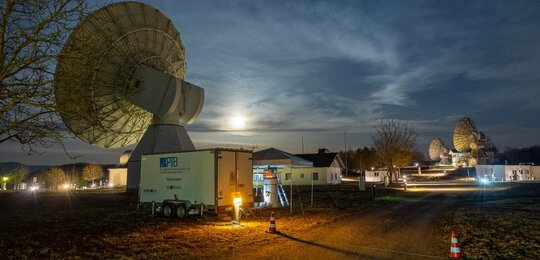
Image showing 17 turbines in a rural wind farm against the sunrise

A new procedure for energy meters to support power grid digitalisation

As energy grids across Europe become increasingly decarbonised, reliance on renewable energy sources such as solar, wind and hydroelectric power is becoming more prevalent. However, due to the nature of these sources, their integration into the grid brings with it more variability of supply and more complex conditions. To main...

read more
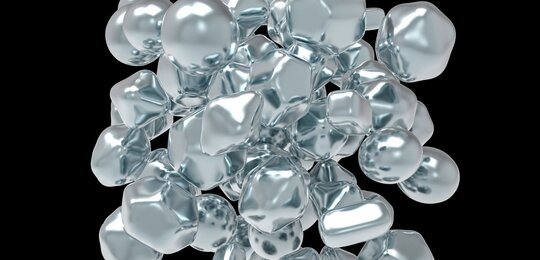
Against a black background is a 3D illustration of zinc oxide nanoparticles. Silver in colour, a roughly spherical shape, around 50 particles are clumped into a ball in the centre of the image

A new deep-learning AI tool for analysing images of complex nanoparticles

Nanoparticles (NPs), due to their small size (1-100 nm), have enhanced activity compared to the same material of larger sizes and are finding uses in a range of products and processes, including cosmetics, sunscreens and water treatment. It is estimated that the global market for NPs is €20 billion – with over 300 000 European ...

read more
Image showing a clock with hours spiralling through space

Providing reliable support to orbital-based time and frequency dissemination

Time and frequency dissemination plays a central role in location services, commercial and financial transactions, communication systems such as 5G and the internet, as well as providing a frequency reference used in electricity grids. The most widespread way this is done is via Global Navigation Satellite Systems (GNSS). In Eu...

read more
Improving knowledge of radiation physics

BetaShape: An improved code for calculating beta radiation decay spectra

Radioactive decay occurs in unstable nuclides with an excess of protons or neutrons in the nucleus. Accurate knowledge of the decay process is vital in the nuclear industry where it is used in waste processing, storage, powerplant decommissioning or adherence to Directives such as 2013/59/Euratom on basic safety standards for p...

read more
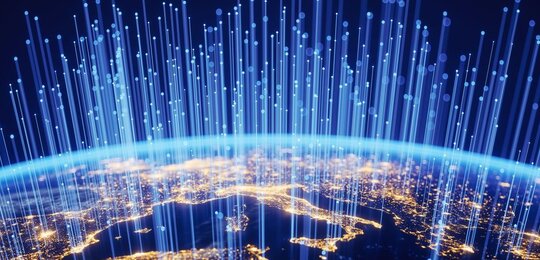
Fibre optic cables rising into space

Dissemination of accurate time and frequency over ground-based optical systems

Almost all areas of modern life require an accurate knowledge of time, synchronised to a common time source. In Europe, time and frequency signals, and hence positioning information, are provided by radio signals or the European Space Agency’s (ESA) Galileo network of 30 satellites orbiting 20 000 km above the Earth equipped wi...

read more
Page 9 of 44.
Element 1 Element 2 Element 3 Element 1 Element 1 Element 1 Element 1 Element 1 Logo-Footer