Case Studies

Page 1 of 2.

Secure communications in the quantum age

The first “quantum revolution” (Quantum 1.0) came about in the 20th century, when an understanding of fundamental particles led to the development of lasers, semiconductors and atomic clocks. We’re now in the second quantum revolution (Quantum 2.0), where physicists and engineers are controlling individual photons and sub-atomi...

read more
Against a black background is a 3D illustration of zinc oxide nanoparticles. Silver in colour, a roughly spherical shape, around 50 particles are clumped into a ball in the centre of the image

A new deep-learning AI tool for analysing images of complex nanoparticles

Nanoparticles (NPs), due to their small size (1-100 nm), have enhanced activity compared to the same material of larger sizes and are finding uses in a range of products and processes, including cosmetics, sunscreens and water treatment. It is estimated that the global market for NPs is €20 billion – with over 300 000 European ...

read more

Trusting complex software

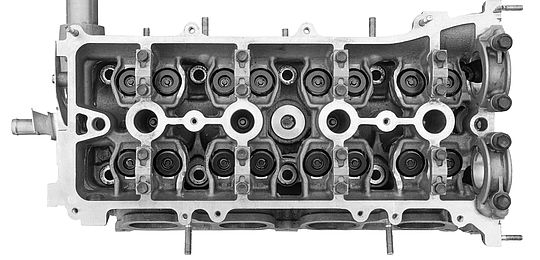
Modern cars must be manufactured with great precision to ensure they meet design specification. Grooves in the pistons or ripples on body surfaces affect the car’s performance and appearance. Most engineering industries face similar issues, as ever greater accuracy is required to produce more precisely engineered parts. Co-ord...

read more
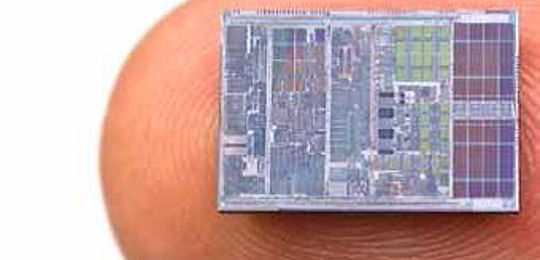
Image showing a crystal processor

Innovation in 3D analysis

The electronics industry aims to develop ever smaller, more powerful and efficient devices, and is keen to use new organic materials alongside conventional components. Existing measurement methods – designed for silicon based electronics – are unsuitable for these organic materials. Therefore, in order to accurately specify the...

read more

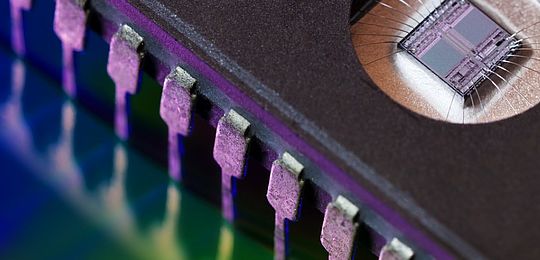
Image showing a close up of a microchip

Nano-material properties

Introducing innovative products such as novel optoelectronics based on quantum dots, nanowires and nanorods or wear resistant coating using new nanostructures relies on having confidence in how these materials behave at the nano-scale. Understanding the strength of materials at the nano-scale as opposed to in bulk is essential...

read more

Piezoelectric innovation

Piezoelectric materials, which convert movement into electrical signals and vice versa, are used in a wide range of applications such as gyro-sensors, and micro switches in miniaturised electronic devices. In addition, their unique characteristics make them suitable for sensing operations where continuous remote monitoring of r...

read more
Page 1 of 2.
Element 1 Element 2 Element 3 Element 1 Element 1 Element 1 Element 1 Element 1 Logo-Footer