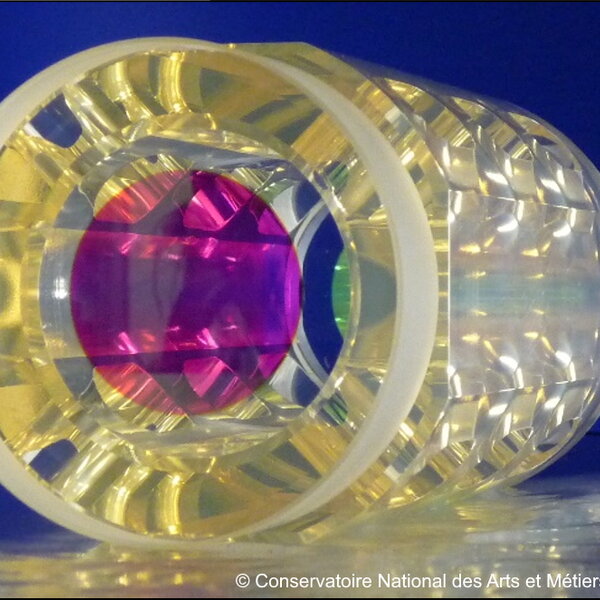
<p>Photon-based realisations of the pascal enable new calibration methods for gas pressure</p>
Current realisations of the pascal rely on pressure standards based on piston gauges and liquid manometers often containing toxic mercury, both of which measure force per area. Their performance has remained unchanged over the past few decades, and they suffer from both practical and environmental limitations.
The aim of completed EMPIR project Towards quantum-based realisations of the pascal (18SIB04 QuantumPascal) was to develop novel quantum based pressure standards using optical, microwave and dielectric methods and to assess their potential - with the aim of replacing existing mechanical based pressure standards.
Project outputs
1. During this project the world’s first Transportable Optical Pressure standard called TOP was developed, used successfully in a circular comparison, and was compared to a similar stationary optical pressure standard as well as to conventional piston gauges. The TOP was packed on a standard pallet and successfully transported by truck from Borås (Sweden) to Berlin (Germany), Turin (Italy), Paris (France) and back to Borås for a final comparison. Despite adverse conditions during shipping, such as shocks and temperature influences, the standard was able to function with little effort after each journey and retained its performance during the whole comparison campaign.
Full details of the design and transport can be found on the project web page in the report ‘Demonstration of a transportable Fabry-Pérot refractometer refractometer by a ring-type comparison of dead-weight pressure balances at four European National Metrology Institutes’.
2. The transportable optical pressure standard used the GAMOR methodology ratified in the project. GAMOR is a new gas modulation refractometry method in combination with a recently realised Fabry-Pérot cavity system bored in the material Invar. During the project it was shown that even materials with much higher thermal expansion coefficients than ULE-glass and Zerodur can be used for refractometers with highest precision. This enables new designs of refractometers to offer benefits for the photonic pressure assessment such as orders of magnitude lower gas permeabilities (as shown for sapphire) and lower thermal gradients within the material of the cavity spacers.
3. When gas is introduced into the measurement cavity, thermodynamic effects (pV work) cause the temperature of the gas to rise. Compared to the sub-millikelvin temperature stabilities and uncertainties required for assessing pressure via gas density with uncertainties of a few parts per million, potential temperature changes due to pV-work of several tens of Kelvin are significant. This has led to scepticism within the community regarding the potential use of the GAMOR methodology for pressure assessments at the highest metrological level. Contrary to intuition, however, experiments conducted as part of the project as well as corresponding simulations clearly demonstrated that the optimised design stabilises the temperature hundred times faster than the best systems currently available worldwide. This not only dispelled all doubts within the community, but also confirmed the advantages of GAMOR and served as a template for design optimisations of other optical pressure standards around the world.
4. Improved calculations for the thermodynamic and electromagnetic properties of gases helium, neon, argon, carbon monoxide and carbondioxide. For the last two (CO & CO2) these are the World’s most precise calculations. Theoretical and experimental results were compared and used to verify the theory used. This is important for climate models, especially CO and CO2.
5. Published 3 guides on the use of Fabry-Pérot refractometry for pressure:
6. Published 3 e-learning modules:
- A short introduction to Gas modulation refractometery with self-study questions
- Rayleigh scattering for pressure measurement
- Multi reflection interferometry to measure picometers and pressure
7. A number of non Fabry-Pérot based instruments were developed during the project. These were based on Rayleigh scattering, multi-reflection interferometry, dielectric constant gas thermometry, refractive index gas thermometry, superconductive refractive index gas thermometry and absorption spectroscopy.
These are all in use and some are being used in two current follow-on projects:
The improved pressure standards developed in this project have the potential to provide a major economic benefit to calibration laboratories and sensor and instrument manufacturers.
Project coordinator Tom Moses Rubin from PTB said
‘I am really proud of the experimental and theoretical results and everything that this great, perfectly complementary and super collaborative team has achieved during the QuantumPascal project.’.
This EMPIR project is co-funded by the European Union's Horizon 2020 research and innovation programme and the EMPIR Participating States.
Want to hear more about EURAMET?
Sign up for EURAMET newsletters and other information
Follow us on LinkedIn and X