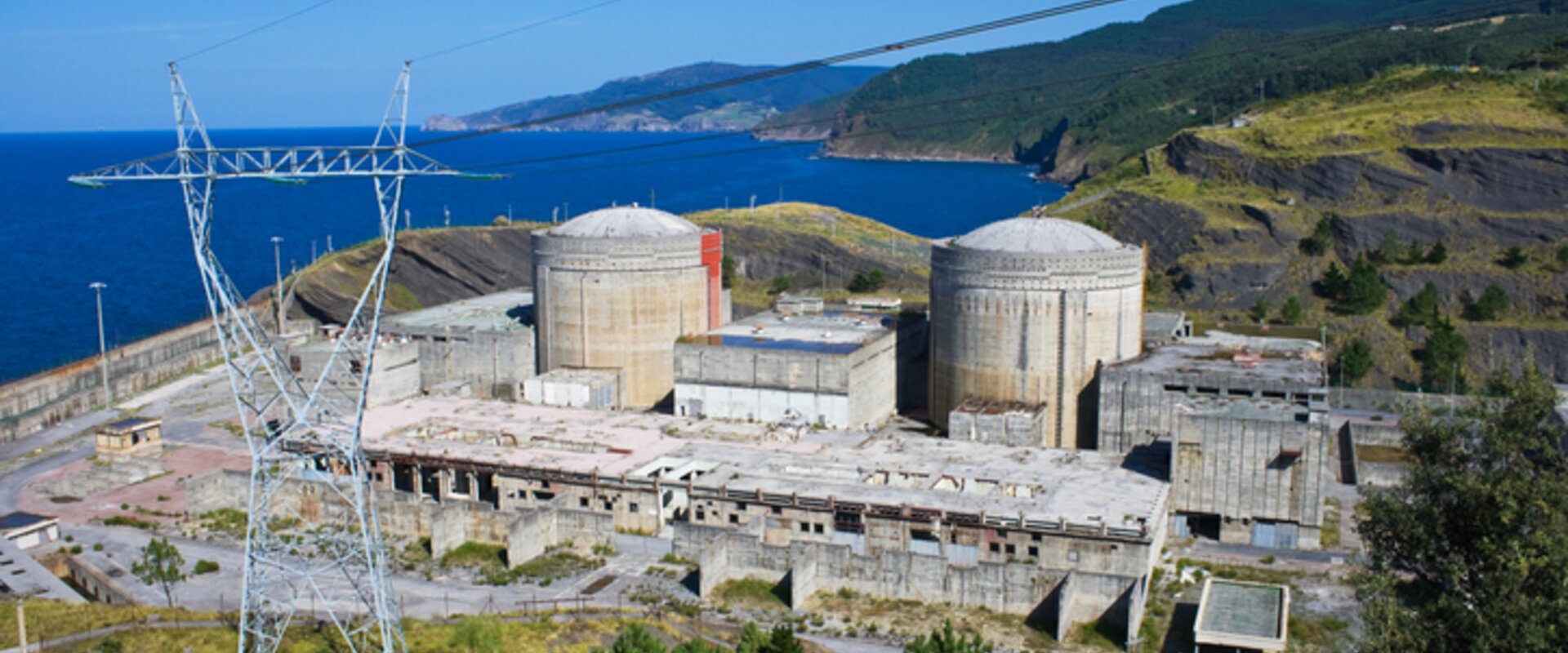
Supporting the decommissioning of first-generation nuclear power plants
Challenge
Since the building of the first power stations in the 1950s and 60s, nuclear power has grown to contribute 9–17 % of worldwide electricity every year. These ‘first-generation’ stations are now approaching the ends of their lives and must be decommissioned. Across the EU, over 200 power stations are due to be decommissioned by 2030, a process estimated to cost €150 billion. To ensure this is done safely, minimising the risk of public and environmental exposure, nuclear waste must be accurately analysed to determine its characteristics and whether it requires long-term storage. Waste with radioactivity below limits set by regulation is deemed “free release” and disposed of through strictly controlled means – this often includes building and storage materials, cables and other equipment.
However, as nuclear sites have been in operation for many decades and are not uniform in their production of waste, there was a need for novel methods to characterise these materials. Significant progress was made in this area during EMRP projects MetroRWM and MetroDECOM and follow-on EMPIR project MetroDECOM II, where new preselection and free release technologies were developed. This included calibration software and procedures and a new facility, SuperMUM, constructed by project partner NUVIA. SuperMUM uses special aged concrete shielding (equivalent to 5-10 cm of lead but with lower interference) alongside semiconductor germanium detectors and is able to detect radioactivity levels as low as 50 Bq per kg. However, support was needed to deliver these developments to the international market and adapt the SuperMUM facility to the broad needs of end-users.
Solution
The Free Release project conducted a survey of over 30 members from the nuclear industry, European metrology institutes and waste management companies to fully understand the needs of end-users. Their responses were then used to prepare a document which can be used to plan modifications to hardware and software in pre-selection and free release facilities, responding to throughput, waste type and the needs of legislation. A list of seven interested end users was collated and for each an updated pre-selection and free release facility incorporating the new technology was proposed.
Impact
NUVIA is a multi-national expert in construction for the nuclear industry, from installation to decommissioning. Through the work of the Free Release project, NUVIA have been able to offer their SuperMUM system to the broader decommissioning community, tailoring it to end-users’ needs. In particular, NUVIA was able to install a system at the Centre for Energy, Environmental and Technological Research (CIEMAT) in Madrid, Spain. This facility was used during the project to host a 2-day training course where experts demonstrated SuperMUM, training participants in how to calibrate and perform measurements using the new system.
CIEMAT is now using the SuperMUM to test waste with Enresa, the Spanish national company responsible for overseeing the decommissioning of Spain’s nuclear facilities – already saving an estimated €6 million in public funds by keeping free release material out of expensive long-term storage and supporting efforts to decommission nuclear facilities safely and efficiently.
- Category
- EMPIR,
- Environment,
- EMN Pollution Monitoring,
- EMN Radiation Protection,