
Reducing cost and improving the accuracy of radiometric sensor calibrations: Terrestrial and space
Challenge
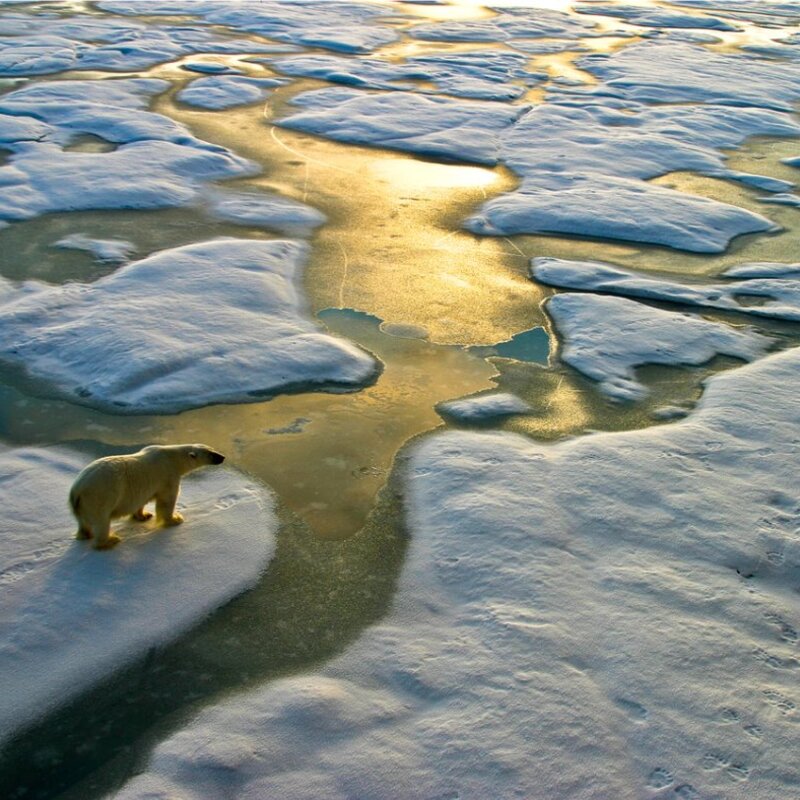
Over the last few centuries, carbon trapped by millions of years of plant and animal deposition has been released into the environment as carbon dioxide (CO2) through the burning of fossil fuels. In 1958 the measured level of this greenhouse gas in the atmosphere was 315 parts per million (ppm), in 2024 it reached 423.9 ppm and continues to grow. 2024 was also the first year that the Intergovernmental Panel on Climate Change (IPCC) recorded global temperatures exceeding 1.5oC above pre-industrial levels. This is considered a critical threshold by many environmental experts and, if unaddressed, could irreversibly change the climate we rely on, leading to increased flooding, fires, droughts, biodiversity loss and global food insecurity.
Signatory nations of the 2015 Paris Agreement are obliged to compile and communicate how much CO2 they produce, based on self-assessment of the amount emitted from sectors including energy, construction, and automotive. However, measurement uncertainties can arise when comparing data from different sources. Satellite remote sensing has been identified by the IPCC as an independent method of verifying national CO2 inventories and other greenhouse gases. Orbital measurements can also separate out natural and manmade sources of CO2 and provide the location and assess efficacy of the ‘sinks’ e.g. forests and oceans which absorb it.
To do this, Earth observation satellites require the highest accuracy sensors to determine sub-ppm changes that only state-of-the-art metrology can provide.
Solution
In the EURAMET project MetEOC-3, the National Physical Laboratory (NPL), the National Metrology Institute (NMI) of the UK, developed methods utilising a new generation of widely tuneable laser, replacing incandescent lamps traditionally used for the spectral radiometric calibration of sensors.
This improvement fundamentally changed the way the spectral shape of the bandwidth of any sensor under test is determined, while also allowing a more direct traceability to the SI primary standard detector at NPL, so vastly reducing the achievable uncertainties. The laser and new methodology were integrated into a new facility, the Spectroscopically Tuneable Absolute Radiance calibration and characterisation Optical Ground Support Equipment (STAR-cc-OGSE, or “STAR”). Capable of radiometric calibration and characterisation of satellite sensors to an accuracy of <0.5%, the facility was also designed to be transportable, allowing cost-effective NMI level measurements to be made at either NPL or at a customer’s location.
Impact
In 2022, following the end of MetEOC-3, STAR was transported to the premises of Airbus in France and, over a 56-day period, was used to calibrate the spectrometer of the MicroCarb CO2 satellite, a mission of the French space agency CNES supported by the UK government. This was to be the first European satellite designed to track atmospheric CO2 levels down to <1 ppm. The spectrometer was assessed for its optical, geometric, spectral, and radiometric performance. In 2025, MicroCarb was successfully launched, returning its first measurements of the Amazon Basin later that year – a region believed crucial in the global carbon cycle, but for which few ground-based CO2 measurements existed.
In the subsequent MetEOC-4 project, STAR’s accuracy was further improved, towards the 0.1% level - necessary for optical SITSat missions, such as ESA TRUTHS. After MetEOC-4, in 2023 the STAR blueprint was used to build two sister facilities, STARWELL, designed to provide quick, affordable calibration of small-sat radiometric instrumentation, and CARES for calibrating drone mounted and portable field instruments.
European infrastructure now exists to ensure that a range of satellite and in-situ data can access the highest accuracy possible. Amongst many other applications it also allows the sources and sinks of greenhouse gases to be independently verified, providing policy makers with the information needed for present and future mitigation strategies.
- Category
- Environment,
- EMN Climate and Ocean Observation,