Providing measurement traceability for selected volatile organic compounds
Challenge
Thousands of volatile organic compounds (VOCs) are present in the atmosphere. Of those, halogenated ones containing fluorine, chlorine, or bromine - are mainly emitted by anthropogenic activities. In 1987, after it was discovered that chlorofluorocarbons used in refrigeration were destroying the protective ozone layer, the Montreal Protocol was established, banning their use. Due to this ban, and following ones such as the Kyoto protocol, new halogenated compounds replacing the banned ones have continuously emerged. Although these are at very low atmospheric amount fractions (pmol- nmol), and do not all contribute directly to climate change, their source, intermediate and degradation products are very long-lived and have a negative impact on the environment.
One such is 1,2-dichloroethane, widely used in industry as a solvent, has been linked to ozone layer depletion. Its atmospheric levels are currently monitored at several sites of the Advanced Global Atmospheric Gases Experiment (AGAGE). This network also monitors the levels of another halogenated VOC, hexafluroro-2-butene, which is drawing concern because of its potential toxicity to certain terrestrial and marine species when decaying into trifluoroacetic acid.
However, due to the reactivity of some halogenated VOCs, or new emerging ones produced by industry, no SI-traceable reference gases existed for these at atmospheric levels, meaning that measuring instruments remained uncalibrated and lacked measurement uncertainty budgets.
Solution
During the MetClimVOC project, reference gas mixtures containing six halogenated VOCs were identified as being relevant for the atmospheric community - difluoromethane (HFC-32), pentaflurobutane (HFC-365mfc), dichloromethane (CH2Cl2), tetrachloromethane (CCl4), 1,2-dichloroethane, and hexafluoro-2-butene (HFO-1336mzzZ). These were produced by METAS based on the permeation dynamic method described in the international standard ISO 6145-10.
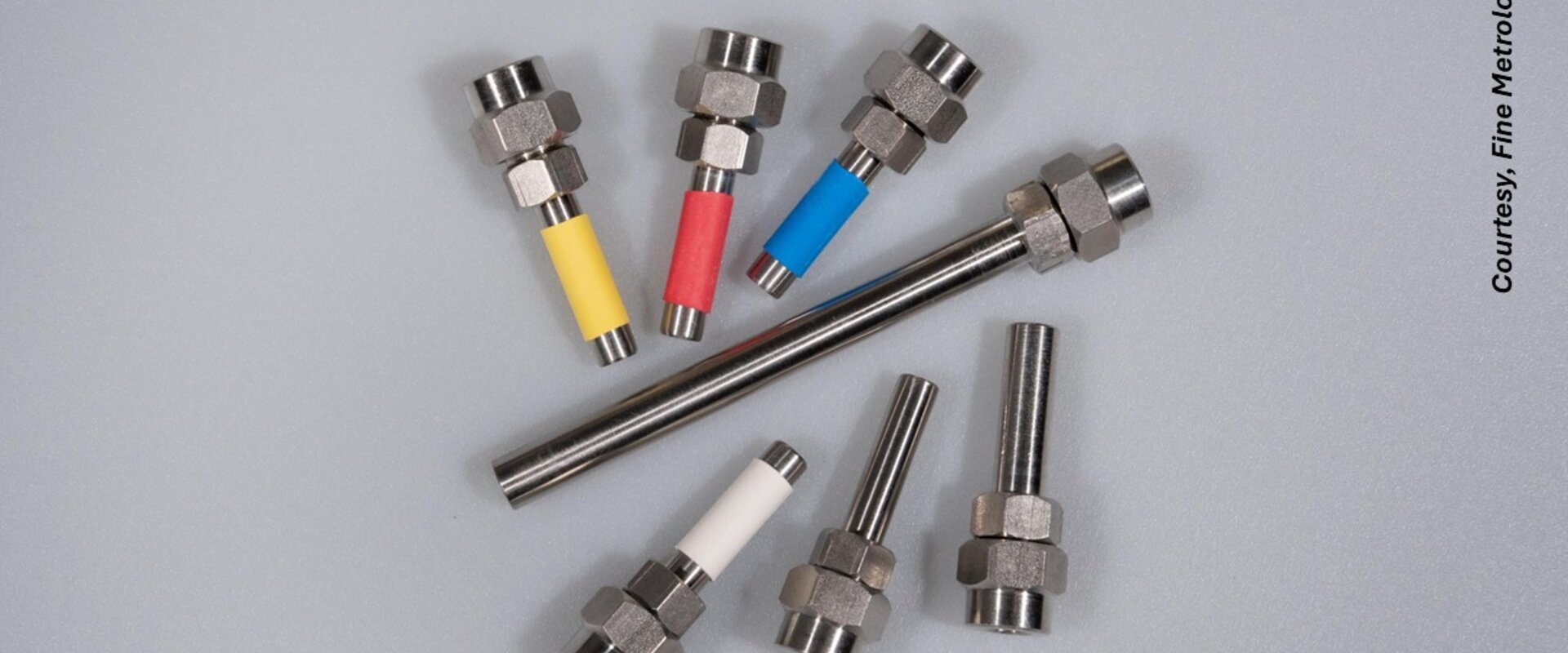
Permeation tubes containing a polymer membrane were pre-conditioned at selected temperatures and pressures for at least one week and calibrated using METAS’ magnetic suspension balance. The VOC of interest was then added at a defined volume or mass and eluted into a stream of high purity synthetic air. Each gas was then cryo-filled into passivated cylinders using an improved technique with traceability provided by the volumetric standard of Switzerland.
References gas mixtures were produced with amount-of-substance fractions from 1.0 pmol/mol for hexafluoro-2-butene to 74.6 pmol/mol for tetrachloromethane, with expanded uncertainties < 3% and at least 18 months temporal stability.
Impact
For over 30 years, Fine Metrology has provided high-quality sources for calibrating gas analysers and air quality measuring instruments used worldwide for environmental monitoring, industrial safety, scientific research, and manufacturing quality.
Due to their expertise, Fine Metrology became collaborators in the project, developing new permeation tubes for the selected halogenated VOCs following the consortium’s requirements. These permeation tubes, of high purity (>99%), such as the company’s WaferCAL tubes, were made commercially available for generating the source used to produce the halogenated VOC reference gas mixtures. These gas mixtures, at ambient levels, are now available for monitoring networks such as AGAGE, ensuring that measuring instruments can be accurately calibrated, with clear SI traceability.
The extensive testing performed by Fine Metrology to produce fit-for-purpose permeation tubes, including how to condition and calibrate these, has allowed them to improve their accuracy and reproducibility, information they can now incorporate into new products.
The new reference gases will allow more accurate monitoring of these pollutants and, in the long-term, the adoption of more effective mitigation strategies to protect both human health and the environment.

- Category
- EMPIR,
- Environment,
- EMN Pollution Monitoring,