Protecting public health through accurate real-time pollen monitoring
Challenge
Air quality has a profound influence on human health and the environment. Poor air quality can trigger respiratory conditions, like asthma or allergies, limiting people’s ability to go about their daily lives or even causing serious medical complications. The World Health Organization estimates that asthma affects 262 million people worldwide and attributes 455,000 deaths to it annually. It is therefore vital for the public, medical researchers and local governments to have access to timely, accurate air quality measurements to inform decision-making, enhance research and limit exposure.
Although emission of airborne particles from anthropogenic sources are quite strictly controlled, biological aerosols like bacteria, fungal spores and pollen can also be strongly influenced by humans. For example, the choice of plants in urban green spaces and private gardens. Typically, pollen levels have been determined by timeconsuming manual analysis. This results in data being days out of date and with high measurement uncertainties. Relatively recently, automatic pollen monitors have started to become available, but the lack of standards and calibration methods means these pollen measurements have unknown levels of uncertainty.
Solution
The AEROMET II project developed the first ever traceable calibration procedures for automatic pollen monitors, including a new standardised method for pollen aerosolisation. During the project, METAS (the National Metrology Institute for Switzerland) created new methods to calibrate particle size spectrometers and bioaerosol monitors based on a reference optical particle counter and size-certified polystyrene spheres. These particles, which range from 10-20 μm in size, mimic pollen grains and have been found to be a suitable reference material for calibrating automatic pollen monitors, achieving low (<10 %) measurement uncertainty.
This work has allowed METAS to extend its existing bioaerosol monitor calibration facility. The facility is the first of its kind in Europe and is now able to provide traceable calibrations for different types of particle size spectrometers (including aerodynamic and optical instruments) for particles up to 20 μm at concentrations of 0.5-2 cm-3. A new CEN technical specification for automatic bioaerosol monitors that will include aspects of this is in development.
Impact
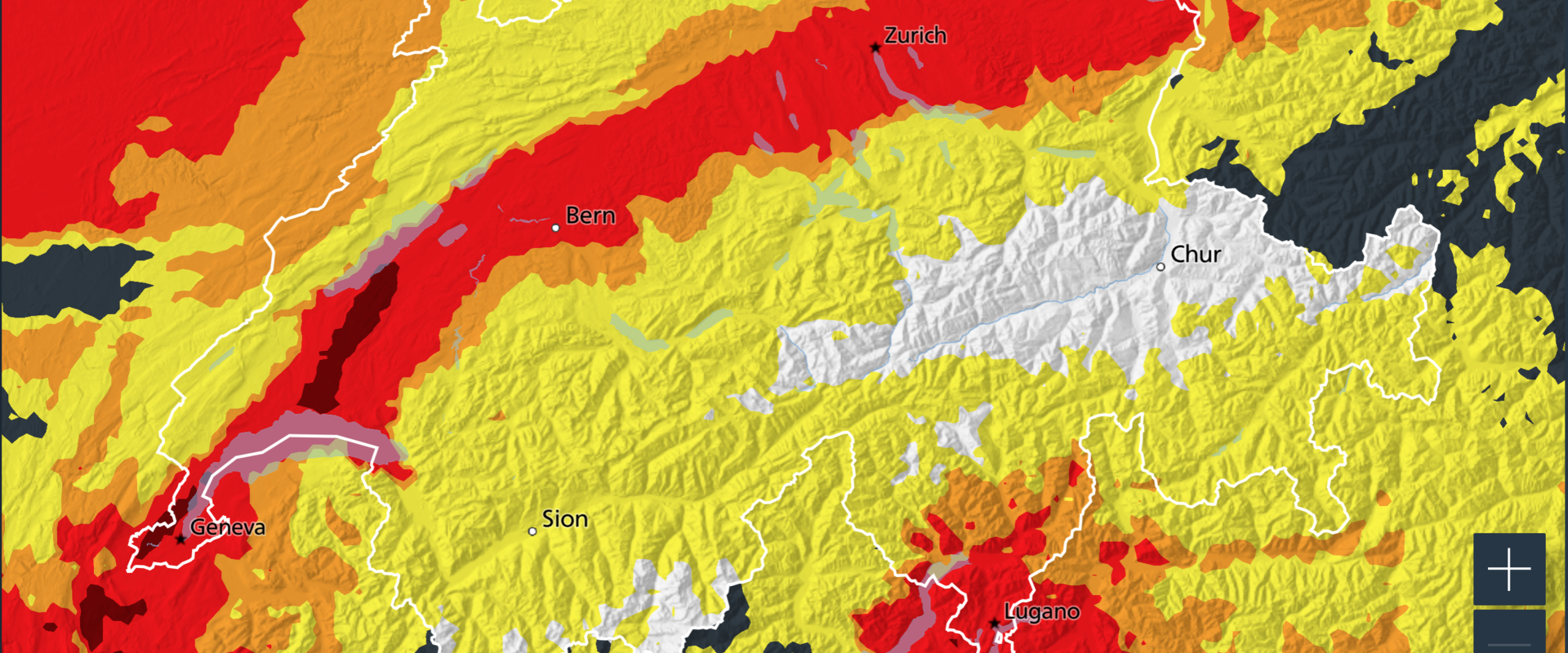
MeteoSwiss, Switzerland’s national meteorological service, provides weather and climate information to the public, research organisations and local government. Since the 1990s, it has also monitored pollen levels across the country and now provides easy-to-use real-time pollen maps of both observations and forecasts. This service not only supports those affected by allergies and asthma but has also become an important tool in climatology research. However, the accuracy of the service was negatively affected by the lack of a calibration service for automatic pollen monitors within Europe.
As part of the AEROMET II project, MeteoSwiss used the new service at METAS to calibrate four of their pollen monitoring instruments. Following this work, MeteoSwiss then introduced the consortium of the EUMETNET AutoPollen Programme to the service. EUMETNET is a network of 33 national meteorological services across Europe and established the AutoPollen Programme in 2018 to set standards and protocols for automatic pollen monitoring. Alongside further work through Partnership project BioAirMet, the METAS facility is helping to further develop the methods and protocols necessary to standardise automatic pollen monitoring and is making major contributions to the AutoPollen Programme – which now counts 65 sites providing real-time data across Europe. These calibrations ensure that measurements using automatic monitors are accurate and that the public can be provided with real-time data to inform their decisions and protect their health.

- Category
- EMPIR,
- Environment,