
New reference standards to support engine emission monitoring
Challenge
Nitrogen dioxide (NO2) gas is a harmful pollutant mainly produced by the combustion of fossil fuels. It can react with water in the atmosphere to form nitric acid (HNO3), producing acid rain, harmful to vulnerable ecosystems. In humans, it can impair lung function and exacerbate respiratory conditions and is a precursor of ground-level ozone and fine particulate matter (PM 2.5) - which together lead to around 300 000 premature deaths in Europe each year.
The revised Air Quality Directive of 2024 targets a 50% reduction of NO2 atmospheric levels from 40 μg/m3 to 20 μg/m3 by 2030 and, to further reduce this and other pollutants, the EU Zero Pollution Action Plan aims to achieve levels to those not considered harmful by 2050.
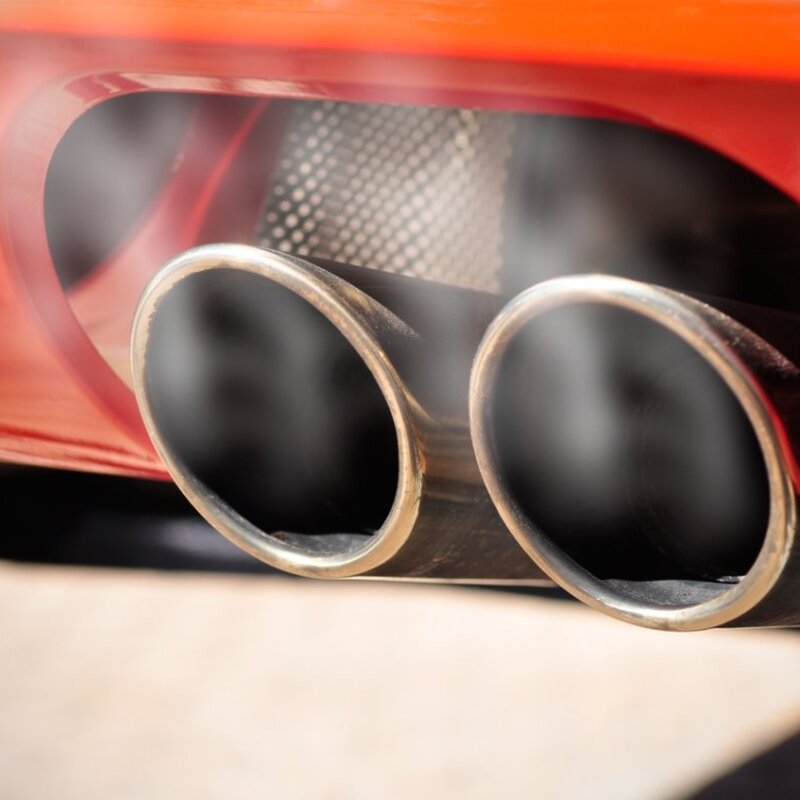
As more than 30% of NO2 is generated by road transport, in 2016 the EU introduced the Real Driving Emission (RDE) regulation, requiring car makers to test emissions directly at a vehicles tail pipe under real-world conditions. To do this, “Portable Emission Measurement Systems” (PEMS) are used, which require accurate calibration with reference gases. However, NO2 can react with trace water or other gases in cylinders and can also adhere to the inside of sampling tubes. This reduces the stability of reference materials, especially at the low-level concentrations required for emission monitoring, leading to increased measurement uncertainty which poses a barrier to the accurate calibration of measurement instruments.
Solution
During the MetroPEMS project, fifteen NO2 standards at 1 and 10 μmol/mol were produced using gravimetric preparation by LNE and NPL, the National Metrology Institutes (NMIs) of France and the UK, and the company Air Liquide.
These were prepared in pre-dried synthetic air and stored in two different passivated cylinder types (aluminium or steel). These were then transferred to NPL where there their stability was assessed for more than 12 months and levels of nitric oxide (NO) were measured using chemiluminescence and NO2 by Non-Dispersive Ultraviolet or Cavity Attenuated Phase Shift spectroscopy. The amount of contaminating HNO3 was calculated by subtracting these values from the total nitrogen species present.
In addition, VSL (the NMI of the Netherlands), NPL and Air Liquide produced nine reference standards in synthetic air at 500, 1 500, 2 000 and 2 500 μmol/mol.
Results indicated a good stability for all gases, with a relative measurement uncertainty of around 3.5 % or less over 14 months.
Impact
For over 120 years, Air Liquide has provided gases, technologies and services for industry and health. Due to their expertise in producing reference gases, they were invited to join the MetroPEMS consortium to help generate the low- level NO2 gas mixtures. The company has now expanded its comprehensive range of ISO 17025 accredited NO2 calibration gases, such as its ALPHAGAZ™ MIX range which can be used for calibrating PEMS, catalytic converters, or exhaust gas analysers.
During the project, Air Liquide also worked with VSL to produce six multicomponent reference standards containing NO2, NO, carbon monoxide (CO) and carbon dioxide (CO2) – mixtures considered extremely challenging to manufacture by many other companies working in this area.
The company acknowledges that working closely with some of the world’s most prestigious NMIs has allowed them to assess the stability of highly reactive gases in cylinders, as well as providing SI traceability and demonstrating the accuracy of their products to their customers.
The reference gases produced in MetroPEMS will help the automotive industry to demonstrate compliance to EU regulations and directives on emissions, whether it be measurements from automobiles, industrial stacks or environmental monitoring stations.
- Category
- EMPIR,
- Environment,
- EMN Pollution Monitoring,