Modelling the interaction of sunlight with the Earth
Challenge
The Earth’s energy budget describes how much radiation from the sun reaches the Earth’s surface and how much escapes back into space. Knowledge of how this is changing is not only important in understanding and predicting climate changes, but also essential in areas including weather forecasting, air quality monitoring, vegetation health analysis, land use monitoring and natural disaster management. Radiative transfer models — software that simulates the propagation of light in the Earth’s atmosphere and at its surface – play a key role in the design and calibration of remote sensing instruments, both in orbiting satellites and on ground, as well as in interpreting instrument readings. To minimise measurement uncertainty arising from this modelling process, assessing how accurately these models represent physical reality is critical.
So far, RTMs have made strong simplifying assumptions depending on their intended applications, e.g. assuming that the Earth is flat, or neglecting the effect of the atmosphere on radiation. Consequently, no RTM currently merges all the ingredients required to simulate a realistic image with the accuracy required by the best modern instruments. In addition, few RTMs have been validated against SI artifacts, meaning comparing their outputs is difficult.
Solution
To determine the requirements of a RTM suitable for all aspects of the Earth Observation community, during MetEOC-3, the company Rayference consulted the European Space Agency (ESA) and experts from areas including clouds, vegetation, atmosphere, and oceans. A new RTM design was then compiled and, using funding from the ESA’s Copernicus programme, a new RTM was developed.
In the subsequent MetEOC-4 project, NPL (the National Metrology Institute of the UK) manufactured an SI-traceable artifact with optical reflective properties that could be replicated in a digital form. Light reflectance measurements were then made at various angles using a 3D goniometer developed by Aalto University in MetEOC-3 and traceable to the absolute goniospectrophotometer at Aalto. The experimental results were then compared to the outputs of the RTM, which indicated more than 80% agreement with around 2% measurement uncertainty - the first time such a comparison had been performed with this degree of rigorous uncertainty analysis and to this level of agreement.
Impact
Rayference provides innovative consultancy services for radiative transfer, specialising in Earth Observation. The company’s goal in developing the new RTM is to break the boundaries between subcommunities working in this area, helping them to share their scientific advances. In line with this, in 2022, they released their new RTM, Eradiate, as free software. This can model deserts and oceans, vegetation, particulates, and atmospheric layers – from the very top of space down to the Earth’s surface or anywhere in between, with virtually no limitation on the possible combinations.
It has since been used been used to support ESA missions such as “CHIME”, which will provide hyperspectral data in support of environmental and resource monitoring, and “LSTM” analysing landsurface temperatures in support of agriculture and water scarcity.
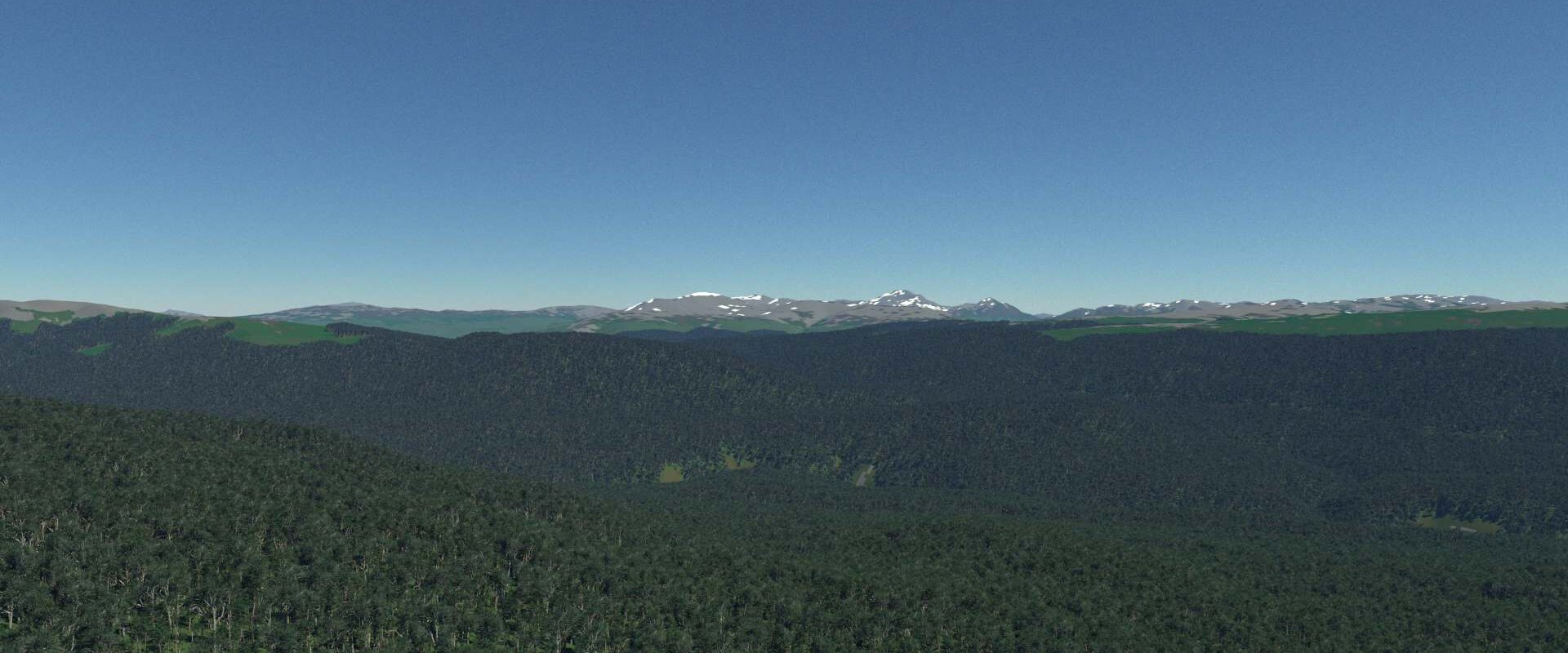
Eradiate is also supporting the FRM4VEG project, in which drone observations are used to validate surface reflectance data retrieved from satellites. The company is now developing DTE-S2GOS – an ambitious project to create a digital twin of the Earth as seen from drones or space. Based on physical constants it will allow improved RTM modelling in support of Earth observation applications.
A validated model on how light propagates not only benefits current and future space missions but will also allow a greater knowledge of how water, agriculture and vegetation is affected by a changing environment.
- Category
- EMPIR,
- Environment,
- EMN Climate and Ocean Observation,