Improved metering to support green fuels in the maritime industry
Challenge
In 2021, the European Commission adopted the EU Action Plan “Towards a Zero Pollution for Air, Water and Soil” - a key deliverable of the European Green Deal. As the maritime sector accounts for 14 % of the EU’s CO2 emissions from transport, regulations like the FuelEU Maritime Initiative (adopted in 2022) have been created to tighten emission requirements and fuel consumption limits. This has led to a focus on alternative low- or zero-carbon fuels and improved engine testing. To support this transition, new metrology was needed to improve flow measurements, which have a direct impact on the quality of fuel consumption determination and emissions measurements.
One of the factors affecting maritime flow measurements is the variety of fuels used. Some, such as green methanol, have viscosities similar to water at room temperature (1 centistokes at 20 °C), while others must be heated before they can burn and remain relatively viscous. Heavy fuel oil, for example, can have a viscosity of up to 700 centistokes, similar to cooking oil, at 50°C. These properties can affect the measurement uncertainty of common types of flow meters which, along with environmental influences such as temperature and vibration, can lead to inconsistent measurements.
Solution
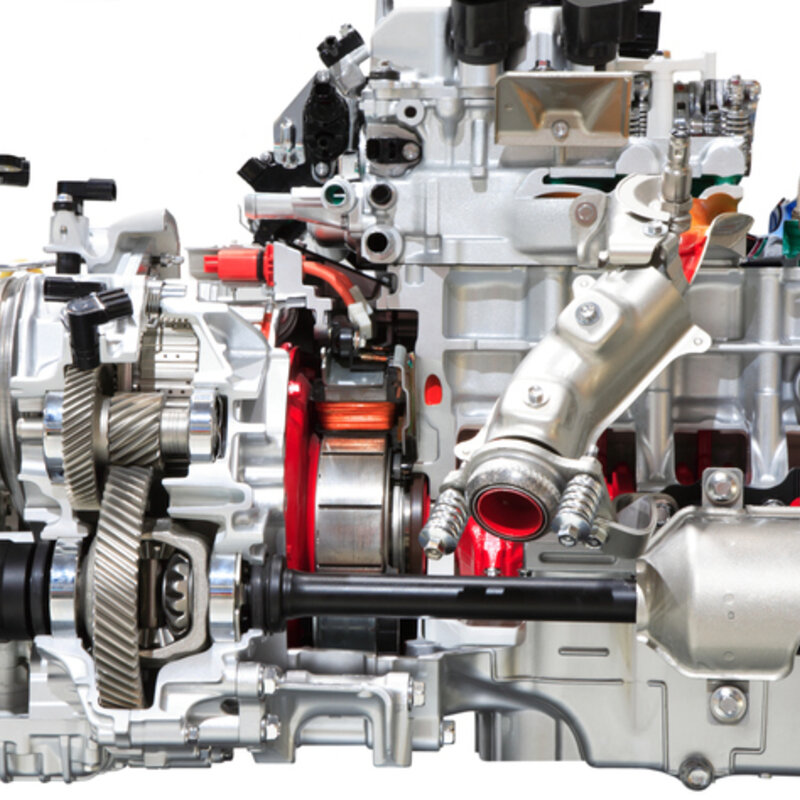
During EMPIR project SAFEST, project partner AVL developed a new prototype for a servo-controlled positive displacement (PD) flow meter tailored to maritime applications. The meter works by repeatedly displacing a fixed volume of liquid between a system of gears. The number of displacements is then counted over a known period to find the flow rate. The meter has high accuracy and is unaffected by fuel viscosity or density. It also does not require a specific orientation of the surrounding pipework and, due to its robust design, is less sensitive to external factors. This means flow measurements can be made under complex conditions with consistent measurement uncertainty, whether using heavy fuel oil, green methanol or any fuel between. During the project, the PD flow meter was assessed using testbenches at RISE, the National Metrology Institute (NMI) for Sweden, and PTB, the NMI for Germany, allowing AVL to optimise its design and ensure traceability to the SI.
Impact
AVL, based in Graz, Austria, is a world-leader in mobility technology in the automotive and rail industries. More recently, the company has expanded its operations to include maritime transport. The work of the SAFEST project has allowed AVL to develop the new PD flow meter beyond the prototype stage. The company has now initiated type approval with a classification society, who specify the materials and other requirements needed for maritime products. At the same time, AVL is also collaborating on a project with Wismar University of Applied Sciences in Rostock, Germany, using the new meter to conduct flow measurements on diesel dosed with green methanol, a fuel alternative with lower carbon dioxide (CO2), particle and nitrous oxide (NOx) emissions.
The work of the SAFEST project and the development of the new PD flow meter will contribute to improved flow measurements across the maritime industry, providing better accuracy and useability. In the long-term, this will aid the transition towards greener fuels and reduced emissions, aiding Europe in its ambitions towards zero pollution.
- Category
- EMPIR,
- Industry,