Enabling better regulation of hydrogen chloride gas emissions
Challenge
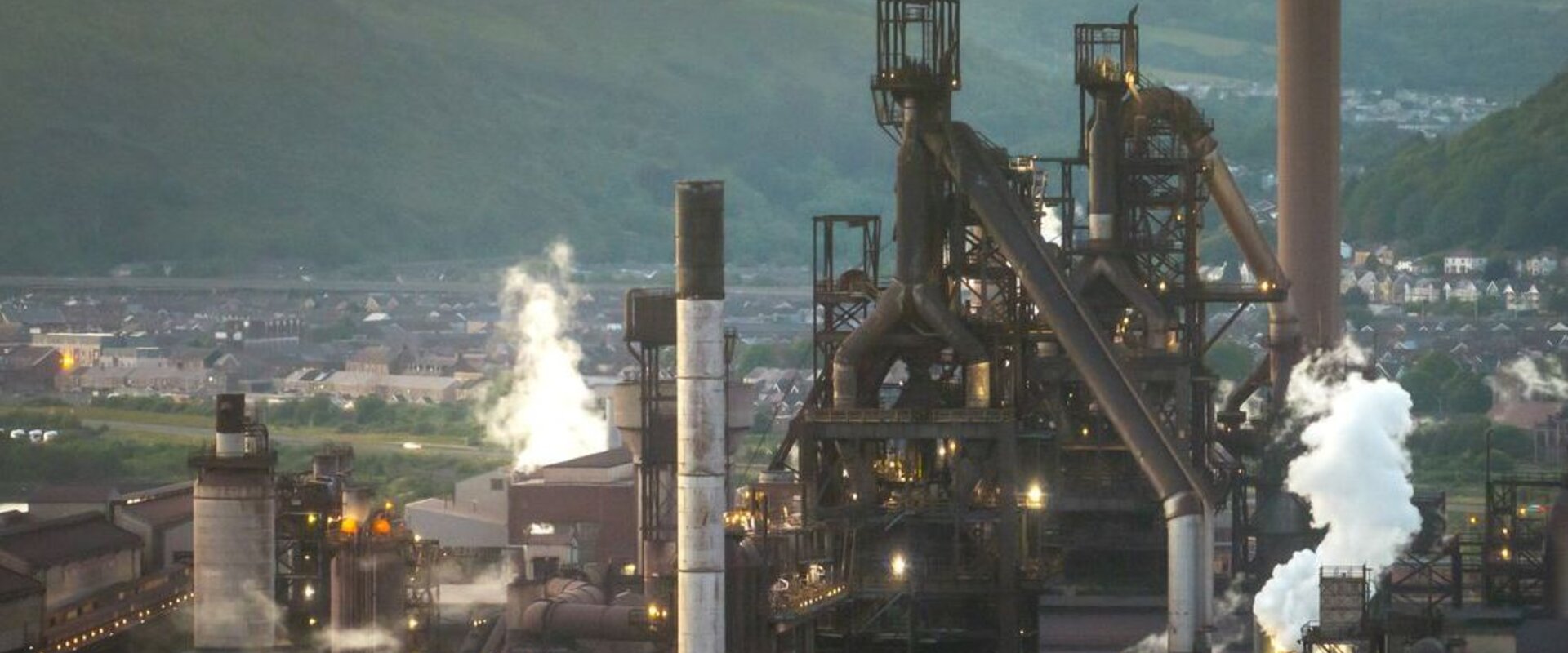
Waste incineration, steel production, chemical and cement plants all emit hydrogen chloride (HCl) gas which combines with water to produce hydrochloric acid, contributing to photochemical smog that damages health, buildings and ecosystems.
The Industrial Emissions Directive (IED) limits maximum permissible HCl emissions from waste incineration and co-incineration plants to 10 mg/ m3 with a measurement uncertainty of 30%. It also states industries must apply the “Best Available Techniques” (BAT) without prescribing the use of any technique or specific technology. For an industry to operate it must adhere to BAT “conclusions” that set allowed emission levels. The Standard Reference Method for measuring chlorinated compounds is EN 1911, where a known volume of gas is extracted through deionised water in absorber bottles before off-line analysis at laboratories.
Regulations are continuously evolving, and BAT conclusions and HCl levels are set much lower than those in the IED, originally published in 2010, such as such as 2-6 mg/m3 for new waste incineration plants, and 1-3 mg/m3 for iron and steel production. However, the EMPIR project IMPRESS 2 demonstrated that the 30% measurement uncertainty set in EN 1911 may be underestimated by monitoring organisations and analysis laboratories measuring below 10 mg/m3 HCl, meaning that many industries may no longer be able to demonstrate compliance.
At the discretion of national regulators, portable automated measurement systems (P-AMS) may be used as an alternative to measure gases, if type approved in accordance with EN 15267-4, both on-site and in real-time. However, no P-AMS instrument was certified to this standard for HCl measurements at the time.
Solution
During the EMPIR project Heroes, the National Metrology Institute (NMI) of the UK, NPL, validated their “stack simulator” for HCl emissions down to 1mg/m3. This was then used to test the “wet-chemistry” sampling detailed in EN 1911 against a variety of P-AMS instruments. This including three based on Fourier Transform infra-red spectroscopy (FTIR), that uses infrared light to analyse chemical composition. The operation of the analysers being carried out following the method standardised in CEN/TS 17337, a further output of the project.
In addition, INERIS, on their similarly validated stack simulator facility, probed the performance of EN 1911 itself, whilst VTT and CMI (the NMI’s of Finland and Czech Republic) investigated other influence factors including sampling apparatus configuration and stack geometry, respectively – the latter being carried out using computational fluid dynamics (CFD) flow modelling.
The results have facilitated national regulators in further permitting the use of P-AMS for HCl emissions monitoring.
Impact
The UK’s Environment Agency (EA) aims at creating better places for people and wildlife. They protect and improve the environment in a range of areas including monitoring the health of rivers, fisheries and waterways, treatment of contaminated land, and regulating industrial waste.
With a pragmatic approach, the EA has allowed P-AMS for HCl measurements at industrial sites that come under their regulation because they have benefits compared to the use of EN 1911. These measure HCl directly, unlike EN 1911 which measures total chlorides, and thus can overestimate HCl emissions. This can lead to industries over-investing in abatement methods – such as the excessive use of expensive lime. On-site P-AMS measurements are also less labour intensive than sampling and lab-based methods and provide continuous, real-time measurements at stacks, an advantage for pollutants whose levels fluctuate over time.
The validation of these instruments in Heroes has provided the EA with greater confidence in this technology and, as a direct result of the project, in 2024 the first P-AMS certified to EN 15267-4 for HCl was obtained by a Finnish collaborator.
Not only will this reduce costs to industries and allow demonstration of compliance to standards, most importantly it will also support the IED’s fundamental aim of minimising the impact of pollution on people’s health and the environment.
- Category
- EMPIR,
- Standardisation,
- Environment,
- EMN Pollution Monitoring,