Accurately determining the piezoelectric coefficient of nanowires
Challenge
Fossil fuel use is driving climate change and to address this Europe aims to increase energy production from renewable sources and become carbon neutral by 2050. However, many electronic items rely on batteries which have limited lifetimes and are often bulky which limits device miniaturisation. An attractive alternative is the use of piezoelectric materials which generate electricity when subject to a mechanical force, and have numerous applications including wearable electronics, biosensors in medicine, or self-sustained smart sensing in buildings.
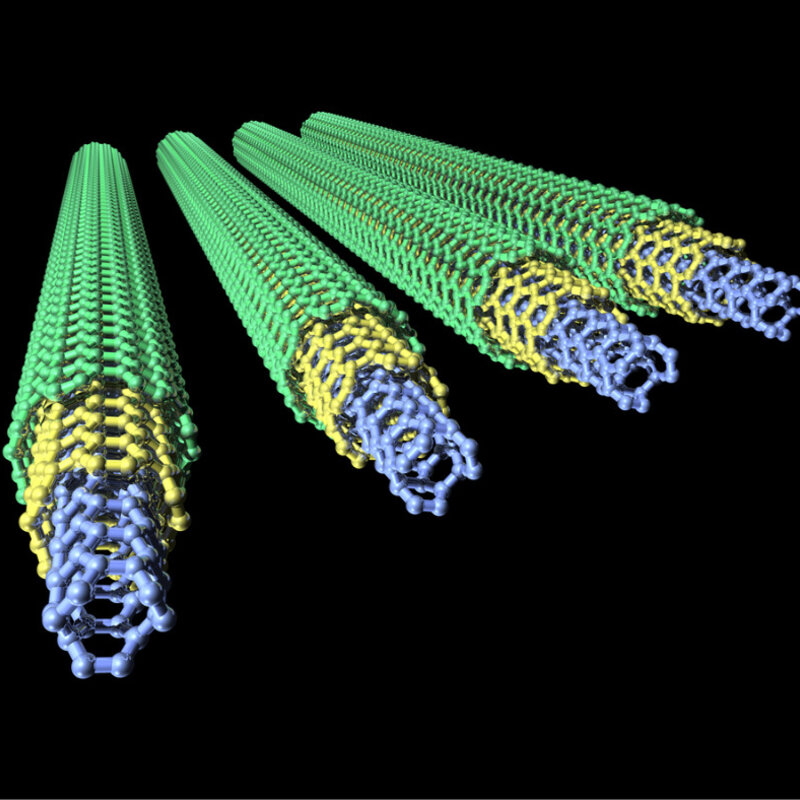
Recently piezoelectric nanowires (NW) have drawn interest due to the capability of incorporating them into integrated circuits or micro-electromechanical systems. These are tiny rod-like structures with sub-micrometre diameter commonly made of polymers or non-toxic zinc oxide (ZnO). It has been shown that the efficiency of NW solar cells can be enhanced from 17.8 % currently to the ultimate limit of 46.7 % by means of nanophotonic engineering.
However a lack of metrology for NWs has hindered their use, including accurate knowledge of the piezoelectric coefficient (d33), which indicates their potential to produce electricity. This parameter is generally measured using the ‘Berlincourt’ method which has proven problematic, especially for soft or easily deformed materials. New metrology was required to characterise these materials for quality control and provide information on individual NW performance.
Solution
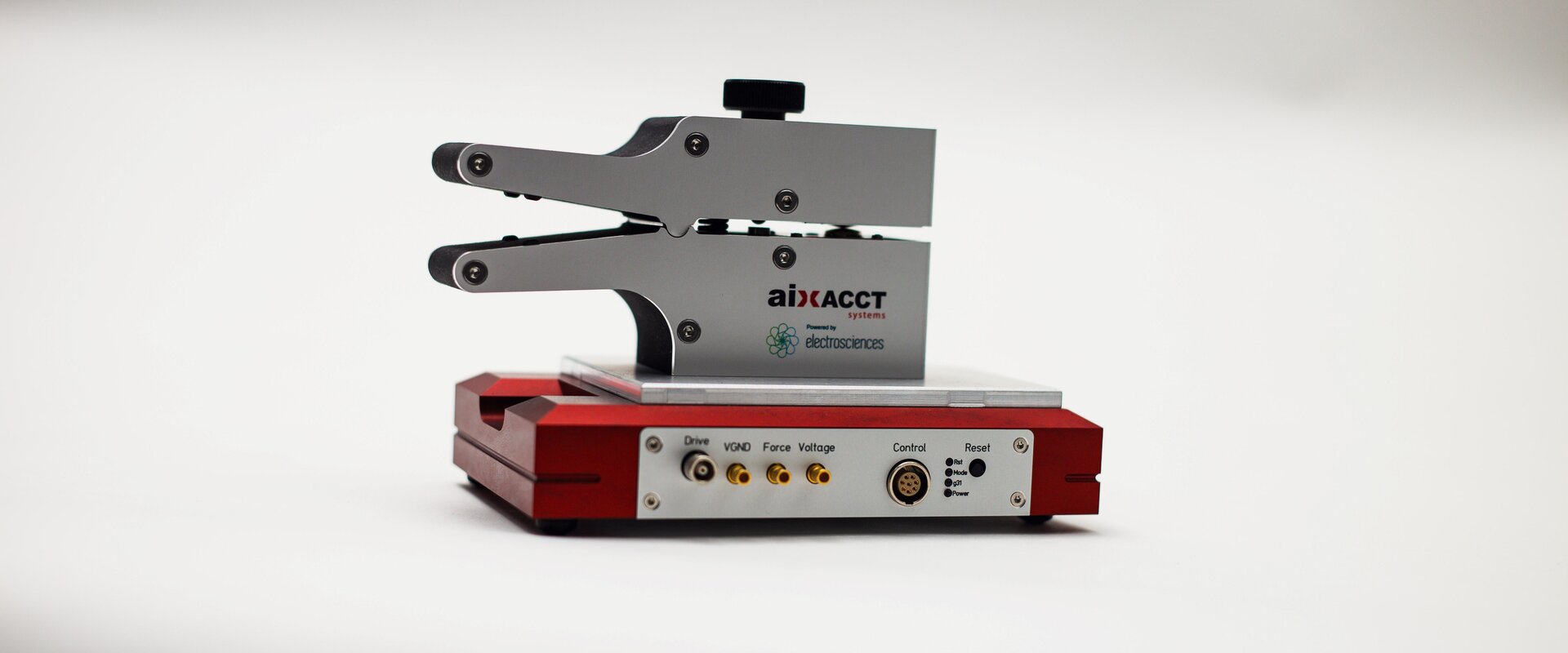
During the NanoWires project, partner Electrosciences improved a prototype piezoelectric measurement tool, the ESPY33, they had initially developed in a UK-funded project. The instrument, which had previously been calibrated for force and current, applies a known mechanical force to a sample, the resultant current or charge measured, and the piezoelectric charge coefficient is then calculated.
It was assessed against a ‘forest’ of ZnO nanowires produced on 24 mm x 24 mm silicon substrates during the project and was further improved in terms of sensitivity and noise. The piezoelectric charge of individual NWs was modelled using COMSOL software and compared to that obtained from the bulk material. The tool was also compared against two piezoelectric materials with well-defined d33 constants - quartz and lithium niobate. Results indicated the ESPY33 instrument could accurately measure the piezoelectric coefficient and provided a d33 value better than 1% of the true values for the single-crystal piezoelectric materials.
Impact
Founded in 2008 by scientists with over 30 years’ experience in the field of materials science and solid-state physics, Electrosciences provide specialised scientific and technical consultancy to industry and academia in multifunctional materials research and development. Since the end of the Nanowires project in 2023 the company has since patented the unique technology in their ESPY33 instrument, which, along with their developing and manufacturing partner aixACCT Systems GmbH, has now been commercialised. The tool, like all Electrosciences and aixACCT products, has SI traceability built in and is small enough to fit onto a laboratory bench.
With a frequency range up to 500 Hz it contains an integrated force measurement cell positioned in perfect alignment with the sample fixture - ensuring highest precision in d33 coefficient measurements. It can also be easily retrofitted into quality control production processes, allowing 20 or more to be incorporated into manufacturing lines without interrupting the product process. In addition to ZnO nanowires it can also be used for a range of other materials, such as piezoelectric ceramics, single crystals, polymers, composites, and biological soft materials.
The improved knowledge of the energy output from piezoelectric materials will support Europe’s energy aims. It will also improve a wide range of high-technology applications where a reliable and accurate knowledge of piezoelectric constants are required, including advanced solar cells and touchscreens, automotive pressure sensors and medical ultrasound.
- Category
- EMPIR,
- Energy,
- Industry,
- New Technologies,
- EMN Advanced Manufacturing,