A radon monitor for public safety and climate change mitigation strategies
Challenge
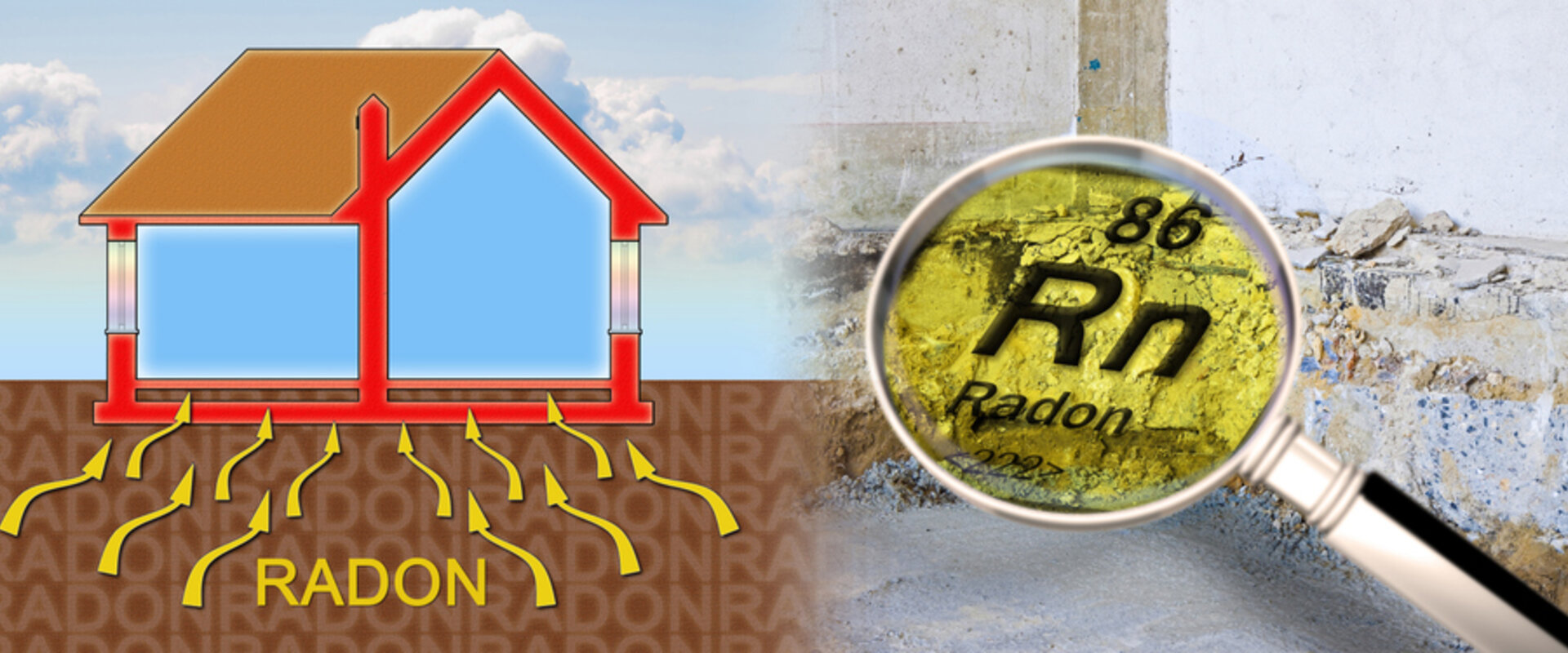
The radioactive gas radon is released naturally from soils and rocks. It can accumulate in buildings and accounts for around half of public exposure to naturally occurring radiation. The World Health Organization therefore recommends mitigation if prolonged exposure to concentrations above 100 Bq/m3 to 300 Bq/m3 is reached. As it undergoes the same surface-atmosphere exchange processes as greenhouse gases (GHG) – and its only sink is radioactive decay - it is an ideal “tracer” of GHG transport and mixing that can help improve climate change mitigation strategies. However, atmospheric concentrations are extremely low, between 5 Bq/m3 and 15 Bq/m3 near the Earth’s surface down to ~0.01 Bq/m3 in the troposphere. The large difference in concentrations at which radon is a health risk or used as an atmospheric tracer, has led to monitors for these applications being independently developed, so not all measurements are comparable.
The most sensitive measurements are provided by two-filter monitors, which specifically target the isotope Radon-222. Since their sensitivity is proportional to their measurement volume, the most sensitive are not readily portable.
Development of a monitor satisfying both requirements would not only increase the number of monitors available to both research communities, but also improve measurement compatibility between collected datasets.
Solution
During the traceRadon project, the Australian Nuclear Science and Technology Organisation (ANSTO) designed and developed a new monitor based upon their 1500 L monitor, currently the most sensitive radon monitor available, with a detection limit of 0.025 Bq/m3. However, this instrument weighs 120 kg and requires a truck to transport it.
In conjunction with PTB, the National Metrology institute of Germany, ANSTO developed the new ANSTO 200 L radon detector. Transportable in a standard vehicle, weatherproof, and narrow enough for standard instrument racks, the detector was traceably calibrated inside a controlled climate chamber at PTB using a new radon source developed in the project. A field-based intercomparison of 4 different radon monitors was performed, demonstrating the ability to transfer traceability from the ANSTO 200 L to an operational 1500 L detector, without interrupting its data collection. Results indicated the new detector could reliably measure radon concentrations down to 0.14 Bq/m3 and over 1000 Bq/m3.
Impact
For 40 years ANSTO have provided cutting edge research in radon monitoring. Their 1500 L radon detector is recognised by the World Meteorological Organization as the best in the world for atmospheric baseline studies and is used by universities and leading environmental monitoring organisations around the world.
The ANSTO 200 L has since been installed in a mobile air chemistry facility in New Zealand to help achieve net-zero GHG emissions by 2050. ANSTO acknowledges the help of traceRadon in developing the instrument – the first ever SI-traceable, portable, research-grade monitor for radon at environmental concentrations. There are also plans to use it in the project RadonNET, which aims to improve indoor radon monitoring by developing low-cost sensors for air quality management and radiation protection. ANSTO is further enhancing the 200 L, potentially improving its sensitivity 3-fold, approaching that of the 1500 L model. This would greatly facilitate monitoring at remote sites, where access is challenging and space availability in the laboratories limited. Work has also started on the smaller ANSTO 100 L, which could revolutionise indoor public health monitoring.
The development of sensitive, traceably calibrated, portable radon monitors, such as the 200 L, will greatly facilitate a wide range of atmospheric and climate science research. It will also allow increased harmony between radon datasets for climate science and public health research.
- Category
- EMPIR,
- Environment,
- EMN Radiation Protection,