Developing the metrological framework for generating and utilising renewable energy sources
Case Studies
Please find below selected case studies from EURAMET's European Metrology Research Programmes (EMRP and EMPIR) and the Metrology Partnership that are related to Clean Energy:
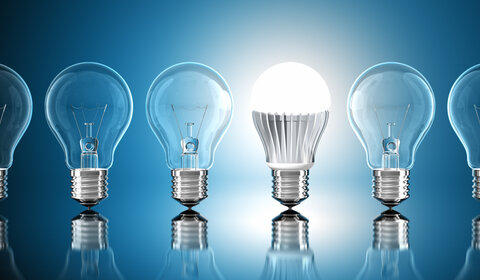
The EU’s Energy Efficiency Directive of 2023 committed all member states to a further 11.7% reduction in energy consumption by 2030.Fully transitioning to lighting using light emitting diodes (LEDs) could save Europe €65 billion in energy costs annually and reduce carbon dioxide emissions by 51 million tonnes.
White LEDs are up to 75% more efficie...
Around 12% of electricity consumption in the world is used for lighting. More efficient systems have the potential of allowing Europe to save up to 34 TWh of electricity by 2030, reducing CO2 emissions by 7 million tonnes per year. Incandescent lights – where electricity flowing through a thin metal filament, such as tungsten, heats it until it glo...
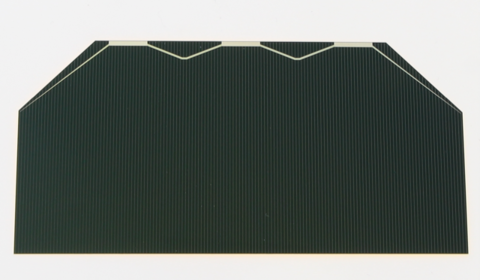
Multi-junction solar cells (MJSC) are made up of layered semiconductors that, together, absorb a wider range of solar energy than silicon alone. Higher energy conversion efficiencies for this type of cells are predicted, that, in time, may enable photovoltaics to become cost-competitive with conventional energy sources. Manufacturing and material a...
The International Energy Agency predicts that by 2050 solar power could cover 69 % of electricity generation, making it the world’s largest source of power. For this to happen it will require multiple approaches such as reduced installation costs, increased solar cell efficiencies or the adoption of new technologies.
New types of solar cells, or p...
The EU’s renewable energy directive sets a binding target that at least 32 % of energy consumed in Europe comes renewable sources by 2030.
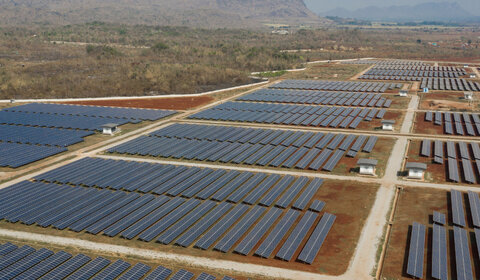
Electricity generated from solar cells, also known as photovoltaics (PV), will have a vital role but will require an increased uptake of PV technologies. Operators of solar parks need accurate forecasts of the ...
Although the EU is on course to meet its renewable energy directive 2020 target of 20 % of its total energy consumption to be sourced from renewable sources, expansion in generation capacity must continue to reach the equivalent 2030 target of 32 %.
Electricity generation by wind energy systems (WES) has increased by 350 % over the last ten years,...
While the EU is on course to meet its 2020 target of sourcing 20 % of its total energy consumption from renewable sources, electricity generation capacity will need to continue to grow to meet the next renewable energy directive binding target of 32 % by 2030.
The amount of electricity generated by wind energy systems (WES) has increased by 350 % ...
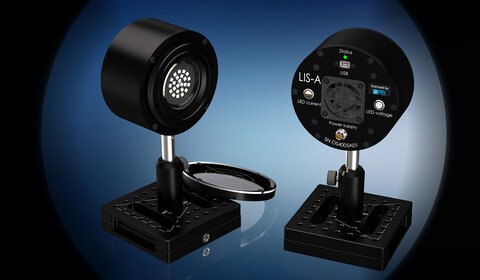
Solid state lighting (SSL), which uses LEDs as the light source, is the most energy-efficient lighting technology available, and offers better quality light and visual performance. SSL’s extremely long lifetime and low maintenance costs promise savings for consumers and public authorities, and, unlike fluorescent lamps, it does not contain toxic me...
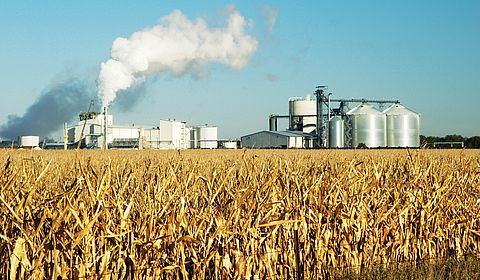
Biofuels are gradually being introduced across Europe’s transport sector through low-level blending with conventional fuels – of bioethanol in petrol and biodiesel in diesel. Ahead of large-scale implementation, given the significantly different chemical and physical properties of biofuels, we need a better understanding of how they affect engine p...
Harvesting waste heat from vehicles could reduce fuel consumption and CO2 emissions. Most major automotive companies are currently developing thermoelectric generators, which capture waste heat from a car’s exhaust and turn it into electricity. This harvested energy can be used to power a car’s electrical system, reducing the load on the engine and...