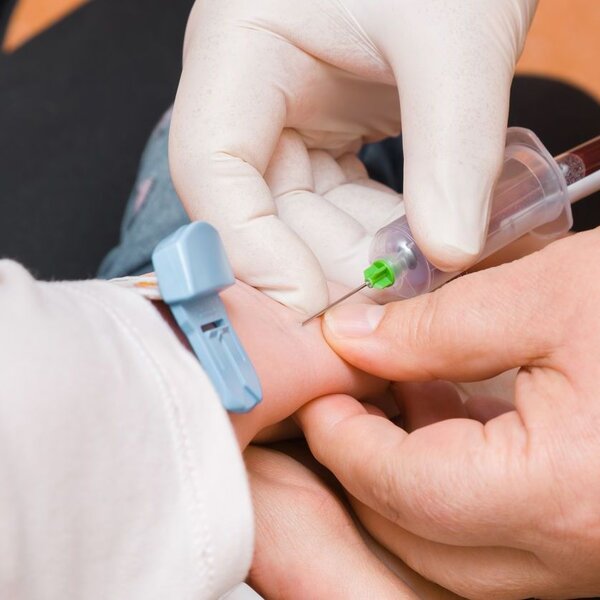
<p><em>Pathological infections cause millions of deaths annually and effective treatment requires accurate, rapid identification of the cause</em></p>
Pathological infections cause millions of deaths annually and effective treatment requires accurate, rapid identification of the cause
Sepsis is an acute clinical emergency where the immune system has an extreme response to an infection. Sepsis is not only responsible for 700,000 deaths annually in Europe, but also causes morbidity in up to 60% of patients.
Sepsis is a textbook example where rapid accurate diagnosis is linked to improved outcomes both to identify patients and determine the cause. For the latter the main method to detect cause and guide treatment involves bacterial culture which is too slow and cannot detect all pathogenic causes; including viruses.
Molecular methods that detect DNA and RNA can offer rapid alternative diagnostic solutions. However, reference measurement systems to support traceability when demonstrating analytical test performance are still in their infancy.
This was addressed by the completed EMPIR project Metrology to enable rapid and accurate clinical measurements in acute management of sepsis (18HLT03, SEPTIMET) which delivered a range of new reference methods and procedures to support sepsis diagnosis that were also applicable to other diseases.
COVID-19 (SARS-CoV-2)
The original aim of SEPTIMET was to identify bacterial sepsis causing agents but the techniques developed also helped with the global response to COVID-19 in 2019 and 2020, including the development of novel detection methods for test evaluation and when managing COVID-19 in hospital patients. As COVID-19 can lead to sepsis, with long COVID often having similar effects to post sepsis syndrome, SEPTIMET included this disease as one of the models where improved diagnosis would directly improve patient outcome.
Since the end of SEPTIMET in 2023, the work led by the National Measurement Laboratory at LGC (the UK’s designated institute for Chemical and Biological measurement) has continued to have influence in this area, including the publication of two highly-received papers, one on ensuring the accuracy in the development of nucleic acid amplification tests for infectious diseases, such as COVID-19, and the second on how different diagnostic performance of methods routinely used during the pandemic can lead to different results.
In many examples (including HIV and viral hepatitis C) measurements of viral genome quantity is a marker that aids management of infection. A common idea during the pandemic was that the amount of the virus responsible for COVID-19 could be a clinical marker, with patients with less virus being less likely to spread the disease. While this may be a clinically valid hypothesis, the project results demonstrate how the methods in question were incapable of delivering such measurements due to the lack of standardisation. This highlights a clear need for metrology to allow the clinical community to test hypotheses that may improve patient diagnosis.
The research in the project also focused on defining clinical reference ranges when considering diagnostic test use and details a new theory on how less sensitive methods, such as lateral flow tests (LFTs), can give different results depending on the stage of the pandemic. These are predicted to identify more COVID-19 patients within a population at the start of an outbreak when the replication rate of the virus is high, which makes it spread, but the tests may detect fewer positive patients when the outbreak is starting to abate (e.g. such as the situation during the first lockdowns in many countries). Consequently, the work published as part of the SEPTIMET consortium could aid in the selection and deployment of diagnostic tests during future outbreaks scenarios.
Testing without the need for a laboratory
The LFTs that were used during the pandemic detected viral proteins to predict COVID-19 status. Due to their ease of use and availability, LFTs offered a rapid decision-making tool to help patients to self-isolate with the aim of preventing spread of infection. The use of LFTs during COVID clearly demonstrated public acceptance of these types of at home, or point of care (POC), tests. This opens the possibility for POC tests to revolutionize healthcare by providing patients at home far beyond COVID. Biosensors represent advances in POC formats as they can detect a wide range of analytes and can be digitalized offering a dynamic alternative to LFTs that could further increase the access of home testing to the general public.
During SEPTIMET a novel biosensor platform based on a Graphene Field Effect transistor (GFET) was developed by NPL, the National Metrology Institute (NMI) of the UK. Originally designed to help identify the measurement needs and challenges of detecting bacterial endotoxins an important cause of septic shock, it was adapted to detect COVID-19 virus proteins.
The sensor was successfully tested at Great Ormond Street Hospital (UK) and could detect 5 different strains of SARS-CoV-2 which were present in patient fluids at concentrations that were even lower than those detected by LFTs. Whilst still at a proof-of-concept stage, the GFET was found to rapidly detect small amounts of SARS-CoV-2 antigens and the virus itself demonstrating potential for population screening.
Based on the encouraging results , an interlaboratory comparison for Validating biosensor kinetics for microorganism antigens was launched under Versailles Project on Advanced Materials and Standards (VAMAS) to explore a metrological basis of such a biosensor with traceability to the International System of Units (the SI).
Jim Huggett (National Measurement Laboratory at LGC) who coordinated the project said about the work:
“The SEPTIMET project has led to numerous examples of impact when considering acute bacterial sepsis, but the fact that this world leading consortium was in place when the COVID-19 pandemic hit (which is a cause of viral sepsis) meant we were in a very strong position to deliver metrological support to the COVID-19 testing. This, along with the global attention placed on COVID-19 diagnostics, meant the consortium has also been able to demonstrate the needs of metrology to support ensuring accuracy in pathogen diagnostics, which is especially important for rapid and accurate diagnosis of sepsis.”
With advances in diagnostics, both laboratory and at home testing will require support to ensure tests are working optimally, the work of SEPTIMET continues to make a positive impact in the diagnosis of pathological disease, ensuring the correct measurements are made in an accurate and timely manner in the treatment of these life-threatening conditions.
This EMPIR project is co-funded by the European Union's Horizon 2020 research and innovation programme and the EMPIR Participating States
Want to hear more about EURAMET?
Sign up for EURAMET newsletters and other information
Follow us on LinkedIn and X/Twitter