<p>New calibration methods and improved knowledge for reducing fatalities caused by dosage errors</p>
New calibration methods and improved knowledge for reducing fatalities caused by dosage errors
The project
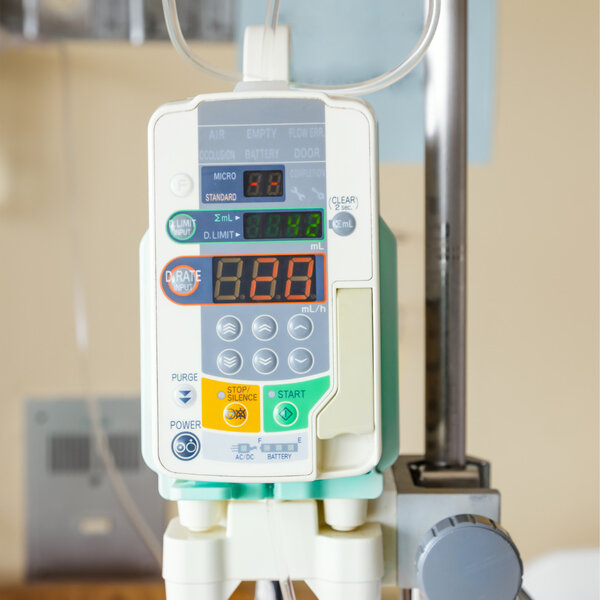
Completed EMPIR project Metrology for drug delivery (18HLT08, MeDDII) improved dosing accuracy and enabled traceable measurements of volume, flow and pressure of existing drug delivery devices and inline sensors operating at very low flow rates (lower than 100 nL/min). This was achieved through the development of new calibration methods and improved metrological infrastructures. The influence of fast changing flow rates was investigated along with the physical properties of the infused fluids (e.g. viscosity), and occlusion phenomena in multi-infusion systems.
Special issue of journal
The journal Biomedical Engineering has recently published a special issue focusing on medical flow and dosing measurement metrology in drug delivery, with most of the contributions based on results from this EMPIR project. The Guest Editorial is written by project coordinator Elsa Batista from IPQ, along with project collaborators Hugo Bissig (METAS) and Stephan Klein (Technische Hochschule Lübeck).
As explained in the Guest Editorial, drug delivery is a critical aspect in health safety because infusion therapy is the most used form of therapy in hospitals and clinical environments. Accurate flow and dosing measurements are essential to ensure that the correct prescribed dose is delivered to the patient in hospitals or at home care by self-operated drug delivery devices preventing incorrect drug deliveries and improving significantly patient safety. This is particularly important for the cases where critical drugs are delivered at very small flow rates or administering very low doses for neonates.
The papers included in the special issue are:
Project coordinator Elsa Batista from IPQ said
‘This project allowed the development and validation of new flow calibration methods down to 5 nL/min and a better understanding of drug delivery devices performance. This knowledge is now available in a special issue of the journal Biomedical Engineering and was also disseminated through workshops and training courses organised online and onsite for health professionals, scientists and metrologists with very good feedback from the attendees. Several Calibration and Measurement Capabilities were published in the BIPM Key Comparison Database and new flow calibration services are now available for manufacturers and end users. A predictive model for multi-infusion setups was extended to multiple flows, different viscosities, effects of air bubbles and check valves. This software can now be used by the medical community. Finally, the project supported the development of standards incorporating robust calibration procedures, equipment, and conditions, capable of supporting accurate drug delivery results and reduced risks of adverse patient incidents.’
This EMPIR project is co-funded by the European Union's Horizon 2020 research and innovation programme and the EMPIR Participating States.
Want to hear more about EURAMET?
Sign up for EURAMET newsletters and other information
Follow us on LinkedIn and Twitter