integrated metrology community.

News
Metrology Partnership project develops new measurement methods to facilitate greener shipping
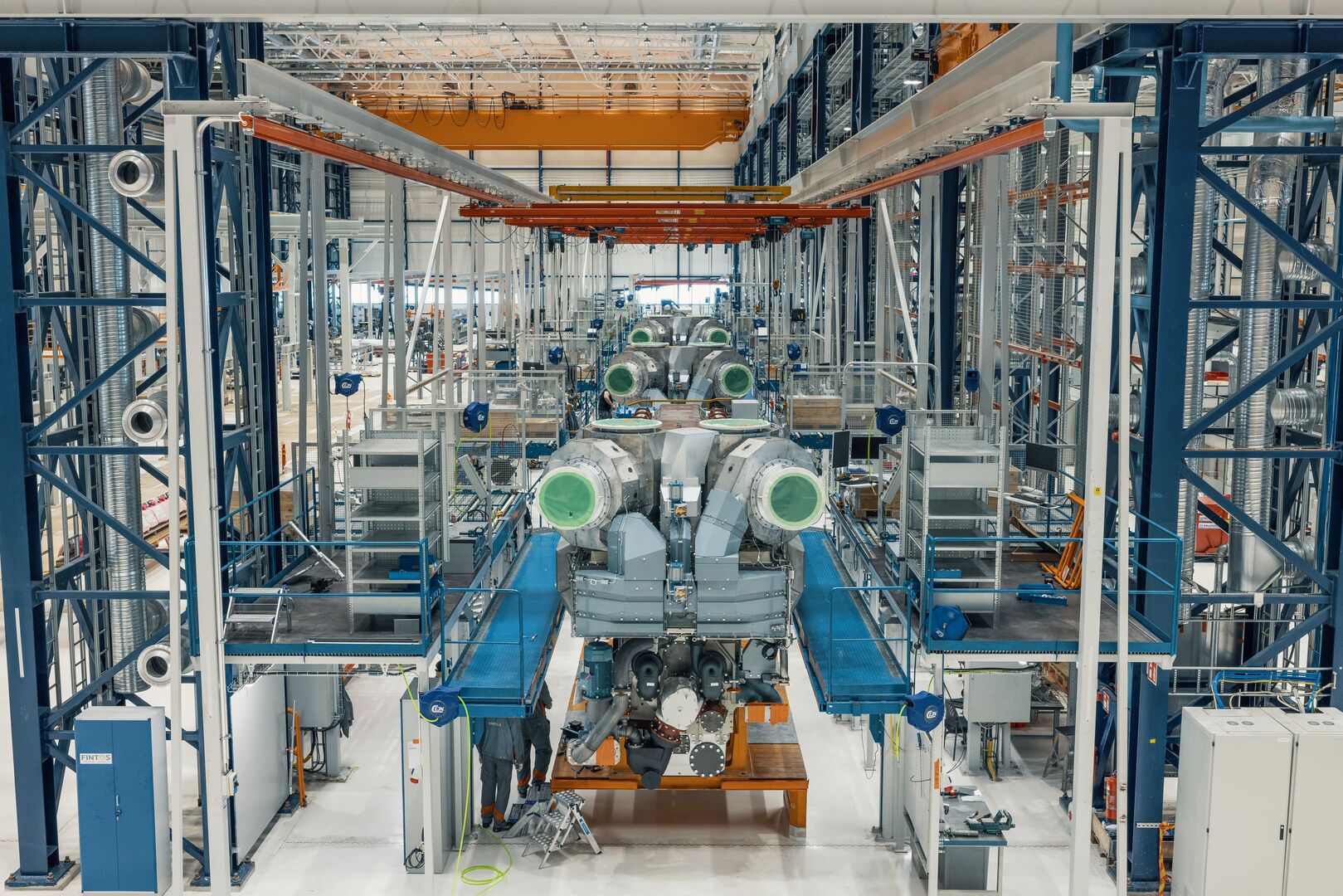
Wärtsilä engine - courtesy of Wärtsilä Corporation
Establishing the measurement infrastructure required to support the transition towards low-carbon maritime fuels and next-generation engines
The International Maritime Organisation (IMO) aims to reduce carbon intensity from international shipping by at least 40% by 2030 through the uptake of alternative zero and near-zero greenhouse gas fuels. However, these energy sources, such as green ammonia, hydrogen and biomethane, require the development of new or modified engines. As regulations such as Fuel EUMaritime, EU ETS and IMO ZNZ Framework increase, the monitoring, reporting and verifying of emissions becomes more important to stakeholders who risk penalties for emissions.
Traceable calibration and measurement methods for dynamic pressure and temperature are needed to improve the quality of engine measurement data, which is essential for optimising and improving the efficiency and fuel flexibility of combustion engines.
Metrology Partnership project Metrology for green maritime shipping: Emission control through traceable measurements and machine learning approaches (23IND09, MaritimeMET) has established new capabilities for traceable emission monitoring, dynamic pressure measurement, dynamic temperature measurement and uncertainty evaluation.
Dynamic pressure measurements
The project improved the existing primary standards, developed new standards and advanced methods for dynamic pressure calibration in the relevant pressure ranges for marine engine operation. Validation studies have demonstrated uncertainties below 1 % for impact-mass-based systems and below 2 % for shock-tube-based systems, representing a substantial improvement over previous capability. These standards provide an important foundation for future calibration and measurement capabilities for dynamic pressure.
The project partner RISE (Sweden) has further developed their shock tube to cover the pressure range from 0.1 MPa to 25 MPa with an expanded uncertainty less than 2 % in reference pressure. Also, RISE has validated the shock tube model using laser absorption spectroscopy method. LNE-ENSAM (France) has developed a device that increases pulse pressure of their shock tube up to 30 MPa, with a rise time on the order of 100 ns. The device suppresses the main shock tube noise sources and improves the signal to noise ratio.
Project partner VTT MIKES (Finland) has developed a novel primary standard for dynamic pressure range from 2 MPa to 30 MPa with an overall uncertainty of 0.7%. TUBITAK UME (Türkiye) has further progressed its impact mass calibration device for the range between 5 MPa and 30 MPa with uncertainty level 1%. Validation of these standards via an inter-laboratory comparison is ongoing and will help dynamic pressure to be included in the key comparisons list necessary to establish traceability.
Establishing traceability for dynamic pressure calibration will benefit sensor manufacturers, intermediaries (like secondary calibration institutes and service providers) and end users (like engine manufacturers for road, maritime, aviation and power generation sectors).
New methods for measuring emissions
Traceable emission measurement methods are required for emissions (NO2, NO, N2O, CH3OH, NH3, CH2O, CO, particulates and black carbon). New SI-traceable laser spectroscopic methods have been developed for key species relevant to future maritime fuels.
- DFM (Denmark) developed a Tunable Diode Laser Absorption Spectroscopy (TDLAS)-based traceable optical spectroscopy-based method and facility for absolute concentration measurements for CH3OH, NH3 and CO.
- PTB (Germany) advanced the existing NO2 Optical Gas Standard method with focus on the maritime sector. TDLAS based SI traceable methods have been established for CH2O and N2O.
- DTU (Denmark) developed UV-based broad-band sensor for in-situ/on-line measurements of NO concentration.
These methods provide the basis for improved calibration and validation of emission monitoring systems operating under representative conditions. This will help to ensure that accurate measurement techniques are reflected in new products and services.
Project coordinator, Ajoy Ramalingam from PTB (Germany) says:
“The average service life of a marine engine is typically between 20 and 30 years. This means that an engine built today is likely to remain operational well beyond 2050. Consequently, engine developers require accurate and reliable tools to design and validate the next generation of engines that will meet future performance and environmental requirements.
Through this project, the partners are combining their complementary expertise and resources to address this challenge. The work on dynamic pressure measurements will enable sensors to be calibrated against primary standards, providing greater accuracy and traceability for both sensor manufacturers and engine developers. Likewise, the spectroscopic techniques being developed for emissions monitoring have the potential to become reference methods, either for direct deployment in the maritime sector or as standards for calibrating other emissions measurement instruments used in the field.
These innovations will contribute to the development of more efficient engines, resulting in reduced emissions and lower fuel consumption. For ship operators, this translates into savings through reduced fuel costs and lower expenditure associated with emissions compliance and penalties. More broadly, the resulting reduction in greenhouse gas and pollutant emissions from the maritime sector will support the society's transition toward a more sustainable future.”
This Metrology Partnership project has received funding from the European Partnership on Metrology, co-financed by the European Union Horizon Europe Research and Innovation Programme and from the Participating States.
Want to hear more about EURAMET?
Sign up for EURAMET newsletters and other information
Information
- European Partnership on Metrology,
- EMN Clean Energy,
- TC-T,
- TC-M,
- TC-MC,
Establishing the measurement infrastructure required to support the transition towards low-carbon maritime fuels and next-generation engines more
Higher‑quality diagnostic images for about 50 million EU citizens patients with implants more
Metrology Partnership project developed electric vehicle real-world charging measurements across Europe to help build sustainable transport system more